- Antonio Guterres says conflicts, from the Middle East to Ukraine and Sudan, are fueling cost-of-living protests and widening global inequalities
- ‘Conflict is feeding conflict and the consequences are traveling farther and faster’ through energy markets, shipping lanes, supply chains and financial systems, he says ahead of Egypt trip
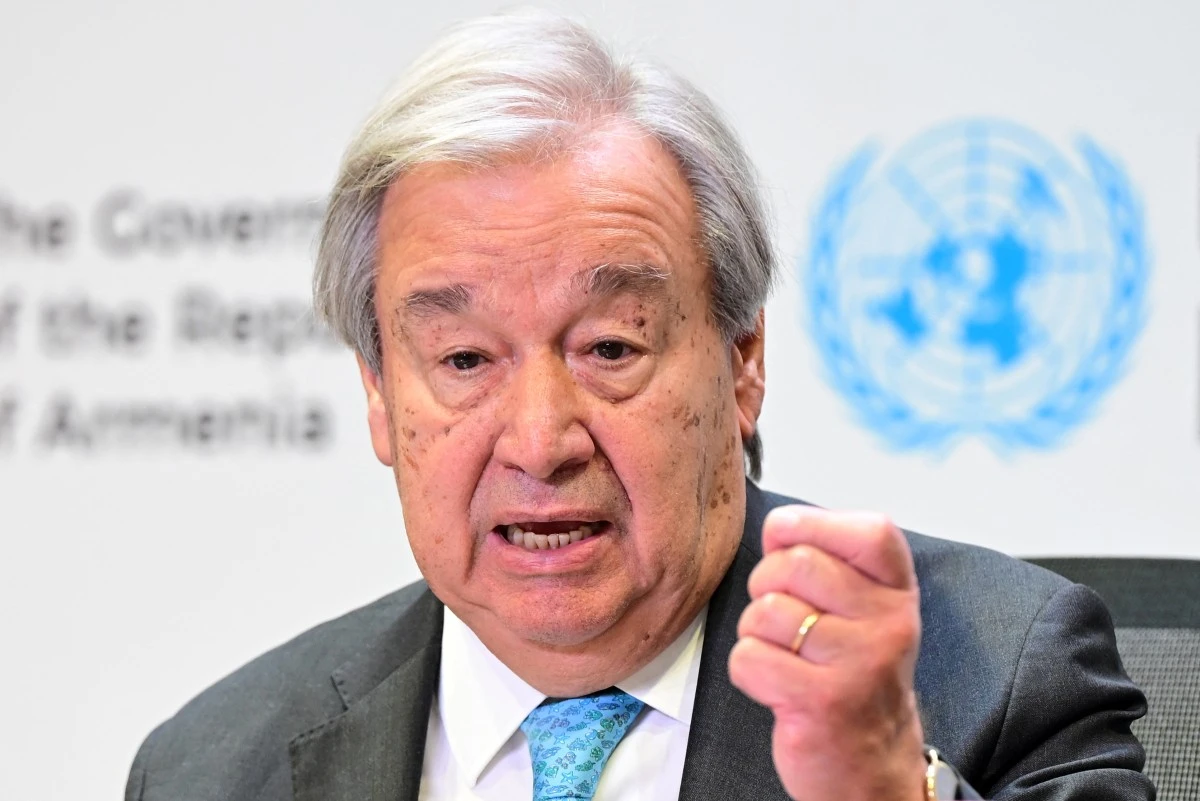
NEW YORK CITY: The UN secretary-general, Antonio Guterres, on Thursday condemned continuing Houthi attacks on civilian targets in Saudi Arabia as “totally unacceptable,” and warned that the escalation and spread of conflicts around the world was acting like “an El Nino of war,” sending economic shock waves far beyond battlefields and hitting the developing world hardest.
He told reporters at UN headquarters in New York that fighting in Yemen was escalating around the city of Taiz and elsewhere, inflicting “immense suffering on civilians” and adding to regional tensions.
“Hundreds of thousands in Yemen have been forcibly displaced and humanitarian needs are mounting,” he said. “We need restraint and Yemen needs a political horizon.”
Guterres said he spoke this week with the head of Yemen’s Presidential Leadership Council, and his special envoy was engaging with all parties in an effort to “to preserve the path for dialogue.”
He framed the Yemen crisis within a broader warning about conflicts around the world that were not only intensifying but expanding. He he likened the phenomenon to El Nino, the climate phenomenon in which a disturbance in one part of the planet can upend lives thousands of kilometers away.
“Conflict is feeding conflict and the consequences are traveling farther and faster,” Guterres said, adding that war moves “through energy markets, shipping lanes, supply chains and financial systems.
“The distance from the Strait of Hormuz to a family home or village market is shorter than we think.”
He linked such conflict-fueled shocks to protests over the rising cost of living in Europe and beyond, and to mounting pressure on ordinary people across the developing world as food, fuel and interest rates climb.
While he condemned violence and destruction on the streets in Europe amid protests as unacceptable, he urged governments not to let it “obscure the legitimate and very real grievances of the many peaceful protesters.”
The shocks, he said, were affecting “a world that is already profoundly unequal,” in which some families can absorb higher prices while others must choose between food and heat, and some countries can borrow cheaply while others must choose between servicing debt and investing in health and education.
War “feeds and exploits” these inequalities, Guterres said, exposing “the fundamental unfairness of an economic system that forces those with the least to absorb the greatest shocks.”
He accused parties to conflicts in a number of places, from the Middle East to Ukraine and Sudan, of deliberately thrusting civilians and civilian infrastructure into the line of fire, citing attacks on homes, hospitals, schools, airports, power stations and energy facilities. “Nothing seems to be off-limits,” he said, stressing that such attacks were prohibited under international law.
In the Occupied Palestinian Territories, Guterres said, Israel was still severely restricting the flow of essential aid into Gaza ahead of winter, and creating difficulties in efforts to implement the US-led Comprehensive Plan to End the Gaza Conflict that was endorsed by the UN Security Council.
In the occupied West Bank, he said, Palestinians faced daily attacks by Israeli settlers whose “clear goal is to drive communities off their land.”
He added: “Journalists are being attacked. Diplomats are being attacked. The situation is out of control.”
Guterres appealed to donors to respond to the World Food Programme’s urgent appeal for $450 million in funding to feed people in Gaza and the West Bank for the next six months, a sum he said was equivalent to about 90 minutes of global military spending.
He reiterated calls for a credible political path to end the occupation of Palestinian land and achieve a two-state solution.
Guterres said he would travel to Egypt on Friday carrying the same message: “We need to stop the widening of war, protect civilians and create the political space for diplomacy and peace.”
His remarks followed a sharp escalation in strikes by the Iran-backed Houthis against the Kingdom amid the wider conflict in the region. The Coalition to Restore Legitimacy in Yemen said last week that at least 19 people had been killed and 364 injured in Houthi attacks on Saudi airports, including King Khalid International Airport in Riyadh and Abha International Airport. Five Saudi airports had been targeted since Oct. 5, it added.