Sales of Scotland’s Islamic tartan surge amid questions of religious, national identity

Sales of Scotland’s Islamic tartan surge amid questions of religious, national identity
1 / 5
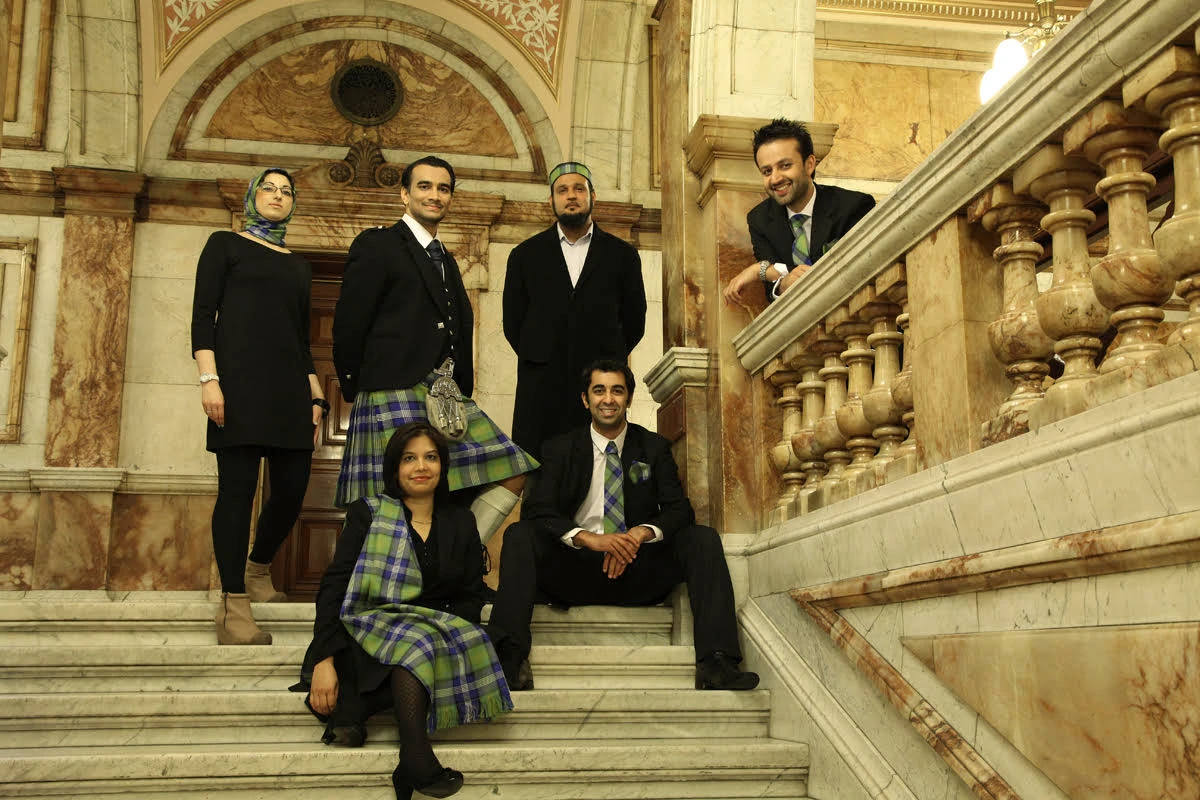
A specially designed Scottish Islamic tartan, released seven years ago, is having a revival in sales following questions of religious and national identity in Scotland. (Photo: Supplied/Azeem Ibrahim)
Sales of Scotland’s Islamic tartan surge amid questions of religious, national identity
2 / 5
A specially designed Scottish Islamic tartan, released seven years ago, is having a revival in sales following questions of religious and national identity in Scotland. (Photo: Supplied/Azeem Ibrahim)
Sales of Scotland’s Islamic tartan surge amid questions of religious, national identity
3 / 5
A specially designed Scottish Islamic tartan, released seven years ago, is having a revival in sales following questions of religious and national identity in Scotland. (Photo: Supplied/Azeem Ibrahim)
Sales of Scotland’s Islamic tartan surge amid questions of religious, national identity
4 / 5
A specially designed Scottish Islamic tartan, released seven years ago, is having a revival in sales following questions of religious and national identity in Scotland. (Photo: Supplied/Azeem Ibrahim)
Sales of Scotland’s Islamic tartan surge amid questions of religious, national identity
5 / 5
A specially designed Scottish Islamic tartan, released seven years ago, is having a revival in sales following questions of religious and national identity in Scotland. (Photo: Supplied/Azeem Ibrahim)
Updated 15 September 2019

Sales of Scotland’s Islamic tartan surge amid questions of religious, national identity

Sales of Scotland’s Islamic tartan surge amid questions of religious, national identity
  • Renewed interest comes at a time of increasing questions of identity
  • A Muslim academic created the design for fabric, traditionally associated with Scottish clans and institutions

LONDON: Sales of a specially designed Scottish Islamic Tartan are soaring thanks to a surge of interest linked to timely questions of religious and national identity.

The tartan was introduced seven years ago to stand alongside the traditional woolen fabrics that proudly represent Scottish clans and institutions. It was designed in 2012 by Scottish Muslim academic, and Arab News columnist, Dr. Azeem Ibrahim to celebrate the histories of Scotland and Islam, and highlight and promote the dual heritage of the two communities in an attempt “to overcome religious intolerance and cultural discrimination.”

The mill that weaves the Islamic tartan fabric said that sales have been steady since it was launched but suddenly increased in the past week after an image and details of the tartan went viral on social media.
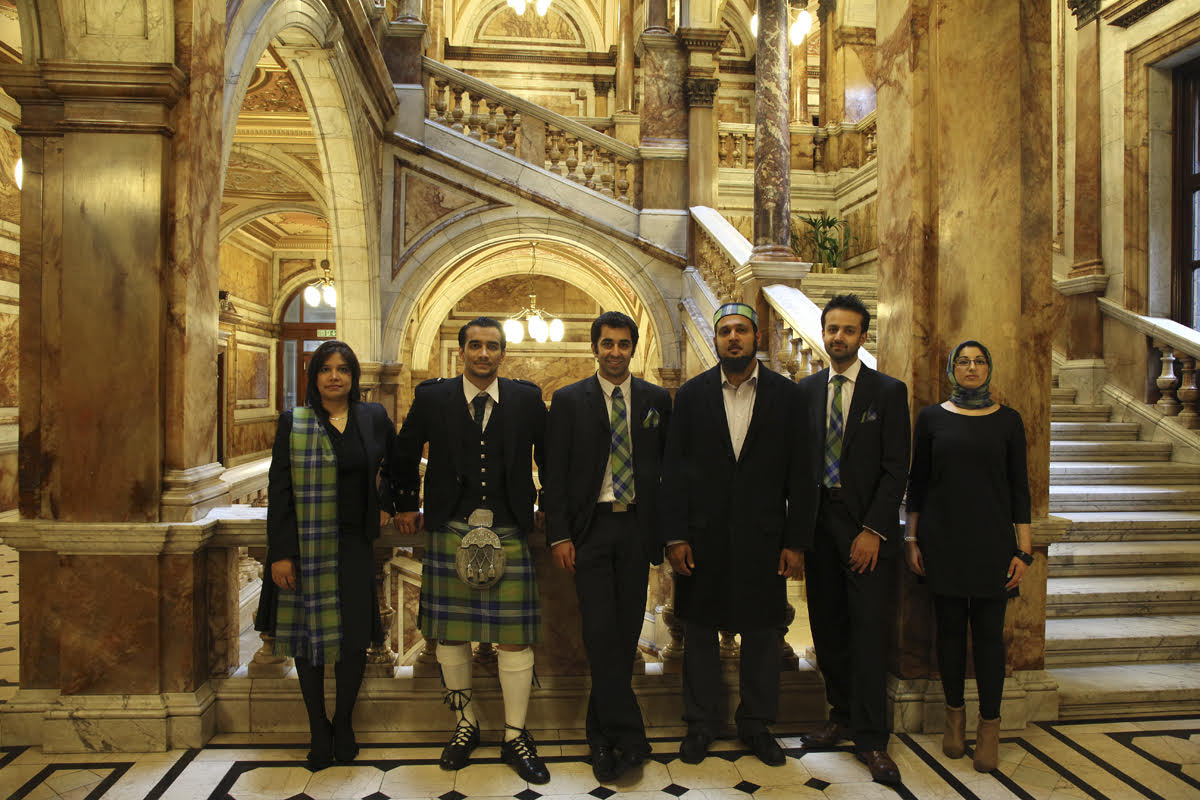


A specially designed Scottish Islamic tartan, released seven years ago, is having a revival in sales following questions of religious and national identity in Scotland. (Photo: Supplied/Azeem Ibrahim)

“The sale of most tartans is a steady trickle, generally, and we normally expect a few orders a week,” said Nick Fiddes, managing director of DC Dalgliesh and CLAN.com, which describes itself as the world’s only hand-crafted tartan mill. “The volume went up by four to six times, perhaps. It was very noticeable and we had no idea why at first. It was quite mysterious.”

The sudden interest came after Canadian academic Laura Morlock, who specializes in religious attire, posted a tweet on Sept. 5 about the tartan.

“Scotland has officially created a tartan to honor its Muslim citizens,” she wrote. Despite coming seven years after the launch of the fabric, the post was retweeted 13,000 times and liked by more than 50,000 people.

Morlock said the response to her post suggested that drawing attention to the tartan must have resonated at a time when Muslim communities in the West, and particularly the US, are feeling more isolated.

“I think people responded differently to learning about this because it hits a nerve at a time when hate crimes (particularly those against religious communities) are on the rise, and the news is full of federally mandated nationalistic cruelty around the globe,” she wrote in her blog.

Fiddes said the tartan is part of a Scottish-Islamic venture that aims to bring the two communities closer together.

“This is one thing I love about tartans,” he said. “It is saying that Muslims are a part of Scotland too, due to cultural significance.”

Tartans are produced in a variety of colors and patterns of criss-crossed horizontal and vertical lines and stripes, and form part of Scotland’s national dress, most notably in the kilt.

“The Islamic tartan was essentially the Scottish-Muslim identity being weaved together in the same way that the tartan is weaved together through its strands,” said Ibrahim, who is director at the Center for Global Policy in Washington.

Muslims have been coming to Scotland since the late 18th century, when sailors from India, Pakistan, Yemen and Malaysia began to arrive in Glasgow on merchant ships. The Muslim population grew substantially after World War II, and a 2001 census indicated that 42,550 Muslims lived in Scotland at that time. Today the figure is estimated to be about 75,000.

FASTFACT

Theological explanation

The tartan design incorporates several Islamic and Scottish elements - the blue represents the Scottish flag (Saltire) and green represents the color of Islam. Five white lines represent the five pillars, six gold lines represent the six articles of faith and a black square for the Kaaba.

In designing a tartan for this community, Ibrahim consulted some of the top tartan designers in the country. The theological explanation behind the final design is that it incorporates several Islamic and Scottish elements. The blue in the pattern represents the Saltire, Scotland’s national flag, and green represents the color of Islam. There are five white lines to represent the five pillars of Islam, and six gold lines representing the six articles of faith. A black square represents the Kaaba in the Great Mosque in Makkah.

At the time the tartan was launched, there was a debate about independence for Scotland, and a national referendum on the question of splitting from the rest of the UK was held two years later.

The Islamic tartan brought “a new focus to what it means to be a Scot,” Ibrahim wrote in 2012. “Muslim communities in Scotland are particularly sensitive to the complexities of culture, race and religion that are perceived as an integral part of Scottishness,” he added.

“Therefore the idea of a Scottish Islamic Tartan seemed to me to be the perfect symbol of the future generation in particular, for the younger, educated Muslims caught between two cultures: East and West, traditional and modern. Instead of conflict, the tartan represents a tightly woven blend of tradition and heritage.”
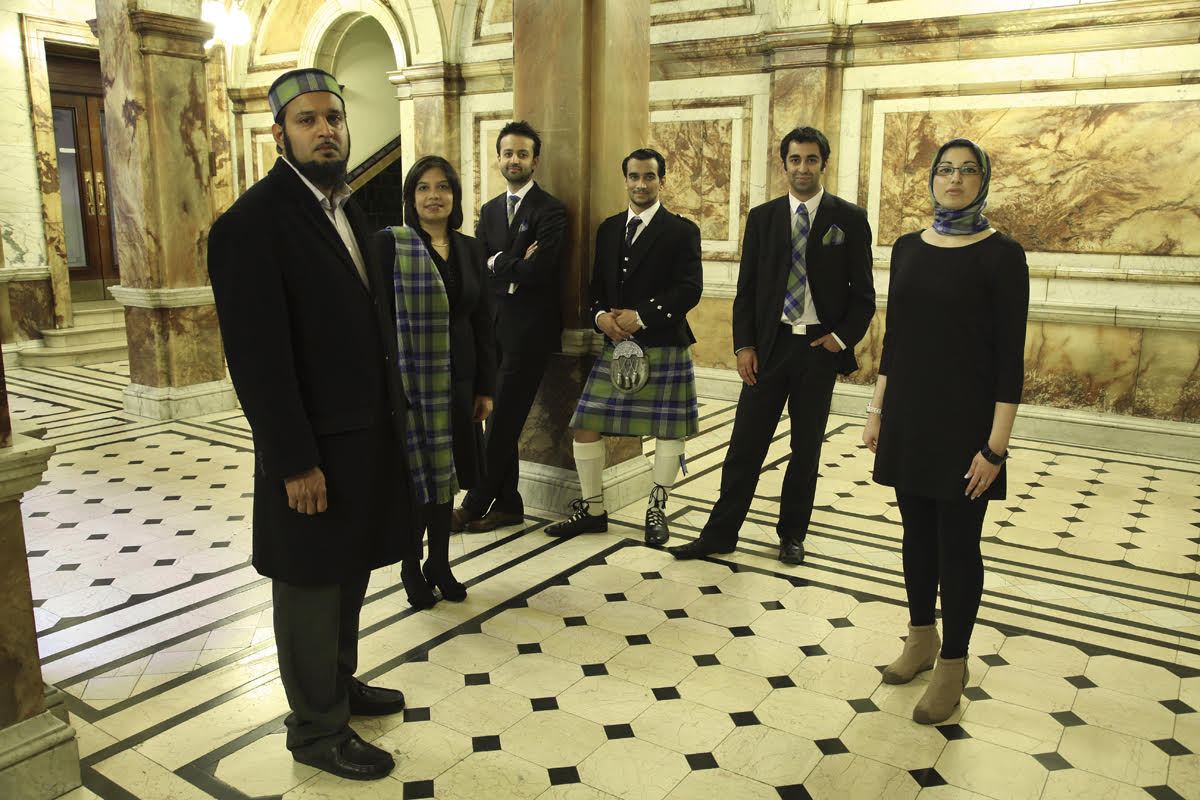


A specially designed Scottish Islamic tartan, released seven years ago, is having a revival in sales following questions of religious and national identity in Scotland. (Photo: Supplied/Azeem Ibrahim)

Ibrahim was initially puzzled as to why interest in the tartan is on the rise now.

“I think it is something that nobody ever understands, when things will go viral,” he said. “A couple of people tweeted it and then it became absolutely nuts and it has gone all over the world.”

The boost in the profile of the tartan comes at a time when the United Kingdom is preparing for its departure from the European Union. Many believe this increases the likelihood of a renewed push for Scottish independence, given that Scotland voted overwhelmingly in the 2016 UK referendum on Brexit to remain in the EU.

“There’s certainly much more interest in people’s identities and people’s affiliations and how people feel about their personal (sense of) belonging: what exactly they belong to,” said Ibrahim.

The Islamic tartan was not introduced for commercial purposes, he added, but rather as a public-relations exercise “to celebrate Scottish-Islamic identity as these two civilizations have made an immense contribution to humanity.”

Ibrahim said he has presented a number of scarfs and ties from the Islamic tartan to world leaders and dignitaries, including Pakistani Prime Minister Imran Khan, Malaysian politician Anwar Ibrahim and former Nigerian President Olusegun Obasanjo, and many others.

One of the people who appeared in the original promotional images for the tartan's launch in 2012 was Scottish National Party politician Humza Yousaf, who is now Scotland’s justice minister.

It was "an importantly symbolic initiative that brought together the various strands of our multifaceted identities as Scots, Muslims, etc.,” he said.

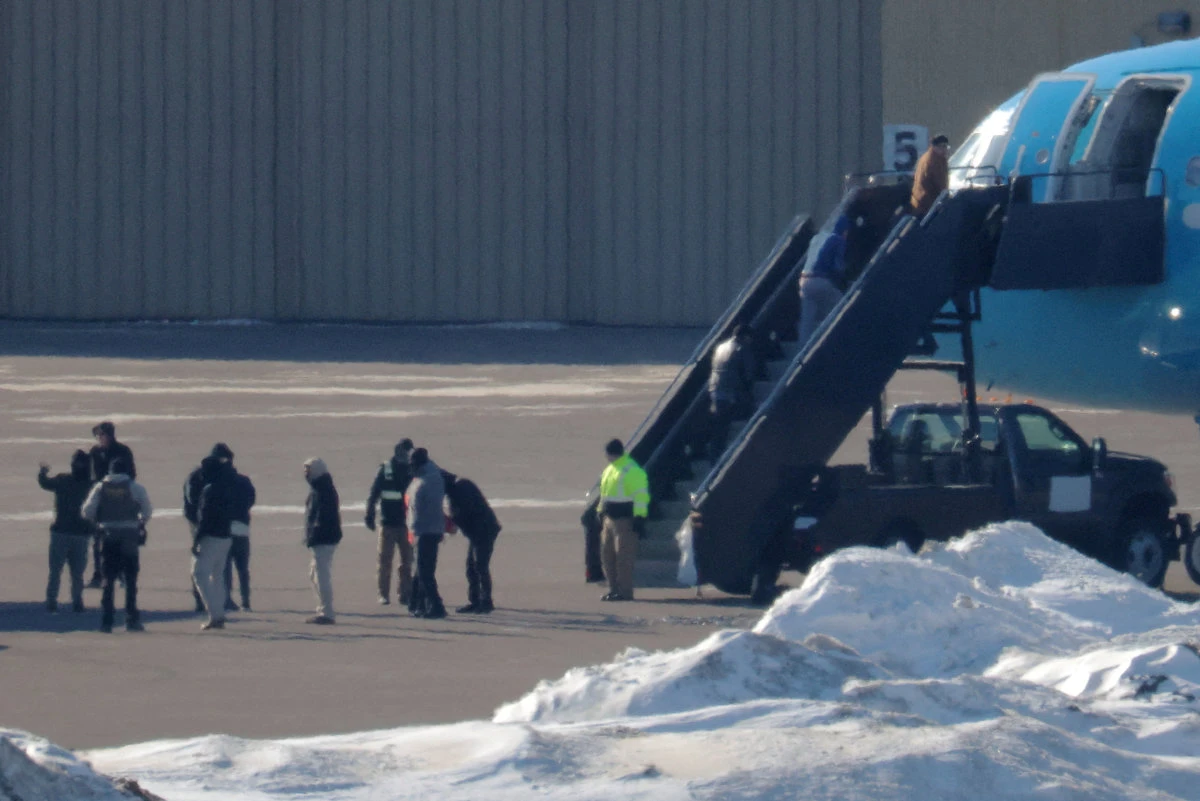
‘Democracy prevailed,’ Biden says after US Electoral College confirms his win

Updated 15 December 2020

‘Democracy prevailed,’ Biden says after US Electoral College confirms his win

‘Democracy prevailed,’ Biden says after US Electoral College confirms his win

LANSING, Michigan/WILMINGTON, Delaware: Democrat Joe Biden called on Americans to “turn the page” on the Trump era in a prime-time speech on Monday, hours after prevailing over the Republican in the state-by-state Electoral College vote that officially determines the US presidency.
The vote, typically a formality, assumed outsized significance in light of President Donald Trump’s extraordinary effort to subvert the process due to what he has falsely alleged was widespread voter fraud in the Nov. 3 election.
Some Trump supporters had called for protests on social media, and election officials had expressed concern about the potential for violence amid the president’s heated rhetoric. But Monday’s vote proceeded smoothly, with no major disruptions.
California, the most-populous US state, put Biden over the 270 votes needed to win the Electoral College when its 55 electors unanimously cast ballots for him and his running mate, Kamala Harris. Biden and Harris — the first woman, first Black person and first Asian American to become vice president-elect — will be sworn in on Jan. 20.
Biden earned 306 electoral votes in November compared with 232 for Trump.
“The flame of democracy was lit in this nation a long time ago,” he said in his speech to mark his Electoral College victory. “And we now know that nothing — not even a pandemic — or an abuse of power — can extinguish that flame.
“In this battle for the soul of America, democracy prevailed.”
Under a complicated system dating back to the 1780s, a candidate becomes US president not by winning the popular vote but through the Electoral College system, which allots electoral votes to the 50 states and the District of Columbia based on congressional representation. (Here’s a graphic on how the Electoral College works: https://tmsnrt.rs/3lUKcgv)
In 2016, Trump defeated Democrat Hillary Clinton despite losing the national popular vote by nearly 3 million ballots. Biden won the popular vote in November by more than 7 million votes.
Electors are typically party loyalists who are unlikely to break ranks, although there are sometimes a handful of electors who cast ballots for someone other than the winner of their states. In 2016, for instance, seven electors went “rogue,” a historically unusual number but still far from enough to change the outcome.
Few observers had expected Monday’s vote to alter the election’s outcome. With Trump’s legal challenges floundering, the president’s dim hopes of clinging to power rest in persuading Congress not to certify the Electoral College vote in a special Jan. 6 session — an effort almost certain to fail.
Trump had also pressured Republican lawmakers in battleground states that Biden won, such as Pennsylvania and Michigan, to set aside the vote totals and appoint their own competing slates of electors. But lawmakers largely dismissed the notion.
“I fought hard for President Trump. Nobody wanted him to win more than me,” Lee Chatfield, Republican speaker of the Michigan House of Representatives, said in a statement. “But I love our republic, too. I can’t fathom risking our norms, traditions and institutions to pass a resolution retroactively changing the electors for Trump.”
In Arizona, at the beginning of the electors’ meeting there, the state’s Democratic secretary of state, Katie Hobbs, said Trump’s claims of fraud had “led to threats of violence against me, my office and those in this room today,” echoing similar reports of threats and intimidation in other states.
“While there will be those who are upset their candidate didn’t win, it is patently un-American and unacceptable that today’s event should be anything less than an honored tradition held with pride and in celebration,” Hobbs said.
A group of Trump supporters called on Facebook for protests all day on Monday in Lansing, Michigan, outside the state Capitol, which was closed to the public as a security precaution.
But by early afternoon, only a handful had gathered, including Bob Ray, 66, a retired construction worker. He held a sign that read: “Order a forensic audit,” “save America” and “stop communism.”
Electors received a police escort to and from the building. One elector, Marseille Allen, told MSNBC she wore a bulletproof vest at the urging of family and friends.
A small group of Republicans who claimed to be electors for their party sought to gain access to the Capitol building as the proceedings were getting under way but were refused entry by police.
They asked for a slate to be delivered to Democratic Governor Gretchen Whitmer, but the officer at the door told them he would not deliver the paperwork and that they should contact the officials independently.
Trump said late last month he would leave the White House if the Electoral College voted for Biden, but he has since shown little interest in conceding. On Monday, he repeated a series of unsupported claims.
“Swing States that have found massive VOTER FRAUD, which is all of them, CANNOT LEGALLY CERTIFY these votes as complete & correct without committing a severely punishable crime,” he wrote on Twitter.
Trump’s sole remaining gambit is to convince Congress to reject the results in January.
Under federal law, any member of Congress may object to a particular state’s electoral count during the Jan. 6 session. Each chamber of Congress must then debate the challenge before voting by simple majority on whether to sustain it.
The Democratic-controlled House of Representatives is sure to reject any such challenge, while senior Senate Republicans in the Senate on Monday dismissed the idea of overturning the result.