- First 14 refugees include people who fled from Lebanon, Iran, Sudan, Myanmar
- Britain’s National Health Service suffers from chronic shortage of nursing staff
LONDON: Nurses from refugee backgrounds are being recruited to work in English hospitals on a fast-track scheme to help the country against COVID-19.
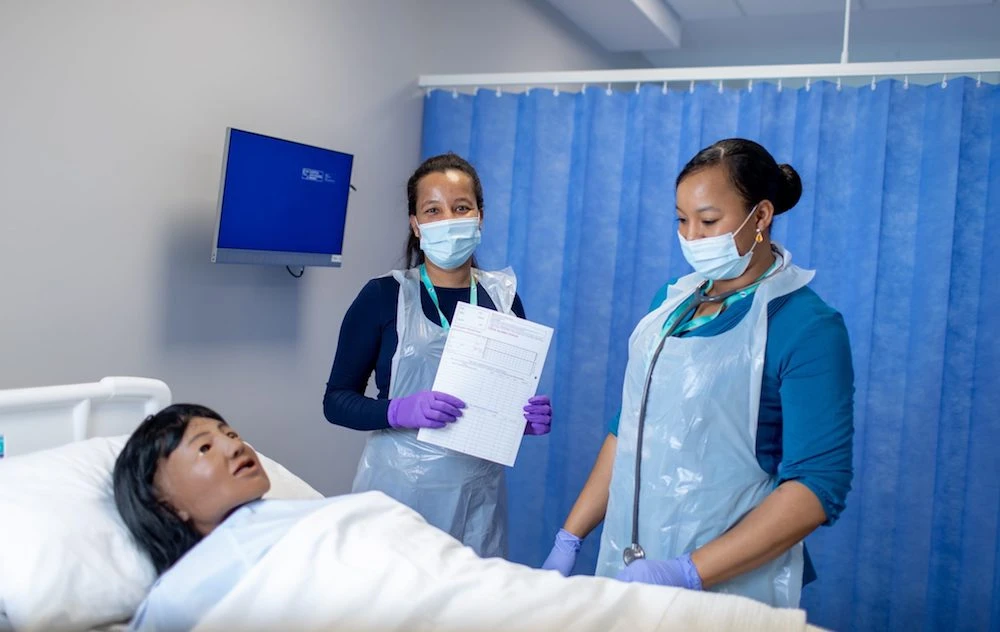
The first-of-its-kind scheme, piloted in St. John’s Hospital in Liverpool, provides a four-week training course to bring refugee nurses up to speed with British practices, before introducing them to the workforce.
Under current rules, nurses who have fled their homeland and arrived in the UK are not allowed to practice their craft while their application for refugee status is being processed — this can sometimes take months or years.
The new course helps nurses who have arrived in the UK to re-enter the workforce, and props up the number of nurses working for the National Health Service (NHS).
Run in partnership with charity Refuaid, the first 14 refugees include people who have fled Lebanon, Iran, Sudan, Myanmar and elsewhere.
Walid Jarad, 31, a Palestinian from Lebanon, had worked as a nurse in an intensive care unit for six years, but had been unable to work for the last year while applying for asylum in Britain.
“I have so much experience in exactly the area that was needed,” he told the BBC. “I’ve worked with so many isolated patients in intensive care respiratory units. My experience is completely relevant and I just couldn’t use it.”
Having completed the four-week course, he said it felt “totally amazing” to be back doing the job he loves.
Ruth May, chief nursing officer for England, said: “I am delighted to welcome these healthcare workers into the NHS, and incredibly proud of the work they have done over recent weeks and months to prepare for the challenge.”
The NHS suffers from a chronic shortage of nursing staff — a situation that became particularly acute during the height of the pandemic.
The vacancy rate for registered nurses exceeded 10 percent in June, and registered nurses accounted for 45 percent of all vacancies in NHS hospitals in England.
May said: “While the NHS will provide a safe and secure place to work, the public and patients will benefit from the skills and expertise these individuals can bring, and I hope this pilot cohort will build the way for hundreds more refugees to become part of our NHS family.”