Expo 2025 Osaka spotlights Saudi handicrafts

The Cultural Development Fund hosted activities from Aug. 22–23 at the Kingdom’s pavilion at Expo 2025 Osaka, in Japan. (SPA)
1 / 2
The Cultural Development Fund hosted activities from Aug. 22–23 at the Kingdom’s pavilion at Expo 2025 Osaka, in Japan. (SPA)
2 / 2
The Cultural Development Fund hosted activities from Aug. 22–23 at the Kingdom’s pavilion at Expo 2025 Osaka, in Japan. (SPA)
Short Url
Updated 24 August 2025
Follow

Expo 2025 Osaka spotlights Saudi handicrafts

The Cultural Development Fund hosted activities from Aug. 22–23 at the Kingdom’s pavilion at Expo 2025 Osaka, in Japan. (SPA)
  • These included an investor-focused workshop on financing solutions, and an interactive handicrafts experience

RIYADH: The Cultural Development Fund hosted activities from Aug. 22–23 at the Kingdom’s pavilion at Expo 2025 Osaka, in Japan.

These included an investor-focused workshop on financing solutions, and an interactive handicrafts experience.

The events, which were attended by Ghazi Faisal Binzagr, the Saudi ambassador to Japan and commissioner general of the pavilion, highlighted the Kingdom’s Year of Handicrafts on the global stage, the Saudi Press Agency reported.

The workshop, “Saudi Cultural Development Fund: Driving Innovative Business Solutions,” welcomed entrepreneurs and international investors and provided an overview of the fund’s role as the Kingdom’s key financial enabler for the cultural sector.

The session showcased Saudi Arabia’s thriving cultural landscape, inviting participants to explore the fund’s support offerings and join the Kingdom’s journey of cultural growth.

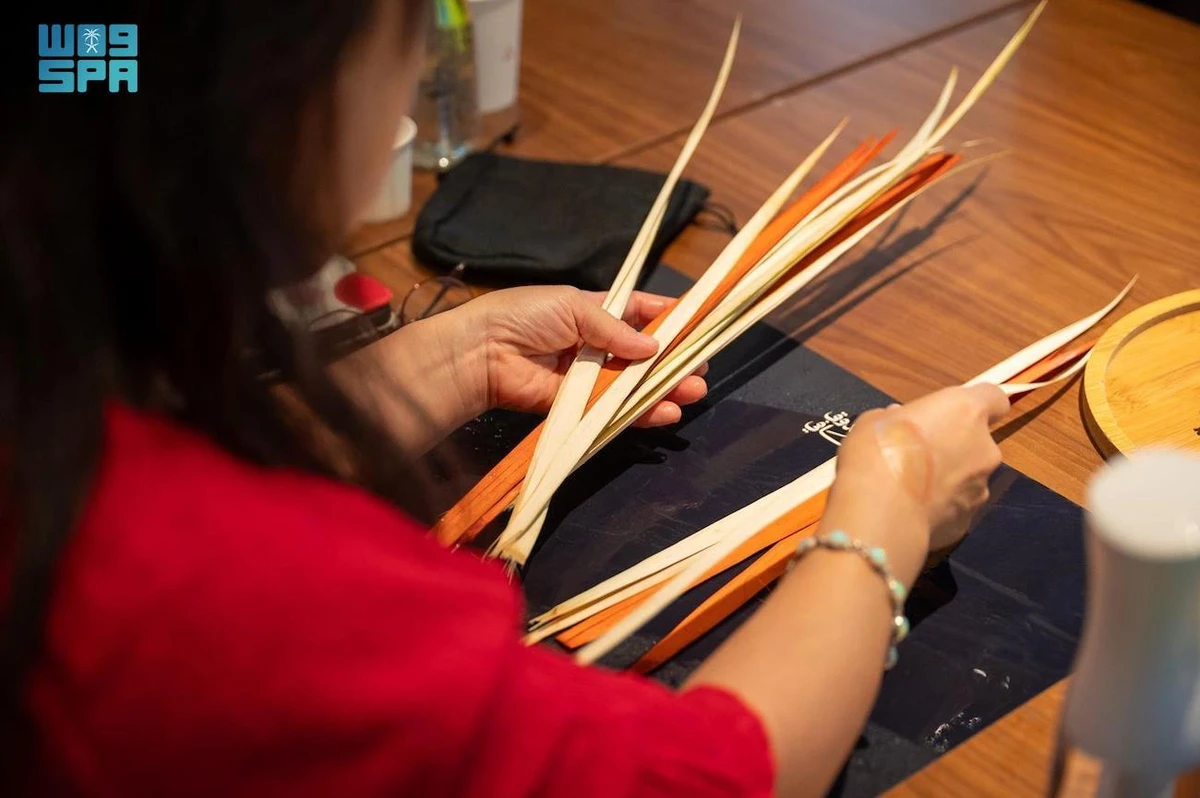
The handicrafts activity, “Saudi Handicraft: Palm Weaving,” demonstrated the Kingdom’s living heritage through a collaboration with Madrasat Addeera, which trains artisans in AlUla, and Turquoise Mountain, a global leader in preserving traditional arts.

Visitors learned about the artistry of palm-frond weaving: the crafting of unique pieces from Saudi palm leaves in an experience symbolizing cultural harmony.

The fund’s participation at Expo 2025 Osaka aims to spotlight the Kingdom’s cultural identity, showcase sector growth under Vision 2030, attract global investment, and encourage innovation and entrepreneurship in the creative industries.


Saudi researchers develop AI system for camel herders

Saudi researchers develop AI system for camel herders
Updated 14 November 2025
Follow

Saudi researchers develop AI system for camel herders

Saudi researchers develop AI system for camel herders
  • AI-powered drone system can recognize and track camels from the air 
  • Prof. Basem Shihada and his team at KAUST developed the low-cost system

RIYADH: A research team at King Abdullah University of Science and Technology has created a low-cost, AI-powered drone system that can recognize and track camels from the air.

The system promises an affordable option for camel herders to continue one of Saudi Arabia’s oldest labors and for scientists to learn more about camel migration patterns and habits, according to a KAUST press release.

Created by Professor Basem Shihada and his labmates, the system uses inexpensive commercial drones and cameras to enable camel herders to track their camels in real time without relying on expensive GPS collars or satellite connections.

The team used a single drone-mounted camera to capture aerial footage of small camel herds in Saudi Arabia, then trained their AI model using machine learning. The model revealed new insights into the animals’ behaviors.

“We found their migration patterns were not random but showed identifiable patterns,” said KAUST scientist Chun Pong Lau, who was also involved in the project.

The release added that camels, especially elders, showed coordinated grazing migration, covering long distances throughout the day, but always returned to their herder by sunset. They also showed high sensitivity to the drone’s sound, which is why the KAUST scientists kept the drone at least 120 meters above the ground.

For centuries, camels have been central to Arabian life by providing transport, food and a cultural link to the desert. Today, they contribute more than SR2 billion ($534 million) annually to the Saudi economy through industries such as food, textiles and tourism.

However, herding remains a challenge, with camels roaming up to 50 km a day across isolated terrain. This mobility often leads to road accidents, overgrazing and loss of livestock.

As a next step, Shihada and his colleagues plan to collect video of larger camel herds of more heterogeneous sizes and colors to train their AI system for higher performance.