Israel’s Supreme Court says government is not giving Palestinian prisoners enough food

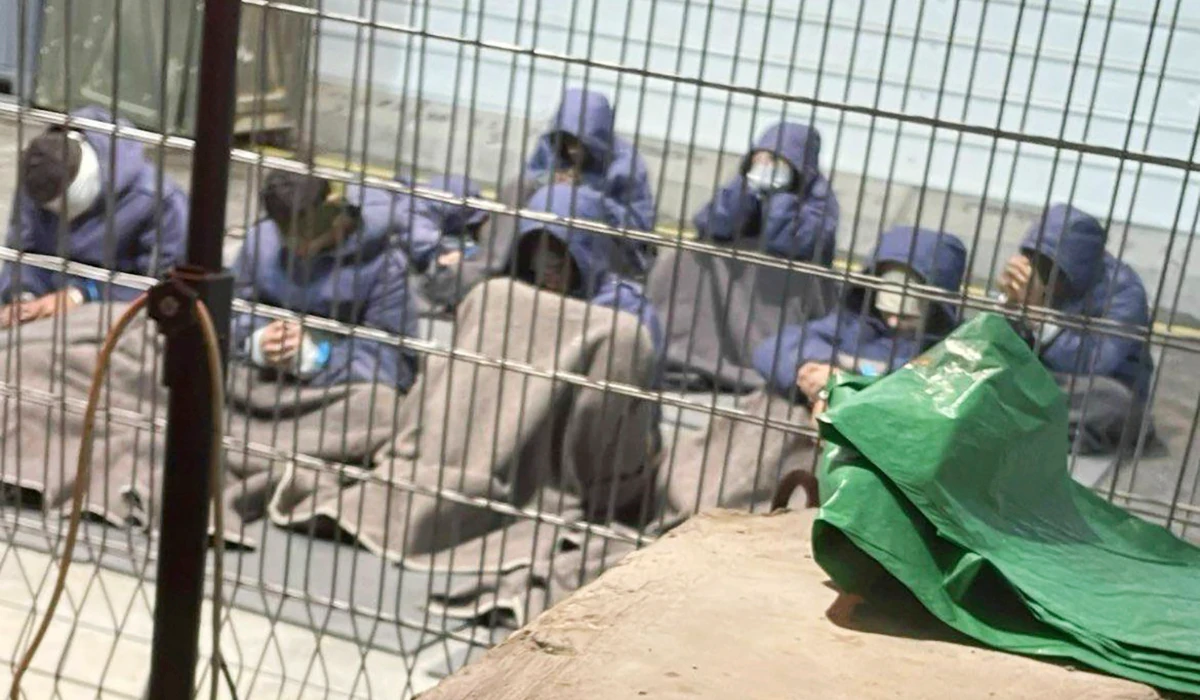
This undated photo from Winter 2023 provided by Breaking The Silence, a whistleblower group of former Israeli soldiers, shows Palestinian prisoners captured in the Gaza Strip by Israeli forces at a detention facility on the Sde Teiman military base in southern Israel. (AP)
Short Url
Updated 08 September 2025
Follow

Israel’s Supreme Court says government is not giving Palestinian prisoners enough food

Israel’s Supreme Court says government is not giving Palestinian prisoners enough food
  • In March, a 17-year-old Palestinian boy died at an Israeli prison and doctors said starvation was likely the main cause of death
  • In Sunday’s ruling, the panel of three justices ruled unanimously that the state is legally obligated to provide prisoners with enough food to ensure “a basic level of existence”

TEL AVIV, Israel: Israel’s Supreme Court on Sunday ruled that the government has failed to provide Palestinian security prisoners with adequate food for basic subsistence and ordered authorities to improve their nutrition.
The decision was a rare case in which the country’s highest court ruled against the government’s conduct during the nearly two-year war.
Since the war began, Israel has seized thousands of people in Gaza that it suspects of links to Hamas. Thousands have also been released without charge, often after months of detention.
Rights groups have documented widespread abuse in prisons and detention facilities, including insufficient food and health care, as well as poor sanitary conditions and beatings. In March, a 17-year-old Palestinian boy died at an Israeli prison and doctors said starvation was likely the main cause of death.
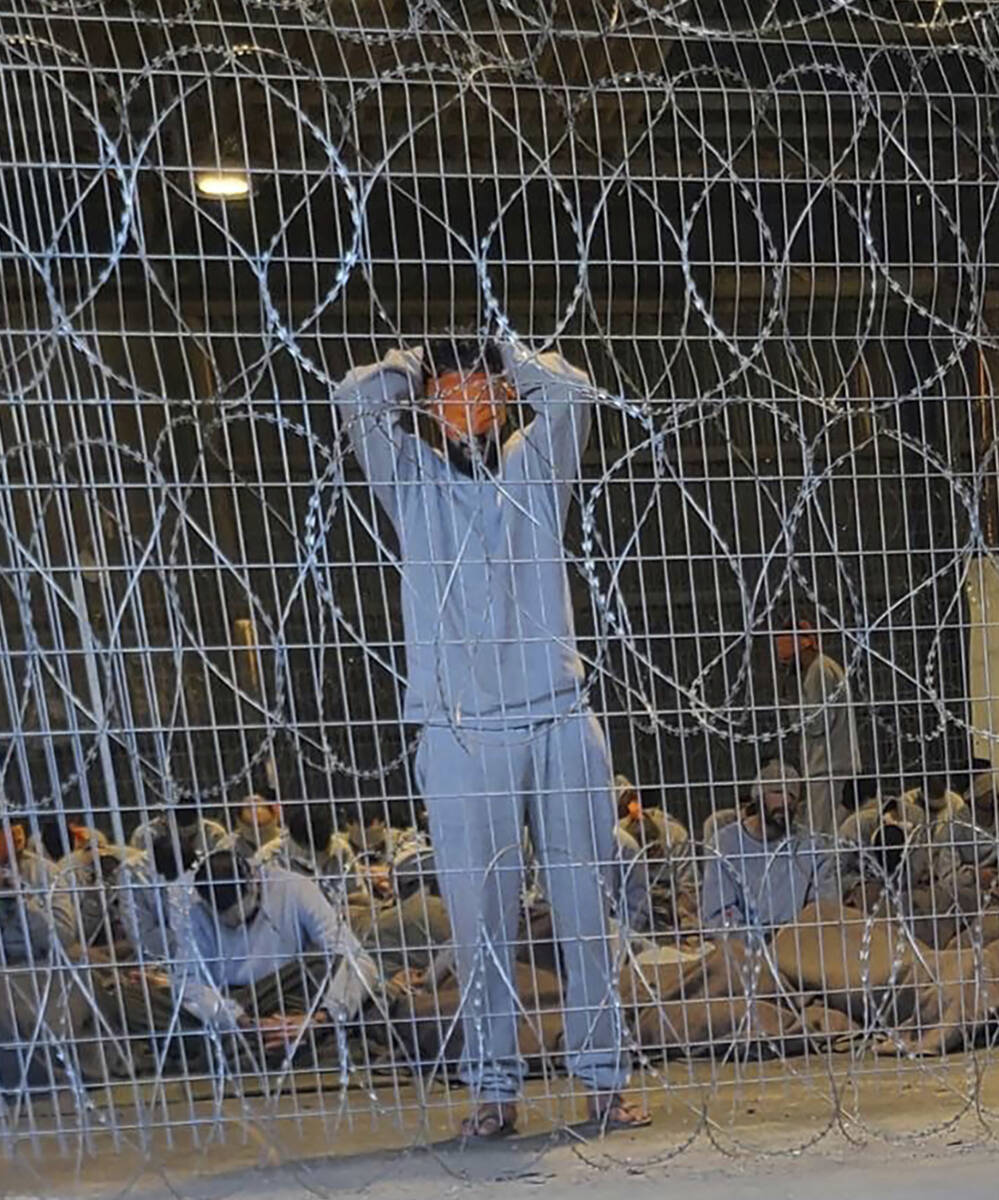


This undated photo from Winter 2023 provided by Breaking The Silence shows blindfolded Palestinian prisoners captured in the Gaza Strip by Israeli forces at a detention facility on the Sde Teiman military base in southern Israel. (AP)

Sunday’s ruling came in response to a petition brought last year by the Association for Civil Rights in Israel and the Israeli rights group Gisha. The groups alleged that a change in the food policy enacted after the war in Gaza began has caused prisoners to suffer malnutrition and starvation.
Last year, National Security Minister Itamar Ben-Gvir, who oversees the prison system, boasted that he had reduced the conditions of security prisoners to what he described as the bare minimum required by Israeli law.
In Sunday’s ruling, the panel of three justices ruled unanimously that the state is legally obligated to provide prisoners with enough food to ensure “a basic level of existence.”
In the 2-1 ruling, the justices said they found “indications that the current food supply to prisoners does not sufficiently guarantee compliance with the legal standard.” They said they had found “real doubts” that prisoners were eating properly, and ordered the prison service to “take steps to ensure the supply of food that allows for basic subsistence conditions in accordance with the law.”
Ben-Gvir, who leads a small far-right ultranationalist party, lashed out at the ruling, saying that while Israeli hostages in Gaza have no one to help them, Israel’s Supreme Court “to our disgrace” is defending Hamas militants. He said the policy of providing prisoners with “the most minimal conditions stipulated by the law” would continue unchanged.
ACRI called for the verdict to be implemented immediately. In a post on X, it said the prison service has “turned Israeli prisons into torture camps.”
“A state does not starve people,” it said. “People do not starve people — no matter what they have done.”



UN secretary-general warns that war in Sudan is ‘spiraling out of control’

UN secretary-general warns that war in Sudan is ‘spiraling out of control’
Updated 6 sec ago
Follow

UN secretary-general warns that war in Sudan is ‘spiraling out of control’

UN secretary-general warns that war in Sudan is ‘spiraling out of control’
DUBAI: The United Nations secretary-general warned Tuesday that the war in Sudan is “spiraling out of control” after a paramilitary force seized the Darfur city of el-Fasher.
Speaking at a U.N. summit in Qatar, António Guterres offered a stark warning about el-Fasher and called for an immediate ceasefire in the two-year conflict that's become one of the world's worst humanitarian crises.
“Hundreds of thousands of civilians are trapped by this siege,” Guterres said. “People are dying of malnutrition, disease and violence. And we are hearing continued reports of violations of international humanitarian law and human rights.”
He added that there also were “credible reports of widespread executions since the Rapid Support Forces entered the city.”
U.N. officials have warned of a rampage by the paramilitary Rapid Support Forces after it took over the city of el-Fasher, reportedly killing more than 450 people in a hospital and carrying out ethnically targeted killings of civilians and sexual assaults.
The RSF has denied committing atrocities, but testimonies from those fleeing, online videos and satellite images offer an apocalyptic vision of the aftermath of their attack. The full scope of the violence remains unclear because communications are poor in the region.
The RSF besieged el-Fasher for 18 months, cutting off much of the food and other supplies needed by tens of thousands of people. Last week, the paramilitary group seized the city.
Asked if he thought there was a role for international peacekeepers in Sudan, Guterres said it was important to “gather all the international community and all those that have leverage in relation to Sudan to stop the fighting.”
“One thing that is essential to stop the fighting is to make sure that no more weapons come into Sudan,” he said. “We need to create mechanisms of accountability because the crimes that are being committed are so horrendous.”
The war between the RSF and the Sudanese military has been tearing apart Sudan since April 2023. More than 40,000 people have been killed, according to U.N. figures, but aid groups say the true death toll could be many times higher. The fighting has driven more than 14 million people from their homes and fueled disease outbreaks. Meanwhile, two regions of war-torn Sudan are enduring a famine that is at risk of spreading.
“It is clear that we need a ceasefire in Sudan,” Guterres said. “We need to stop this carnage that is absolutely intolerable.”