Trump administration places new restrictions on Harvard, citing financial concerns

Trump administration places new restrictions on Harvard, citing financial concerns
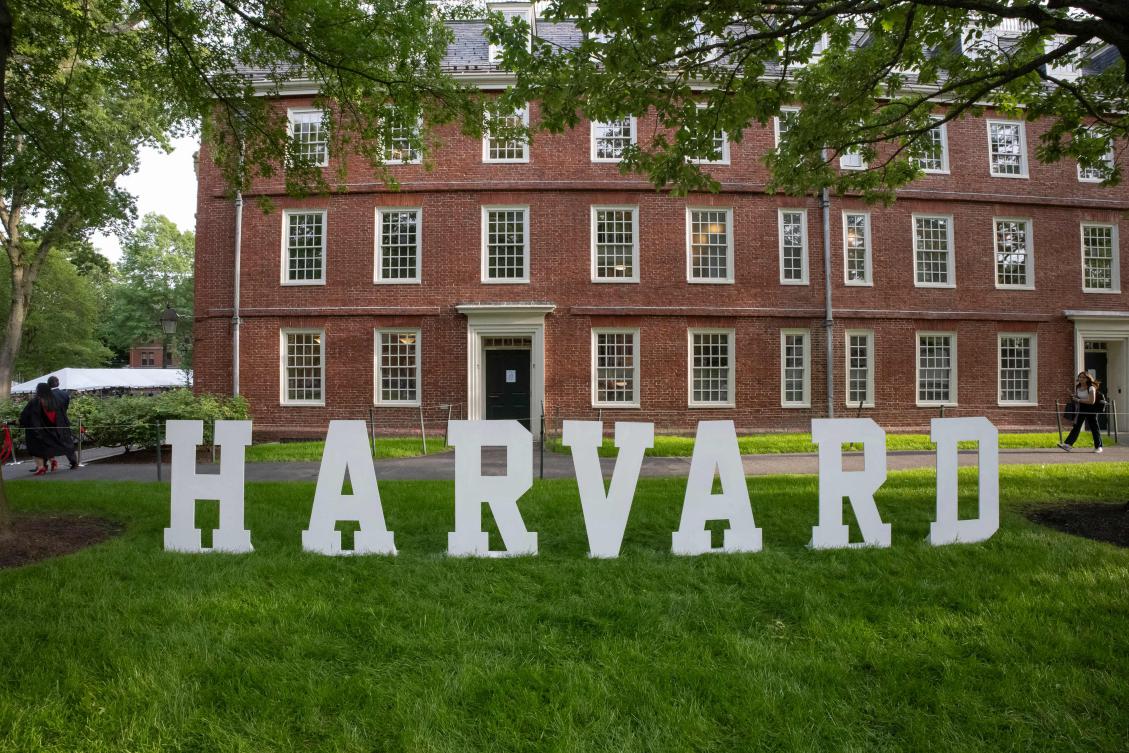
(FILES) A Harvard sign is seen at the Harvard University campus in Boston, Massachusetts, on May 27, 2025. (AFP)
Short Url
Updated 20 September 2025
Follow

Trump administration places new restrictions on Harvard, citing financial concerns

Trump administration places new restrictions on Harvard, citing financial concerns
  • Trump has cracked down on universities over a range of issues
  • Government and Harvard have engaged in settlement talks
  • Government has reached settlements with Columbia and Brown universities

BOSTON/WASHINGTON: President Donald Trump’s administration escalated its campaign against Harvard University on Friday, placing new restrictions on the Ivy League school’s ability to access federal funds for student aid, citing concerns about the “financial position” of the oldest and richest university in the United States.
The Department of Education said it had placed Cambridge, Massachusetts-based Harvard on “heightened cash monitoring” status, a shift from the typical practice that will force it to use its own funds to disburse federal student aid before drawing down funds from the department.
Trump has cracked down on universities and threatened to cut federal funding over a range of issues like pro-Palestinian protests against US ally Israel’s assault on Gaza, transgender policies, climate initiatives and diversity, equity and inclusion programs.
The Education Department is also seeking to have Harvard post a letter of credit for $36 million to ensure its financial obligations are met. In a letter, it said recent events raised concerns about Harvard’s finances, citing its decision to issue bonds and conduct layoffs amid its conflict with the White House.
The Education Department said Harvard was at risk of losing access to all federal student aid funding by not complying with requests for records from its Office of Civil Rights, which a separate letter warned may pursue an enforcement action.
That office has been reviewing whether Harvard still considers race in its undergraduate admissions process even after the US Supreme Court in 2023 ruled that affirmative action practices that schools relied on to boost enrollment of racial minorities were unlawful.
Harvard did not respond to requests for comment.
The government in July settled its federal investigations with Columbia University, which agreed to pay more than $220 million to the government, and Brown University, which said it will pay $50 million to support local workforce development. Both accepted certain government demands.
The Trump administration has been seeking a settlement with Harvard. Trump has said Harvard should pay “nothing less than $500 million.”
The government had separately proposed settling its probe into the University of California, Los Angeles through a $1 billion payment from the university. California Governor Gavin Newsom called that offer an extortion attempt. The government froze nearly $600 million in funding for UCLA, the university said in August.

Protest rules at UCLA amid Trump crackdown
UCLA unveiled new protest rules on Friday that formalized interim policies put in place in September 2024. UCLA experienced large demonstrations last year and a violent attack by a pro-Israeli mob on a pro-Palestinian encampment.
The policies unveiled on Friday at UCLA include measures that restrict unauthorized encampments, ban masks or face coverings for those who violate rules and make outdoor spaces off-limits for demonstrations that are not pre-approved.
UCLA says it will allow pre-approved overnight events and outlined some designated areas for public expression for which prior approval was not needed. Policy violations could lead to disciplinary action or even arrest, UCLA said.
The University of California system, of which UCLA is a part, has called this period one of the gravest threats in the institution’s history.
Harvard, which has a $53 billion endowment, has not suggested it was on the verge of financial catastrophe but it has cut spending after Trump’s administration launched a campaign to leverage federal funding to force change at it and other universities, which the president says are gripped by “radical left” ideologies.
In particular Trump has alleged universities allowed antisemitism during last year’s campus protests. Protesters, including some Jewish groups, say the government wrongly equates their criticism of Israel’s assault on Gaza and its occupation of Palestinian territories with antisemitism and their advocacy for Palestinian rights with support for extremism.
Harvard in July said the combined impact of recent federal actions on its budget could approach $1 billion annually. It has sued over some of those actions, leading a judge this month to rule the administration had unlawfully terminated more than $2 billion in research grants awarded to Harvard.


Germany’s Merz calls for repatriation of Syrians as far-right surges

Germany’s Merz calls for repatriation of Syrians as far-right surges
Updated 55 min 6 sec ago
Follow

Germany’s Merz calls for repatriation of Syrians as far-right surges

Germany’s Merz calls for repatriation of Syrians as far-right surges
  • “There are now no longer any grounds for asylum in Germany, and therefore we can also begin with repatriations,” Merz said
  • The party has campaigned on an anti-migrant platform and argues that Islam is incompatible with German society

BERLIN: Syrians no longer have grounds for asylum in Germany now the civil war in their country is over, German Chancellor Friedrich Merz said, as his conservatives seek to fend off a surging far-right ahead of a slew of state elections next year.
Germany was the EU country that took in the largest number of refugees from the 14-year-long Syrian civil war due to former Chancellor Angela Merkel’s open-door policy, with around one million Syrians living in the country today.
But Merz and several fellow conservatives in his coalition cabinet say the situation has changed following the fall last December of Bashar Assad’s government and end of the war — despite the fact Syria remains in a deep humanitarian crisis and forcible returns would face steep legal challenges.

COUNTERING THE AfD
“There are now no longer any grounds for asylum in Germany, and therefore we can also begin with repatriations,” Merz said late on Monday, adding that he expected many Syrians to return of their own accord to rebuild the country.
“Without these people, rebuilding will not be possible. Those in Germany who then refuse to return to the country can, of course, also be deported in the near future.”
The far-right Alternative for Germany has surged ahead of Merz’s conservatives in opinion polls ahead of five state elections next year that could give the AfD its first state premier.
The party has campaigned on an anti-migrant platform and argues that Islam is incompatible with German society.
Migration has consistently topped polls about Germans’ top concerns in recent years, and some mainstream conservative strategists believe only a hard-line asylum policy can counter the AfD. Others advocate challenging the AfD more robustly.
The United Nations has warned that conditions in Syria currently do not allow for large-scale repatriations, with some 70 percent of the population still relying on humanitarian aid — a sentiment echoed by German Foreign Minister Johann Wadephul during his trip to the country last week.
AfD co-leader Alice Weidel called that “a slap in the face to the victims of Islamist violence,” referring to the arrest of a 22-year-old Syrian in Berlin on Sunday accused of preparing a “jihadi” attack in the latest of a series of high-profile incidents that have fueled public concerns over security and migration.

VOLUNTARY RETURNS
Germany has been examining the possibility of deporting Syrians with criminal records for several months, and Merz said on Monday he had invited Syrian President Ahmed Al-Sharaa to Germany to discuss the issue.
Now a policy of broader repatriations — preferably voluntary — is being discussed.
Chancellery chief Thorsten Frei said on Monday that young Sunni Muslim men were “certainly not subject to any danger or risk of destitution in Syria” anymore.
“Germany will only be able to help people in such situations on a lasting basis if, once the country has been pacified, a large proportion of these people then return to their homeland,” said Frei.
Hundreds of thousands of Bosnians were repatriated from Germany in the late 1990s after the end of the war there, largely via voluntary returns in part prompted by the knowledge their residence permits would not be extended.
Bosnia had a clearer peace architecture, with international monitoring, than Syria has today — and Germany would likely face legal challenges if it sought to forcibly return Syrians.
Only around 1,000 Syrians returned to Syria with German federal assistance in the first half of this year. Hundreds of thousands of Syrians in Germany still hold only temporary residence permits.