New Zealand government criticized for failing to recognize Palestine

New Zealand government criticized for failing to recognize Palestine
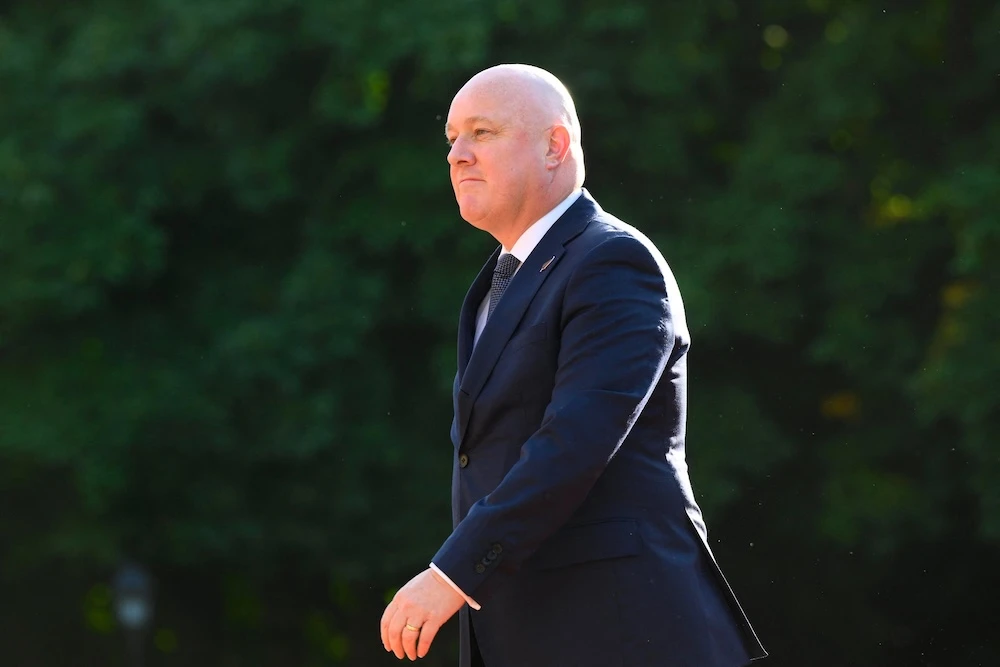
Prime Minister Christopher Luxon earlier asserted that recognition by New Zealand of Palestine was a matter of “when, not if.” (AFP)
Short Url
Updated 29 September 2025
Follow

New Zealand government criticized for failing to recognize Palestine

New Zealand government criticized for failing to recognize Palestine
  • Move was expected at UN General Assembly after PM said issue was matter of ‘when, not if’
  • Ex-PM Helen Clark: New Zealand ‘very much on the wrong side of history’

LONDON: New Zealand’s failure to recognize Palestinian statehood has been met with criticism across the country from politicians and activists.

The government was expected to recognize Palestine in line with the likes of the UK, Canada and Australia at the UN General Assembly in New York. However, Foreign Minister Winston Peters did not take that step in his address on Saturday.

“With a war raging, Hamas remaining the de facto government of Gaza and no clarity on next steps, too many questions remain about the future state of Palestine for it to be prudent for New Zealand to announce recognition at this time,” he said.

It came as a surprise to many after Prime Minister Christopher Luxon’s previous assertion that recognition by New Zealand was a matter of “when, not if.”

Former Prime Minister Helen Clark criticized the decision not to recognize Palestine, saying it places New Zealand “very much on the wrong side of history.”

She told broadcaster RNZ: “As more and more countries move to see that the recognition of Palestine is part of a process of moving towards a solution, New Zealand is lagging behind for reasons which make very little sense at all.”

Elsewhere, members of Protestant and Roman Catholic clergies chained themselves to the immigration minister’s office in protest.

Earlier this month, thousands took to the streets of Auckland to demand that the coalition government recognize Palestinian statehood.

The Justice for Palestine human rights group said the inaction shows that New Zealand is “a country confused about its position in the world.”

The Green Party called the government’s position “a stain.”

Labour foreign affairs spokesperson Peeni Henare said: “Recognition of Palestine and sanctions on Israel send a clear message to Israel and the world: New Zealand will not stand by while Israel disregards human life and dignity, and international law.”

He added: “Luxon had a chance to stand up for what is right, but he failed.”

Palestine has now been recognized by 157 of the 193 UN member states.


Syrian Foreign Ministry reinstates 21 diplomats who had defected during Assad’s regime

Syrian Foreign Ministry reinstates 21 diplomats who had defected during Assad’s regime
Updated 18 sec ago
Follow

Syrian Foreign Ministry reinstates 21 diplomats who had defected during Assad’s regime

Syrian Foreign Ministry reinstates 21 diplomats who had defected during Assad’s regime
  • Diplomats met minister this week in Damascus, Al-Shaibani signed agreement
  • Those returning will help staff with their extensive experience

LONDON: Asaad Al-Shaibani, the Syrian Minister of Foreign Affairs, has reinstated 21 diplomats who had defected from the former Bashar Assad regime in protest at its brutal crackdown on civilians during the civil war.

Al-Shaibani met the diplomats this week at the ministry’s headquarters in Damascus and signed an agreement to reinstate them to the ministry’s staff.

He acknowledged the efforts of the diplomats in exposing the crimes of the Assad regime and praised their commitment to supporting the people of the Syrian Arab Republic and their just cause, according to the Syrian Arab News Agency.

He added that the decision to reinstate the 21 diplomats was a significant move toward restoring national competencies.

Yasser Al-Jundi, the director of the Diplomatic Institute at the ministry, told SANA that the diplomats possessed “extensive experience in diplomatic work both before and after the revolution,” which would benefit new staff.

Diplomat Hussein Al-Sabbagh said that “the dissident diplomats have been waiting for this day since liberation (and the fall of Assad) to support diplomatic work in accordance with Syria’s new foreign policy.”

The Ministry of Foreign Affairs and Expatriates issued a statement in May requesting that dissenting diplomats contact the ministry to update their information in preparation for a return to the ministry’s staff.