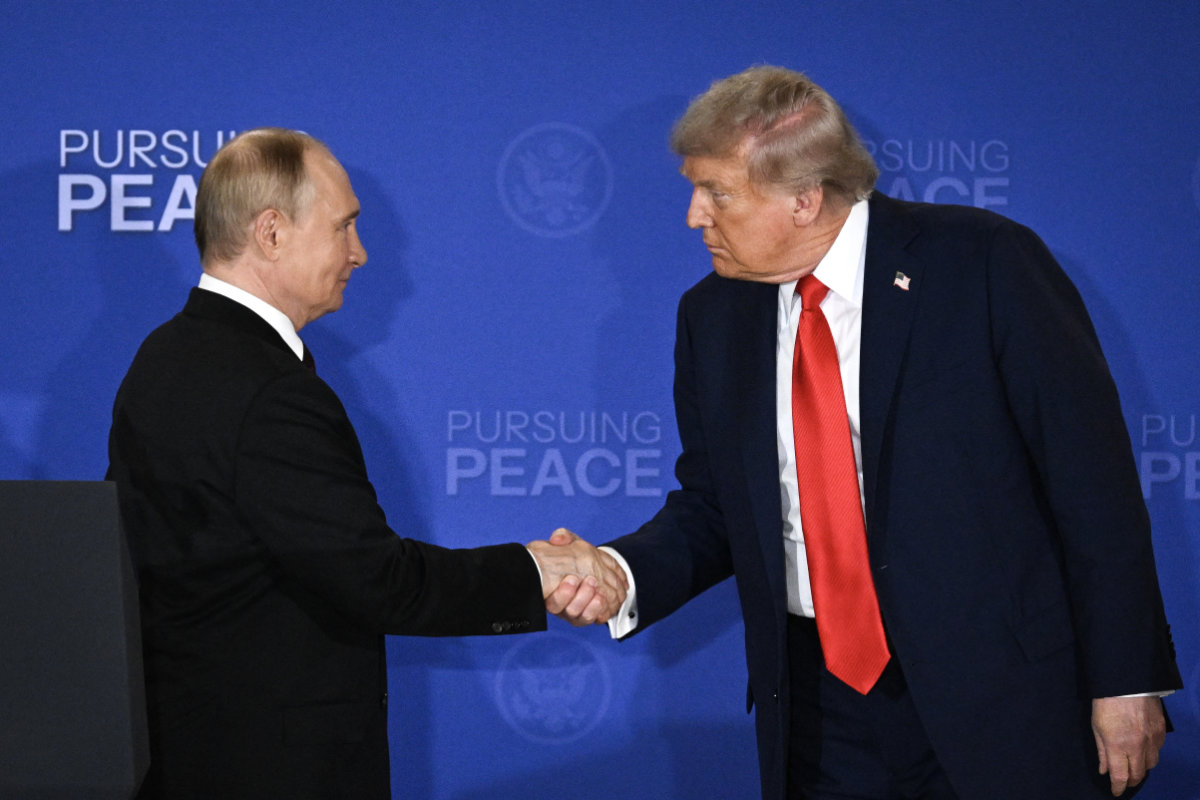
- Trump's mocking of Russia’s military powers and calling the country “a paper tiger,” prompted the Kremlin to push back
- “You’re four years fighting a war that should have taken a week,” Trump said of Russia’s war with Ukraine. “Are you a paper tiger?”
WASHINGTON: Nearly 80 years after Mao Zedong called the United States a “paper tiger” to boost morale at home, US President Donald Trump and Russian President Vladimir Putin are exchanging barbs who is the paper tiger of today.
In a Sept. 23 post on Truth Social, Trump mocked Russia’s military powers and called the country “a paper tiger,” prompting the Kremlin to push back. Trump backed off, but on Tuesday he brought back the dismissive rhetoric when addressing a roomful of generals and admirals. “You’re four years fighting a war that should have taken a week,” Trump said of Russia’s war with Ukraine. “Are you a paper tiger?”
On Thursday, Putin retorted, “We are fighting against the entire bloc of NATO, and we keep moving, keep advancing and feel confident, and we are a paper tiger; what NATO itself is?”
He added: “A paper tiger? Go and deal with this paper tiger then.”
Those familiar with modern Chinese history have found it amusing, odd and not without irony that an American president should be using a classic Chinese propaganda slogan — words that came from the heart of a communist government that is the polar opposite of what the Trump administration frames as the best way to run a country.
“As a Chinese historian I had to laugh at the irony when President Trump appropriated one of Chairman Mao’s favorite expressions in calling Russia a ‘paper tiger,’” said John Delury, a senior fellow at Asia Society.
“Mao famously said this about the United States, at a time when the US had a growing nuclear arsenal and China was not yet a nuclear power. ... How times have changed. Now the leaders of the United States and Russia are calling one another ‘paper tigers’ as Chinese leader Xi Jinping sits back looking like the adult in the room.”
How paper tiger became a propaganda term in China
The phrase — “zhilaohu” in China’s dominant dialect — is well-rooted in the culture of the Chinese Communist Party. Perry Link, a well-known American scholar on modern Chinese language and culture, recalled that Lao She, a famous Chinese writer, referred to US troops as the “paper tiger” during the Korean War years.
“There’s a Cold War echo across this whole story,” said Rana Mitter, a British historian specializing in modern Chinese history.
Accounts by Chinese state media and essays by party theorists say the phrase entered into the party vocabulary when Mao, the founding revolutionary, told the American journalist Anna Louise Strong in a 1946 interview that the atom bomb by the United States was a “paper tiger,” which the “US reactionaries use to scare people.”
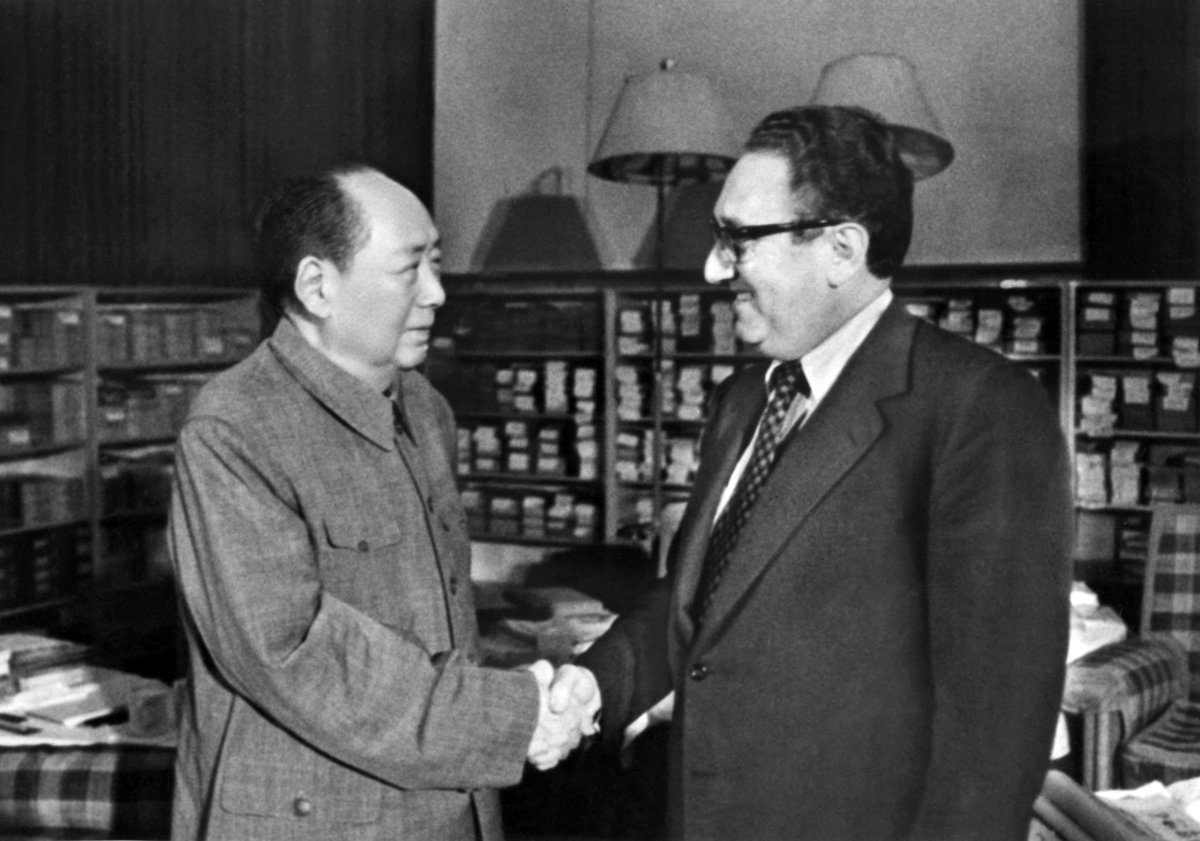
Mao then used the Chinese phrase “zhilaohu,” which means paper tiger literally. But his interpreter translated it into “scarecrow,” according to state media reports, before an American doctor who was present suggested “paper tiger,” which Mao approved. The phrase largely refers to something that is seemingly powerful but actually fragile.
Delury said at the time that Moscow, which took the nuclear threat seriously, was aghast that Mao “casually” dismissed the threat and was annoyed that “Mao would brazenly use ‘paper tiger’ rhetoric at a time when if nuclear war broke out, China would rely on Russian involvement.”
The term became ‘a sharp thought weapon’ for China
That didn’t happen. Mao seized power in 1949, and the phrase “zhilaohu” became a propaganda staple in communist China, closely associated with western imperialists, particularly the United States. Mao famously said that “all reactionaries are paper tigers.” In canonizing the leader’s wisdom, party theorists have called the slogan Mao’s “strategic thought” and “a sharp thought weapon.”
The rhetoric subsided when US-China ties warmed in the 1970s, but it resurfaced in recent years as bilateral relations chilled.
In April, in the heat of a tariff war between the two countries, a Chinese foreign ministry spokesperson posted on X a Mao quotation from 1964: “The US intimidates certain countries, stopping them from doing business with us. But America is just a paper tiger. Don’t believe its bluff. One poke, and it’ll burst.”
Before Trump borrowed Beijing’s propaganda slogan to mock Russia, the phrase had already seeped into the public discourse in the United States. In a February editorial, Eugene Robinson, a Washington Post columnist, criticized Trump’s foreign policy and compared it to bullying. “Trump’s foreign policy is that of a paper tiger, not a real one,” wrote the columnist, now retired.
And in May, Laurence Tribe, a Harvard University professor, called Trump “a paper tiger” when assuring Harvard’s international students not to be scared by the president’s hostile policy toward foreign students.