Review: ‘Hades 2’ is the best roguelike you will ever play
Updated 11 October 2025
Shyama Krishna Kumar
DUBAI: “Hades 2” is a bold and dazzling sequel that leans into ambition at every turn. Where the 2020 original laid the foundation, this new chapter deepens the mythos, sharpens the combat and turns the visual dial up to 11.
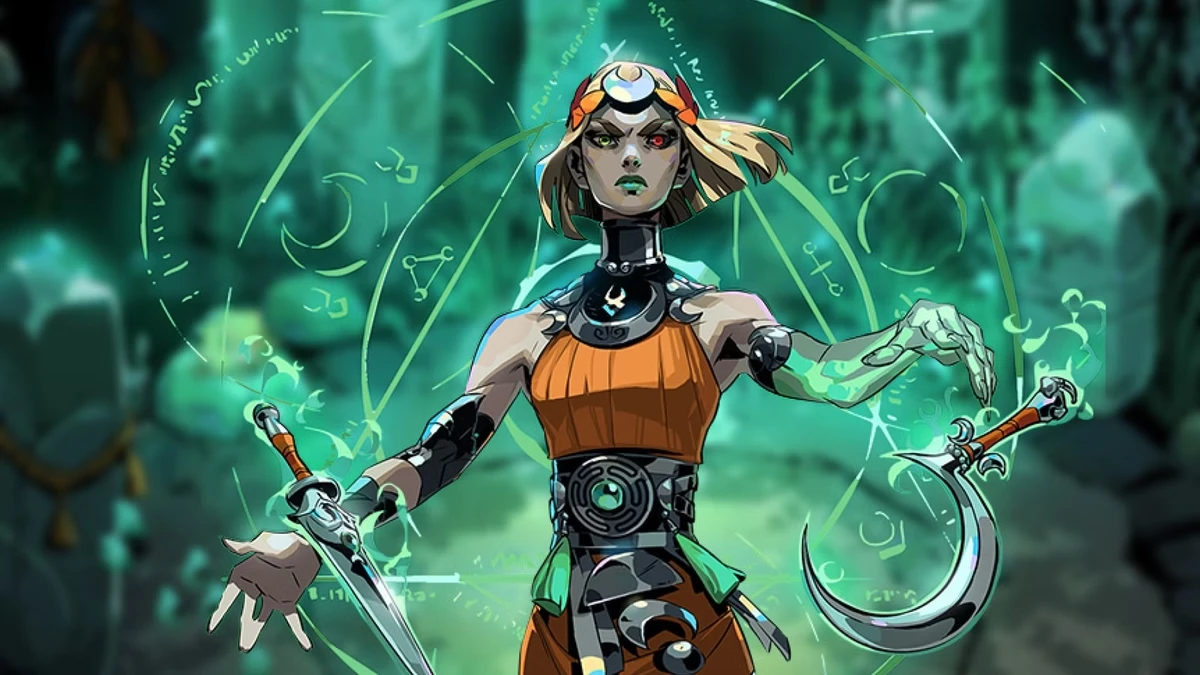
The sequel follows the original hero Zagreus’ sister, Melinoe, daughter of Hades and Persephone who is born after the events of “Hades.” She returns to a shattered Underworld after Chronos usurps power and imprisons key figures.
From the first few runs, the story weaves tension and mystery: Who is the real threat of time? How do the fates and titans dodge their own destinies? The narrative is layered, with revelations gradually unlocked between runs, and many dialogue moments that feel earned.
Visually, “Hades 2” is a triumph, even if early runs may feel a little too familiar to the original. Every character is richly drawn; the environments shift from the, at times, claustrophobic corridors of the Underworld to the majestic heights of Olympus (and beyond) with grace. The color palette moves beyond reds and blacks, embracing verdant hues, turquoise veils and shimmering light. Even in fast-paced combat, the animations remain crisp and fluid.
Mechanically, “Hades 2” innovates significantly while retaining its signature intensity. Melinoe wields physical weapons but also commands Magick, with a new “Magick Bar” that depletes and recovers based on your actions. Boons now carry elemental affinities and infusions; Arcana cards add constant passive effects you choose pre-run; Hexes summon powerful spells that evolve mid-run; and the sprint mechanic encourages fluid repositioning rather than repetitive dashing.
While the added complexity is demanding and can be frustrating at times, it is definitely worth it.
In short, “Hades 2” offers a richer and more expansive mythic journey, stunning visuals, and a combat system that feels both familiar and fresh; standing as a worthy — and, often, superior — successor.
DUBAI: On a small street in Beirut, the sound of an oud drifts through the open doors of a small cafe called Orenda. Inside, all eyes turn to Joe Kamel as his melody takes over, replacing the cafe’s buzz with a slower, softer mood.
A pharmacist by day, Kamel has built a second life through his music — one that reconnects people with something familiar and deeply sentimental.
“My passion was born at a very young age,” Kamel told Arab News.
“I have memories from perhaps the age of five, when I used to sing in a choir. That’s where my journey and love of music and culture began.”
When everyone around him wanted to learn guitar, he picked up the oud instead.
“I wanted to learn something close to my Arabic heritage,” he said. “Both worlds are exceedingly different, but one hectic career is balanced by my musical one to restore calm and peace.”
A pharmacist by day, Kamel has built a second life through his music. (Supplied)
At the cafe, his regular crowd is a mix of Lebanese locals and Europeans who may not understand the words, but still feel every note.
“Arabic music can be dramatic and romantic, but each song and chord tells a story,” he said.
For Kamel, that storytelling is what keeps his performances personal. If the music connects with even one listener, he said, that is enough to make it worthwhile.
He sees live performance as an exchange of energy, not just sound. Reading the room, he often adjusts his set on the spot to match the crowd’s mood.
“It’s hugely important to gauge what the audience wants,” he said. “Deviating from what I planned is something I’ll do if it means everyone enjoys the experience.”
Music events across the Arab world mix local heritage and global influences. ( Dubai World Trade Centre photo)
Kamel believes that renewed interest in traditional instruments such as the oud reflects a wider cultural shift. Many young people, he said, are looking for something they can feel — a break from digital music and a return to the authenticity of live performance.
That revival of live, communal music is not limited to Lebanon. Across the Arab world, a new generation of musicians is finding fresh ways to mix heritage and innovation.
From Riyadh’s warehouse parties to Dubai’s creative hubs and Cairo’s open-air concerts, a new generation of musicians is blurring boundaries between tradition and innovation.
Egyptian composer Hisham Kharma, who has performed in cities from Hamburg to Miami and at historic sites such as the Pyramids of Giza, says that it is a natural evolution.
“Living in such diverse cities taught me that music is universal, but each culture adds its own flavor,” he told Arab News.
Kharma said that nothing compares to performing live, where music becomes a dialogue rather than a presentation.
“On stage, the music becomes a conversation — you feel every reaction instantly,” he said. “It’s that shared emotion, that real-time connection, that keeps me coming back.”
Hisham Kharma says artists across the region are "being more daring, blending genres, and and redefining what Arab music can be.” (Supplied)
For him, Arab identity in music is not about looking back — it is about carrying that sound forward.
“Our heritage gives us identity, but innovation keeps us alive and connected to the present,” he said.
“When I perform in places like the Pyramids, it’s about showing that our culture isn’t ancient history — it’s evolving.”
He describes the moment as one of bold creativity.
“Artists across the region are being more daring, blending genres, and redefining what Arab music can be,” he said.
“Our culture is incredibly deep, and now we’re expressing it in fresh, modern ways.”
In Saudi Arabia, that creativity has found new visibility — and new confidence.
Artists such as TamTam are leading a cultural shift that feels personal as much as national. Her songs move between Arabic and English with ease, a reflection of her own story.
“It’s just who I am; it didn’t shape me; I shaped the music,” she told Arab News. “My identity is what defines my art.”
Tamtam's positivity beams, radiating from her personality to her music, which she attributed to her parents. (AN Photo by Mishari AlKhathran)
Her upcoming album, Ma3assalama, captures that duality; one side Arabic, one side English.
“It’s about the two sides of who I am; my Arabic roots and my Western identity that’s also a part of me,” she said. “I just hope it inspires people to embrace who they are, even if they don’t fit neatly into one box.”
TamTam has watched the country’s music scene transform in just a few years — from underground performances to global stages.
“I’m so proud of the artists coming from Saudi, each one with their own beautiful journey unfolding,” she said.
“It’s only the beginning, but honestly, every part of the journey matters — the beginning, the middle, the end, and everything in between.”
Beyond her own music, TamTam is helping to shape that journey for others through Goast Flower, a creative hub she founded to bring musicians together.
Beyond her own music, TamTam is helping to shape that journey for others through Goast Flower, a creative hub she founded to bring musicians together. (Supplied0
The name comes from the “ghost flower,” a plant that blooms without sunlight.
“It grows in the darkest parts of the forest,” TamTam said. “It blooms without needing light, and that really resonated with me as an independent artist who’s always kept creating, no matter what.”
Through Goast Flower’s Saudi Music Community, artists can find each other, collaborate and share resources.
“Big companies have told me they’re using the database to find and discover artists,” TamTam said. “I don’t want to gatekeep the data. I truly want people in the music community here to find each other more easily.”
She believes that real growth begins in small spaces — the cafes, courtyards and pop-up stages where young artists play their first shows.
“We hope that through the Saudi music community, these artists can find others to collaborate with, but more importantly, that they find a support system,” she said.gger.”
Goast Flower hosted an event last month with Apple Music MENA in Riyadh, where emerging musicians met industry professionals. (Supplied)
Last month, Goast Flower hosted an event with Apple Music MENA in Riyadh, where emerging musicians met industry professionals and ended the night with a spontaneous jam session.
“It was such a beautiful night and a true testament to what community can create,” TamTam said. “These kinds of collaborations help artists learn, grow and dream bi
Whether it is the delicate strings of an oud in Beirut or an electronic beat pulsing through a Riyadh warehouse, these gatherings are doing something powerful — bringing people together through sound.
Tamtam says it is her fervent hope that through the Saudi music community, artists can find others to collaborate with. (Supplied)
Kamel’s evenings at Orenda may seem worlds away from Kharma’s symphonic shows or TamTam’s pop, but they all share the same intention; to connect, to express, to belong.
As Kharma put it: “Artists across the region are being more daring, blending genres, and redefining what Arab music can be.”
More than just a shift in style, this new wave of Arab music is helping people to reconnect — with each other, their roots and national identity.
“Lebanon has been through so much historically, and playing the oud is one of my ways of escaping some of the unfortunate situations we’ve lived through,” Kamel said.
“I want my music to create a safe place for people to learn, enjoy, come together and leave with a feeling of pride, peace and love of music, heritage and culture.”