- Resistance committee for El-Fasher says RSF hit the Dar Al-Arqam displacement center on the grounds of a university
PORT SUDAN: A drone and artillery attack killed at least 60 people at a displacement camp in Sudan’s El-Fasher on Saturday, activists said, as the paramilitary Rapid Support Forces intensifies its assault on the besieged western city.
The resistance committee for El-Fasher, the North Darfur state capital, said the RSF hit the Dar Al-Arqam displacement center on the grounds of a university.
“Children, women and the elderly were killed in cold blood, and many were completely burned,” it said.
“The situation has gone beyond disaster and genocide inside the city, and the world remains silent.”
The committee had initially put the toll at 30 dead, but said bodies remained trapped underground.
It later said 60 were killed in the attack involving two drones and eight artillery shells.
The local resistance committees are activists who coordinate aid and document atrocities in the Sudan conflict.
The RSF has been at war with the regular army since April 2023. The conflict has killed tens of thousands of people, displaced millions and pushed nearly 25 million into acute hunger.
El-Fasher, the last state capital in the vast region of Darfur to elude the RSF’s grasp, has become the latest strategic front in the war as the paramilitaries attempt to consolidate power in the west.
The United Nations rights chief said Friday that he was “appalled” by the RSF’s recent killing of civilians in the city, including what appeared to be ethnically motivated summary executions.
“They continue instead to kill, injure, and displace civilians, and to attack civilian objects, including... hospitals and mosques, with total disregard for international law,” UN High Commissioner for Human Rights Volker Turk said.
“This must end.”
‘Open-air morgue’
Activists say the city has become “an open-air morgue” for starved civilians.
Nearly 18 months into the RSF’s siege, El-Fasher – home to 400,000 trapped civilians – has run out of nearly everything.
The animal feed that families have survived on for months has grown scarce and now costs hundreds of dollars a sack.
The majority of the city’s soup kitchens have been forced shut for lack of food, according to the local resistance committees.
In El-Fasher on Thursday, eyewitnesses said an RSF artillery attack killed 13 people in a mosque where displaced families were sheltering.
Between Tuesday and Wednesday, 20 people were killed in RSF strikes on El-Fasher Hospital, one of the last functioning health facilities in the city.
Pointing to other recent attacks on a maternity hospital, WHO chief Tedros Adhanom Ghebreyesus called on Saturday for “immediate protection of health facilities, and also humanitarian access, so we can support patients requiring urgent care and health workers in dire need of health supplies.”
Most hospitals in El-Fasher have been repeatedly bombed and forced to shut, leaving nearly 80 percent of those in need of medical care unable to access it, according to the United Nations.
Last month, at least 75 people were killed in a single drone strike on a mosque in the city.
According to UN figures released Tuesday, more than one million people have fled El-Fasher since the war began, accounting for 10 percent of all internally displaced people in the country.
The population of the city, once the region’s largest, has decreased by about 62 percent, the UN’s migration agency said.
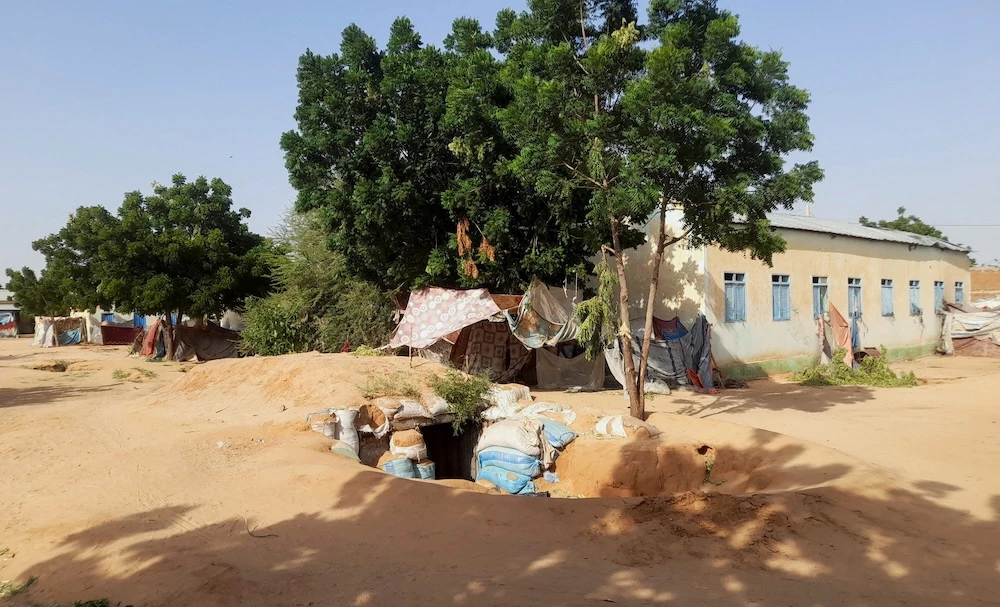
Civilians say the daily strikes force them to spend most of their time underground, in small makeshift bunkers families have dug into their backyards.
If the city falls to the paramilitaries, the RSF will be in control of the entire Darfur region, where they have sought to establish a rival administration.
The army holds the country’s north, center and east.