
Riyadh leads Kingdom’s industrial rental growth in first quarter

Riyadh leads Kingdom’s industrial rental growth in first quarter
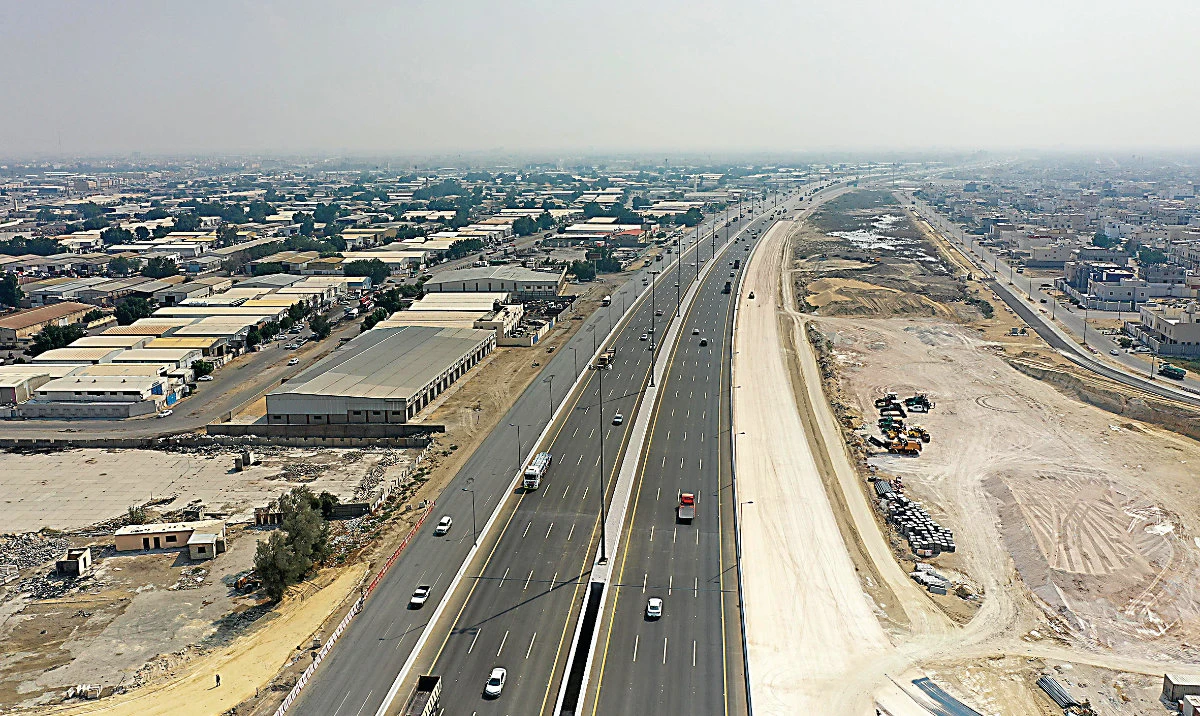
The Kingdom added 1.3 million sq. meters of new warehouse space in the first half of 2025, as the industrial and logistics sector recorded double-digit rental growth and near-full occupancy across major cities. (SPA)
Short Url
Updated 19 October 2025
Follow

Riyadh leads Kingdom’s industrial rental growth in first quarter

Riyadh leads Kingdom’s industrial rental growth in first quarter
  • Warehouse demand in Riyadh is increasingly shifting toward specialized facilities: Knight Frank

RIYADH: Strong demand for warehouse space saw occupancy levels reach 98 percent in Riyadh in the first half of 2025 as industrial rents increased 16 percent, according to Knight Frank.

Average industrial rents in the capital rose to SR208 ($55) per sq. meter, the consultancy’s Saudi Arabia Industrial and Logistics Market Review – Autumn 2025 showed.

The surge underscores Riyadh’s growing dominance in Saudi Arabia’s logistics market, as the Kingdom strengthens its industrial sector — a key pillar of Vision 2030’s aim at reducing the economy’s reliance on oil revenues. 

The Kingdom added 1.3 million sq. meters of new warehouse space in the first half of 2025, as the industrial and logistics sector recorded double-digit rental growth and near-full occupancy across major cities, Knight Frank noted. 

Faisal Durrani, partner – head of research, MENA at the company, said: “Despite this influx of new supply, average rental rates across Riyadh, Jeddah and the DMA (Dammam Metropolitan Area) have risen significantly, underscoring persistent growth in demand, especially for high-quality, modern facilities.”  

He added: “In addition to the existing supply, a substantial pipeline of serviced industrial land within logistics masterplans signals continued expansion ahead.” 

Collectively, these initiatives are strengthening industrial capacity, stimulating export growth, and creating a more resilient and competitive economic base.

Amar Hussain, associate partner, research at Knight Frank for MENA

Knight Frank said warehouse demand in Riyadh is increasingly shifting toward specialized facilities, including cold storage for pharmaceuticals and food supply chains, as well as large-scale data centers supported by the expansion of global tech giants such as Google, Oracle, and Huawei. 

Affirming Riyadh’s status as a regional industrial hub, the report added that key strategic zones — including the 3 million sq. meters Special Integrated Logistics Zone at King Salman International Airport — have attracted major international tenants such as Apple and Shein.

Significant expansion is also anticipated in districts like Taibah, where warehouse capacity is forecast to grow by 50 percent over the next three years. 

In Jeddah, occupancy rates reached 97 percent in the first half of 2025, while average warehouse rents increased 8 percent year on year. 

Growth in the port city was led by the submarkets of Al Kawthar and Al Nakheel, which saw rental gains of 18 percent and 16 percent respectively, signalling strong demand for well-connected, high-quality warehousing. 

The report also cited DP World’s SR3 billion investment in Jeddah Islamic Port, which doubled capacity at the South Container Terminal, streamlining freight flows and reinforcing the city’s role as a key regional trade link. 

The Dammam Metropolitan Area remains a strategic hub on the Arabian Gulf coast but continues to face supply shortages. Average lease rates in DMA rose 9 percent year on year to SR231 per sq. meter, while occupancy remained tight at 96 percent. 

HIGHLIGHT

Affirming Riyadh’s status as a regional industrial hub, the report added that key strategic zones — including the 3 million sq. meters Special Integrated Logistics Zone at King Salman International Airport — have attracted major international tenants such as Apple and Shein.

Pipeline developments in the region include an 850,000 sq. meter logistics zone in Dammam’s Second Industrial City, expected to deliver 900 light industrial units by the end of 2025. 

“Dammam’s position on the Gulf continues to underline its importance within regional supply chains. Improved connectivity through the rail link and ongoing port expansion are expected to unlock significant potential, drawing in a new generation of better-quality industrial and logistics assets to cater to demand,” said Adam Wynne, partner, Occupier/Landlord Strategy and Solutions for the Middle East at Knight Frank. 

He added: “The market is steadily shifting toward modern, purpose-built facilities that meet the evolving requirements of occupiers.”  

Riyadh reinforced its position as the Kingdom’s main logistics hub, with warehouse stock rising 3.5 percent to 28.9 million sq. meters. Industrial and manufacturing facilities in the capital also expanded 1.4 percent to 16.2 million sq. meters. 

In Jeddah, total warehouse supply increased 1.4 percent to 20.1 million sq. meters, while DMA saw a 0.7 percent rise to 8 million sq. meters. 

In addition to the existing supply, a substantial pipeline of serviced industrial land within logistics masterplans signals continued expansion ahead.

Faisal Durrani, Partner – head of research, MENA at Knight Frank

Knight Frank said Saudi Arabia’s expanding industrial market is being propelled by Vision 2030 initiatives aimed at diversifying the economy. 

The National Industrial Development and Logistics Program and the National Strategy for Industry target tripling industrial GDP and doubling industrial exports to SR557 billion by 2030. The goal is also to increase the logistics sector’s contribution to GDP to 10 percent by the end of the decade, up from 6 percent now. 

Government initiatives are reshaping the industrial landscape, including the expansion of the White Land Tax to undeveloped industrial and commercial plots, with a 10 percent annual levy designed to accelerate development and curb land banking. 

“Collectively, these initiatives are strengthening industrial capacity, stimulating export growth, and creating a more resilient and competitive economic base,” said Amar Hussain, associate partner, research at Knight Frank for MENA. 

He added: “Saudi Arabia’s aggressive expansion of its manufacturing sector saw the Kingdom issue 585 new industrial licenses in the first half of 2025 alone, representing SR13.5 billion in new capital investment.”  

Hussain added that the total number of licensed factories stands at 12,840 and is expected to reach 36,000 by 2035.


Saudi Arabia reaches 25% localization of military spending, on track for 2030 goal 

Saudi Arabia reaches 25% localization of military spending, on track for 2030 goal 
Updated 5 sec ago
Follow

Saudi Arabia reaches 25% localization of military spending, on track for 2030 goal 

Saudi Arabia reaches 25% localization of military spending, on track for 2030 goal 

RIYADH: The General Authority for Military Industries has announced that the localization rate of military spending in Saudi Arabia reached 24.89 percent by the end of 2024, underscoring continued progress toward the Kingdom’s goal of exceeding 50 percent by 2030. 

The milestone was revealed during the first annual meeting for the military industries sector, organized by GAMI in Riyadh under the patronage of its governor, Ahmed bin Abdulaziz Al-Ohali, with wide participation from government entities, private firms, and local and international defense companies. 

In a speech at the meeting, Al-Ohali said the achievement represents a pivotal milestone in developing the Kingdom’s defense industries, made possible through the support of King Salman bin Abdulaziz Al Saud and Crown Prince Mohammed bin Salman, who also serves as prime minister and chairman of GAMI’s board.  

“GAMI's sectoral and institutional strategies prioritize the military industries sector to build a sustainable local industry that will generate significant strategic, developmental, and economic benefits for the nation and its citizens,” Al-Ohali said. “We strive to enhance this role in partnership with you and all those working in this promising sector.” 

He added that the authority has introduced a comprehensive package of enablers — including new policies, legislation, regulations, and incentives — to support sector growth and attract investment, while working closely with government partners to create a competitive business environment.  

For his part, Mohammed bin Saleh Al-Adhl, deputy governor of the General Authority for Military Industries for Localization, said localizing military spending is not just a target or statistic but a national endeavor reflecting Saudi Arabia’s determination to build self-sufficient defense industries capable of meeting domestic needs. He added that the initiative marks a qualitative leap, driven by a clear vision, strategic planning, structured execution, and substantial investment in industrial infrastructure. 

He stated that the authority is keen to implement a sound work plan to ensure the accuracy of the localization rate in military spending through a series of procedures that guarantee the quality of the measurement mechanism. This is achieved by forming working groups to audit contracts, review budgets, analyze figures, and verify them through external accountants and auditors to ensure the accuracy of the percentage.  

The authority also evaluates each procedure and ensures its quality and impartiality in cooperation with beneficiary and supporting entities, as well as companies operating in the military industries sector. 

During the meeting, GAMI honored government and private-sector entities with the Excellence in Military Industries Localization Awards. 

The winners in the Military and Security Entities Excellence Track in Planning are the Ministry of Interior, the Presidency of State Security, and the General Intelligence Presidency. The winners in the Military and Security Entities Excellence Track in Implementation are the Ministry of Defense, the Ministry of Interior, the Ministry of National Guard, and the Presidency of the Royal Guard. 

Nine companies were recognized in the Military Sector Companies Excellence Track across its three categories: in the Manufacturers category — SAMI Advanced Electronics Co., National Mechanical Systems Co., and Military Clothing and Equipment Factory; in the Service Providers category — BAE Systems Arabia for Industry, Saudi Aircraft Preparation and Maintenance Co., and SAMI Al Salam Aerospace Industries; and in the Small and Medium Enterprises category — SAMI Aerospace and Space Mechanical Co., Saudi Leather Industries Co., and Eraf Industrial Co. Ltd. 

For his part, Faleh bin Abdullah Al-Sulaiman, governor of the General Authority for Defense Development, highlighted the role of research and innovation as a fundamental pillar in localizing and advancing the military industries sector, enabling the shift from consumption to manufacturing. He noted that research and development serve as key drivers for sustaining industries, ensuring that national products keep pace with global advancements and enabling continued growth. 

In turn, Salman bin Nasser Al-Shathri, chairman of the National Committee for Military Industries at the Federation of Saudi Chambers, expressed pride in the close partnership between the committee and the General Authority for Military Industries.  

He said the collaboration has led to several workshops and coordination meetings aimed at exploring development opportunities, reviewing regulations and systems, sharing success stories, and exchanging ideas between the public and private sectors. 

He emphasized the pivotal role of local supply chains in strengthening the military industries sector and creating promising investment opportunities for entrepreneurs and small and medium-sized enterprises, supported by government incentives, regulatory enablers, and tangible growth prospects in one of the Kingdom’s most strategic sectors. 

Following this, the deputy governor of the High Commission for Industrial Security, Ibrahim bin Abdulqader Al Abu Issa, reviewed the commission’s role in supporting the military industries sector. The deputy governor of the General Authority for Military Industries for the Enabling Sector, Saleh bin Abdullah Al-Aqili, then outlined the authority’s efforts to develop policies and legislation and to foster partnerships that enable local companies to enhance the industrial capabilities of the military supply chains. 

The CEO of Saudi Arabian Military Industries, Thamer bin Mohammed Al-Muhaid, also discussed the role of major companies in developing local supply chains. 

At the conclusion of the meeting, the General Authority for Military Industries honored the graduates of its scholarship and secondment program, who have been qualified in line with the human resources strategy for the military industries sector. The initiative aims to empower the sector by developing national talent and preparing young Saudi men and women to work in one of the Kingdom’s most vital industries. 

The meeting was attended by several high-ranking officials, heads of local and international companies specializing in military industries, and investors in the sector.