- Thieves bypassed security by using a basket lift via the riverfront facade, forcing a window open, and opening glass display cases using power tools
- The daylight heist about 30 minutes after opening, with visitors already inside, was among the highest-profile museum thefts in living memory
PARIS: In a minutes-long strike Sunday inside the world’s most-visited museum, thieves rode a basket lift up the Louvre‘s facade, forced a window, smashed display cases and fled with priceless Napoleonic jewels, officials said.
The daylight heist about 30 minutes after opening, with visitors already inside, was among the highest-profile museum thefts in living memory and comes as staff complained that crowding and thin staffing are straining security.
The theft unfolded just 250 meters (270 yards) from the Mona Lisa, in what Culture Minister Rachida Dati described as a professional “four-minute operation.”
One object, the emerald-set imperial crown of Napoleon III’s wife, Empress Eugénie, containing more than 1,300 diamonds, was later found outside the museum, French authorities said. It was reportedly recovered broken.
Images from the scene showed confused tourists being steered out of the glass pyramid and adjoining courtyards as officers closed nearby streets along the Seine.
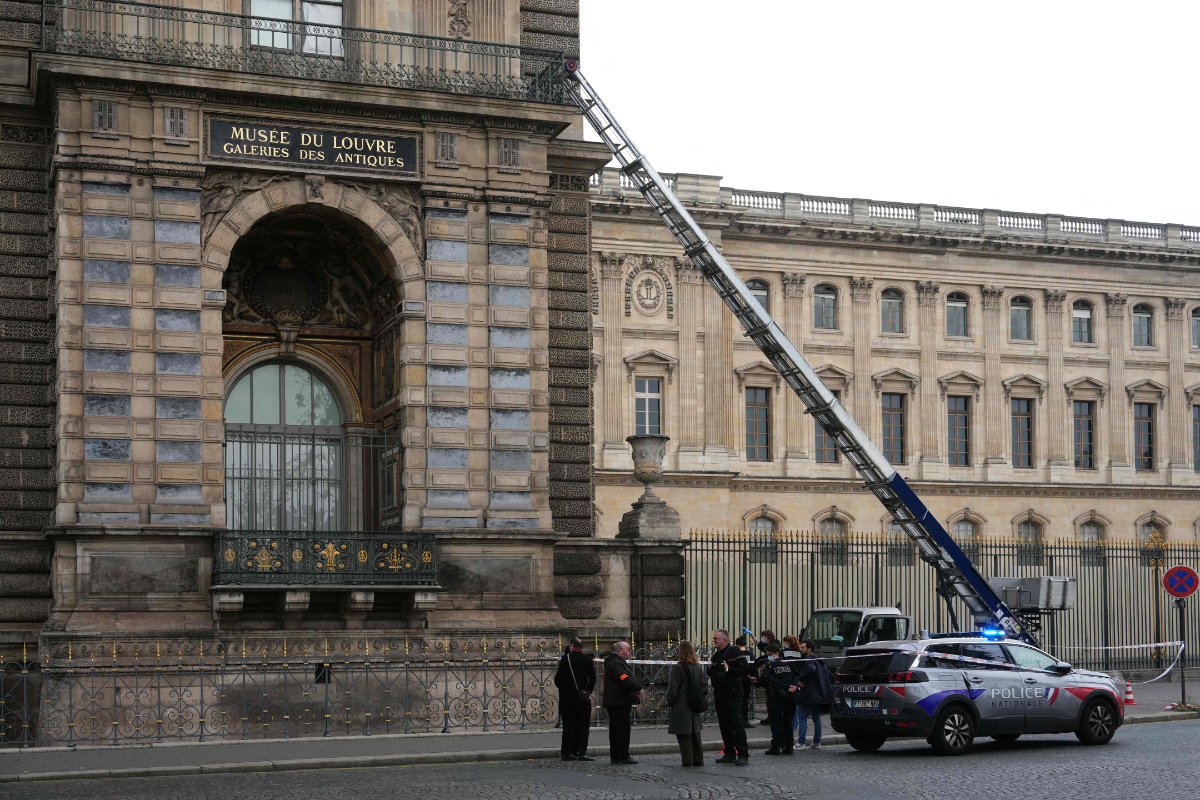
A lift — which officials say the thieves brought and which was later removed — stood against the Seine-facing façade, their entry route and, observers said, a revealing weakness: that such machinery could be brought to a palace-museum unchecked.
A museum already under strain
Around 9:30 a.m., several intruders forced a window, cut panes with a disc cutter and went straight for the glass display cases, officials said. Interior Minister Laurent Nunez said the crew entered from outside using a basket lift via the riverfront facade to reach the hall with the 23-item royal collection.
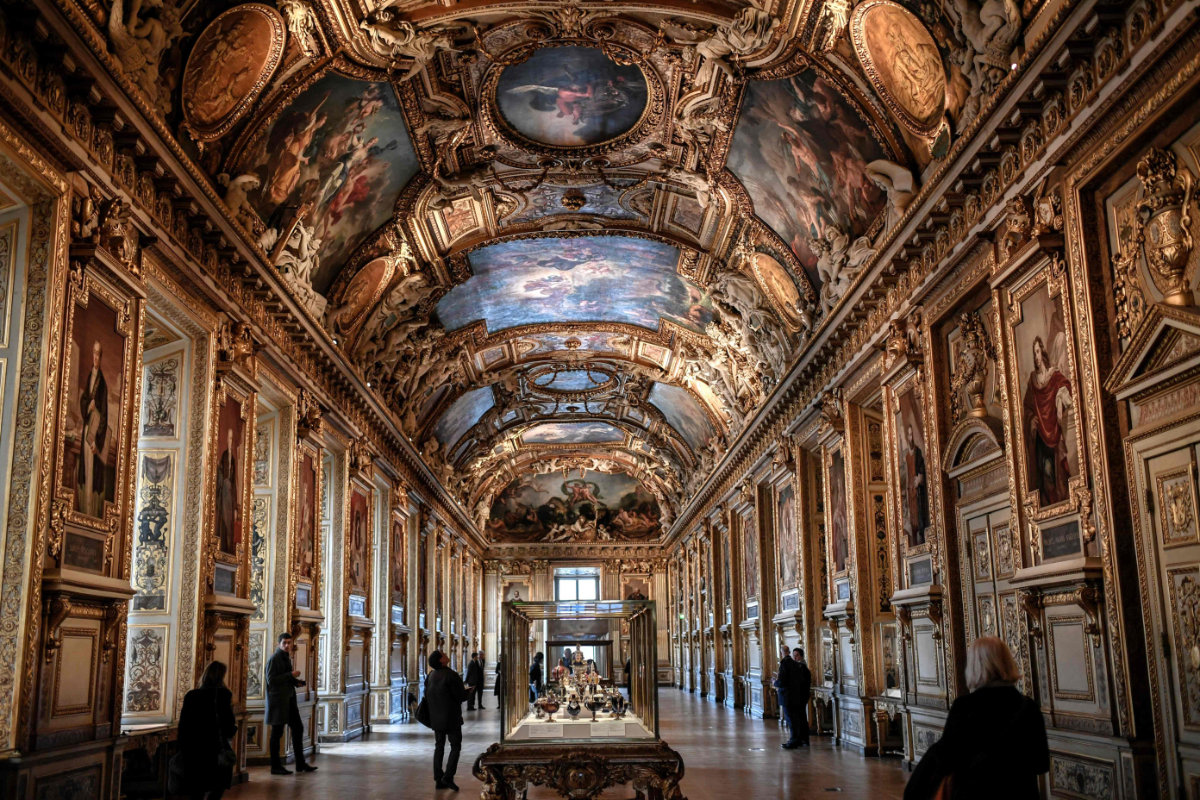
Their target was the gilded Apollon Gallery, where the Crown Diamonds are displayed, including the Regent, the Sancy and the Hortensia.
The thieves smashed two display cases and fled on motorbikes, Nunez said. No one was hurt. Alarms brought Louvre agents to the room, forcing the intruders to bolt, but the theft was already done.
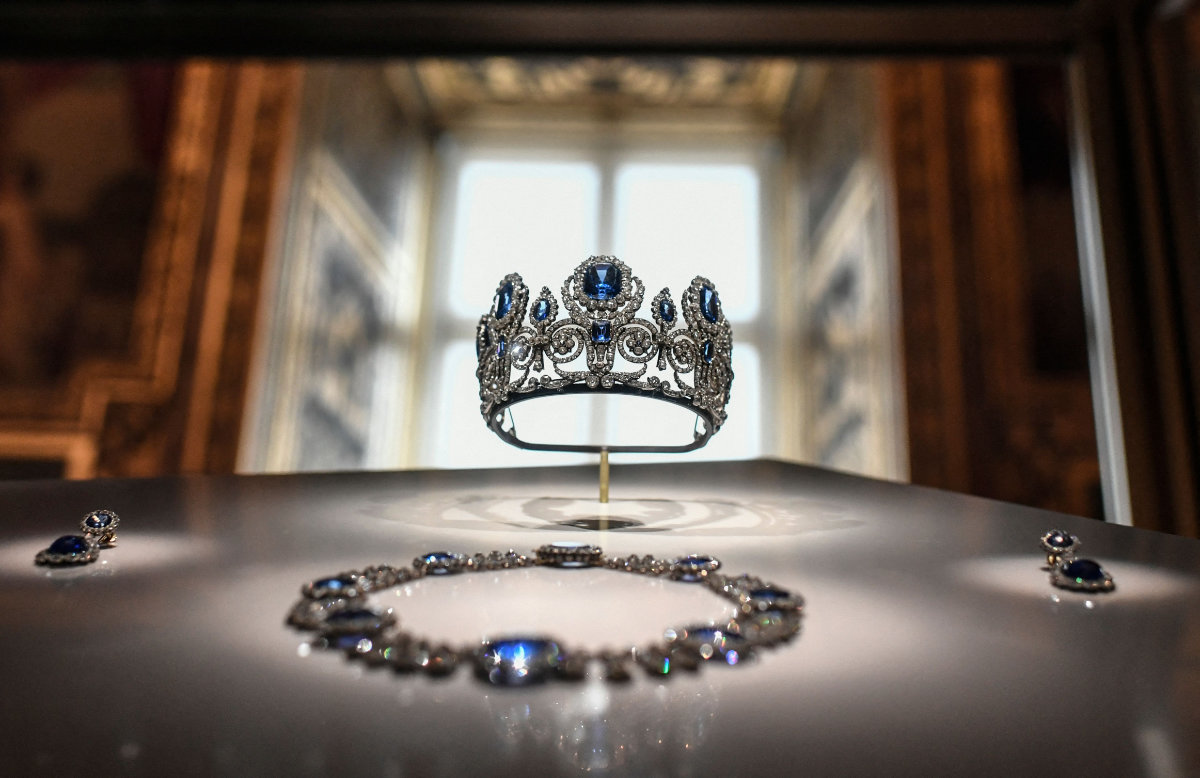
Eight objects were taken, according to officials: a sapphire diadem, necklace and single earring from a matching set linked to 19th-century French queens Marie-Amélie and Hortense; an emerald necklace and earrings from the matching set of Empress Marie-Louise, Napoleon Bonaparte’s second wife; a reliquary brooch; Empress Eugénie’s diadem; and her large corsage-bow brooch — a prized 19th-century imperial ensemble.
“It’s a major robbery,” Nunez said, noting that security measures at the Louvre had been strengthened in recent years and would be reinforced further as part of the museum’s upcoming overhaul plan. Officials said security upgrades include new-generation cameras, perimeter detection, and a new security control room. But critics say the measures come far too late.
The Louvre closed for the rest of Sunday for the forensic investigation to begin as police sealed gates, cleared courtyards and shut nearby streets along the Seine.
Daylight robberies during public hours are rare. Pulling one off inside the Louvre with visitors present ranks among Europe’s most audacious in recent history, and at least since Dresden’s Green Vault museum in 2019.
It also collides with a deeper tension the Louvre has struggled to resolve: swelling crowds and stretched staff. The museum delayed opening during a June staff walkout over overcrowding and chronic understaffing. Unions say mass tourism leaves too few eyes on too many rooms and creates pressure points where construction zones, freight routes and visitor flows meet.
Security around marquee works remains tight — the Mona Lisa sits behind bulletproof glass in a climate-controlled case — but Sunday’s theft also underscored that protections are not uniformly as robust across the museum’s more than 33,000 objects.
The theft is a fresh embarrassment for a museum already under scrutiny.
“How can they ride a lift to a window and take jewels in the middle of the day?” said Magali Cunel, a French teacher from near Lyon. “It’s just unbelievable that a museum this famous can have such obvious security gaps.”
The Louvre has a long history of thefts and attempted robberies. The most famous came in 1911, when the Mona Lisa vanished from its frame, stolen by Vincenzo Peruggia and recovered two years later in Florence. Another notorious episode came in 1956, when a visitor hurled a stone at her world-famous smile, chipping paint near her left elbow and hastening the move to display the work behind protective glass.
Today the former royal palace holds a roll call of civilization: Leonardo’s Mona Lisa; the armless serenity of the Venus de Milo; the Winged Victory of Samothrace, wind-lashed on the Daru staircase; the Code of Hammurabi’s carved laws; Delacroix’s Liberty Leading the People; Géricault’s The Raft of the Medusa. The objects — from Mesopotamia, Egypt and the classical world to Europe’s masters — draw a daily tide of up to 30,000 visitors even as investigators now begin to sweep those gilded corridors for clues.
Politics at the door
The heist spilled instantly into politics. Far-right leader Jordan Bardella used it to attack President Emmanuel Macron, weakened at home and facing a fractured parliament.
“The Louvre is a global symbol of our culture,” Bardella wrote on X. “This robbery, which allowed thieves to steal jewels from the French Crown, is an unbearable humiliation for our country. How far will the decay of the state go?”
The criticism lands as Macron touts a decade-long “Louvre New Renaissance” plan — about €700 million ($760 million) to modernize infrastructure, ease crowding and give the Mona Lisa a dedicated gallery by 2031. For workers on the floor, the relief has felt slower than the pressure.
What we know — and don’t
Forensic teams are examining the site of the crime and adjoining access points while a full inventory is taken, authorities said. Officials have described the haul as of “inestimable” historical value.
Recovery may prove difficult. “It’s unlikely these jewels will ever be seen again,” said Tobias Kormind, managing director of 77 Diamonds. “Professional crews often break down and re-cut large, recognizable stones to evade detection, effectively erasing their provenance.”
Key questions still unanswered are how many people took part in the theft and whether they had inside assistance, authorities said. According to French media, there were four perpetrators: two dressed as construction workers in yellow safety vests on the lift, and two each on a scooter. French authorities did not immediately comment on this.
Investigators are reviewing CCTV from the Denon wing and the riverfront, inspecting the basket lift used to reach the gallery and interviewing staff who were on site when the museum opened, authorities said.