



ISLAMABAD: Islamabad is on high alert with the heavy deployment of law enforcement personnel and several arteries of the city closed for traffic on Tuesday, as authorities prepare for a possible second round of peace talks between the US and Iran despite uncertainty over whether the negotiations will take place.
The White House confirmed to Arab News that a US team of negotiators, led by Vice President JD Vance and envoys Steve Witkoff and Jared Kushner, will hold peace talks with Iran on Tuesday. Several local and international media outlets have also reported that Vance is expected to arrive in Pakistan’s capital on Tuesday.
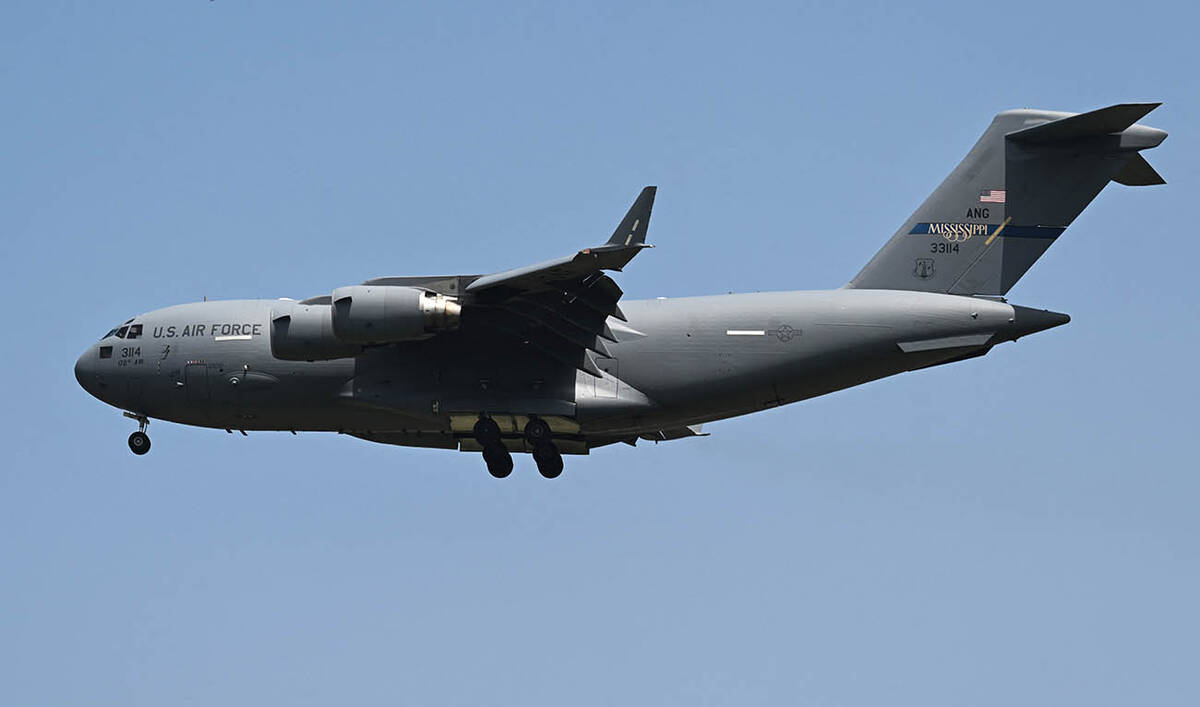
A US Air Force Boeing C-17A Globemaster III aircraft prepares to land at Pakistan's Nur Khan military airbase in Rawalpindi on April 20, 2026. (AFP)
However, the possibility of talks between the US and Iran remain uncertain as Tehran hardens its line amid renewed tensions with the US. The speaker of Iran’s parliament Mohammad-Bagher Ghalibaf criticized Trump’s blockade of the Strait of Hormuz on Tuesday, accusing the American president of seeking to turn the negotiating table into a “table of surrender.”
“We do not accept negotiations under the shadow of threats, and in the past two weeks, we have prepared to reveal new cards on the battlefield,” Ghalibaf wrote on social media platform X.
The development takes place a day after Iran’s foreign ministry spokesperson said Tehran has no plans yet to participate in further talks with Washington.
Tensions between both sides mounted on Sunday after Trump announced that a US destroyer ship fired on and seized an Iranian-flagged cargo ship as it tried to evade a US naval blockade in the Gulf of Oman. Iran’s top joint military command, Khatam Al-Anbiya, accused the US of violating the fragile ceasefire between the two sides, warning that it would retaliate.
Pakistan, which has emerged as a key mediator between Washington and Tehran, has continued its efforts to broker peace. Pakistan’s Foreign Minister Ishaq Dar spoke with his Iranian counterpart Abbas Araghchi over the phone on Monday, the Pakistani foreign office said.
“FM [Dar] emphasized the importance of continued dialogue and engagement at the earliest to resolve all pending issues in order to promote regional peace and stability,” the Pakistani foreign ministry said.
“Both agreed to remain closely engaged.”
ISLAMABAD BEEFS UP SECURITY
Meanwhile, stringent security measures are in place in Islamabad since Sunday, with the city’s key arteries blocked and diversions placed to direct the flow of traffic to adjoining roads. Law enforcement personnel were deployed in sensitive parts of the capital, especially the Red Zone which houses key government buildings and diplomatic missions, in large numbers. The administration in the twin cities of Islamabad and Rawalpindi have also banned public and goods transport till further orders.
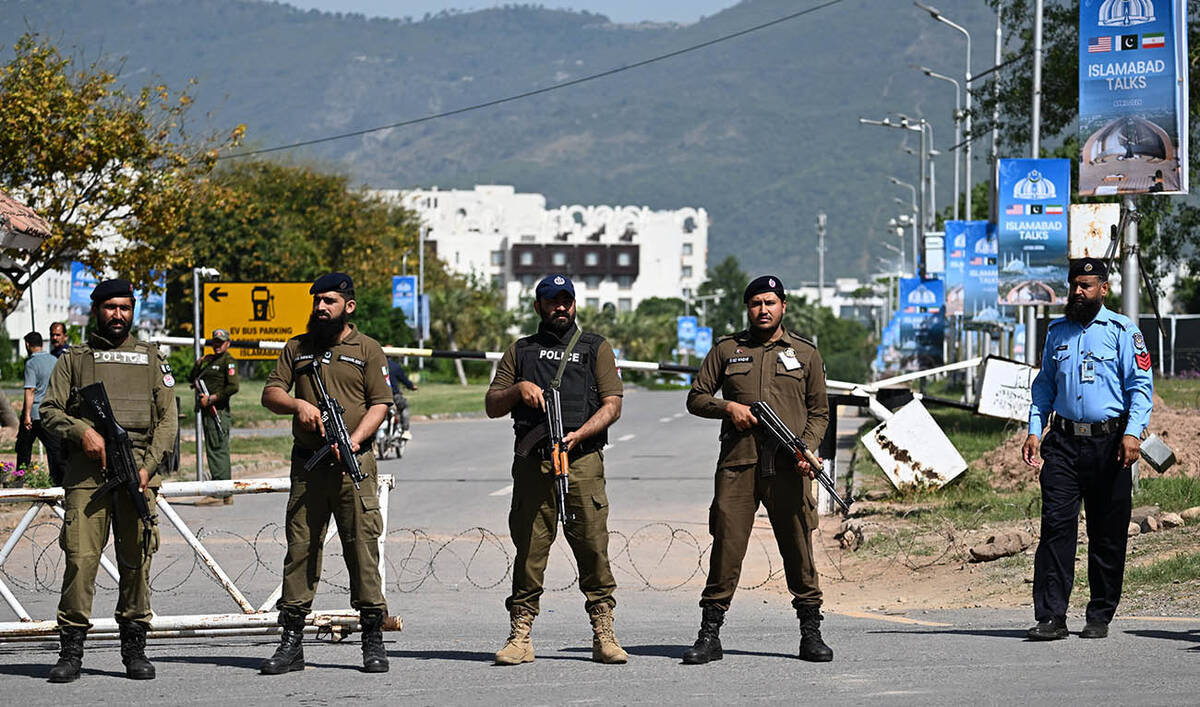
Security personnel stand guard at a security checkpost along a road temporarily closed near the Serena Hotel at the Red Zone area in Islamabad on April 20, 2026, ahead of anticipated US-Iran peace talks. (AFP)
The Faizabad long-distance bus terminal, a major transport hub between Islamabad and Rawalpindi, has also been closed ahead of the expected arrival of the US delegation.
Vance led the US team in the first round of talks with Iran on Apr. 11 in Islamabad, while the Iranian delegation was led by Ghalibaf. The two sides had intensive talks for over 20 hours but were unable to reach an agreement.
Disagreement between the US and Iran persists over several matters. Washington has ruled out concessions for Iran on uranium enrichment and signaled skepticism over reopening key oil routes such as the Strait of Hormuz.
The two sides also disagree over Iran’s missile program and the broader scope of the truce, underscoring the fragile nature of the talks and the risk that negotiations could stall or require multiple rounds to make progress.





