



ISLAMABAD: Pakistan’s army chief Field Marshal Asim Munir left Tehran on Saturday after holding separate meetings with Iranian President Masoud Pezeshkian and Parliament Speaker Mohammad-Bagher Ghalibaf, as Tehran warned Washington against resuming military action and accused it of acting dishonestly in negotiations to end the US-Iran conflict.
Munir’s visit came amid renewed diplomatic efforts led by Pakistan to revive stalled talks between the United States and Iran following weeks of war, which disrupted shipping through the Strait of Hormuz and rattled global energy markets.
The conflict, triggered by joint US-Israeli strikes on Iran in late February, has remained paused under a fragile ceasefire since Apr. 8, though both sides have continued to exchange threats amid deep disagreements over a permanent settlement.
“Field Marshal Syed Asim Munir met separately with President of Iran Dr. Masoud Pezeshkian and head of Iranian negotiating team and Parliament Speaker Dr. Mohammad-Bagher Ghalibaf in Tehran today,” Iran’s state-run IRNA news agency reported earlier on Saturday.
Iranian state television later reported that Munir had departed Tehran following a second meeting with Foreign Minister Seyyed Abbas Araghchi.
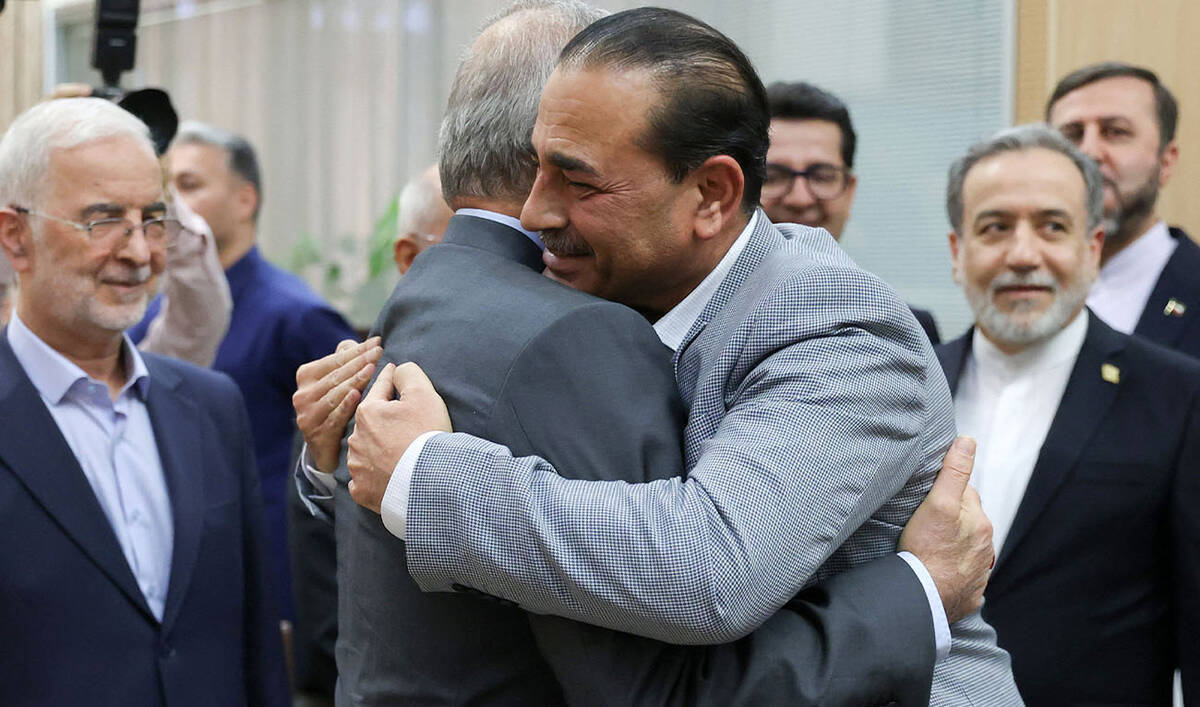
In this handout picture provided by the Iranian presidency, Iran's President Masoud Pezeshkian (C-L) embraces Pakistan’s Army Chief Syed Asim Munir (C-R) in Tehran on May 23, 2026. (AFP)
According to Iranian media, Munir’s talks with Iranian officials focused on diplomatic initiatives aimed at preventing further escalation and reviving negotiations after a round of direct US-Iran talks hosted by Islamabad last month failed to produce a peace agreement.
During his meeting with Munir, Ghalibaf said Iran would continue pursuing its “legitimate rights” through both diplomacy and military preparedness, according to Iranian state television.
According to AFP, Ghalibaf said Iran’s armed forces had rebuilt their capabilities and warned Washington against resuming military action.
“Our armed forces have rebuilt themselves during the ceasefire period in such a way that if Trump commits another act of folly and restarts the war, it will certainly be more crushing and bitter for the United States than on the first day of the war,” AFP quoted him as saying.
Reuters separately reported that Ghalibaf told Munir that Tehran could not trust “a party that has no honesty at all,” referring to the United States, while reaffirming that Iran would not compromise on its “national rights.”
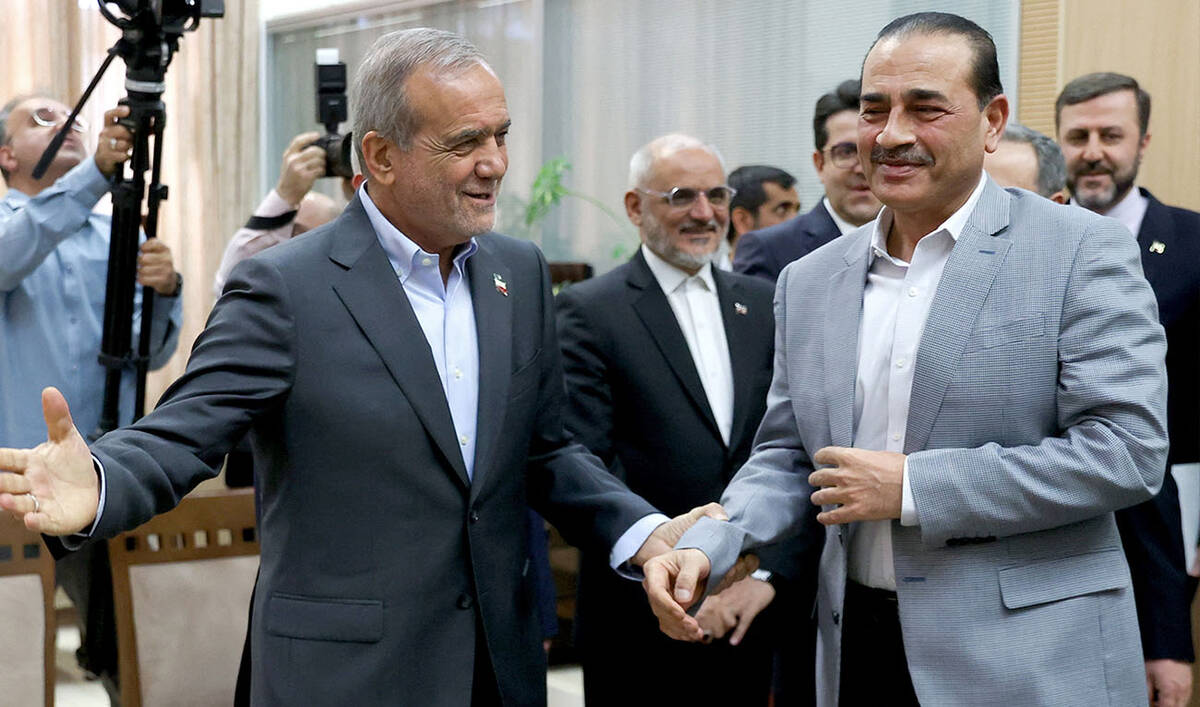
In this handout picture provided by the Iranian presidency, Iran's President Masoud Pezeshkian (C-L) receives Pakistan’s Army Chief Syed Asim Munir (C-R) in Tehran on May 23, 2026. (AFP)
Iran has repeatedly accused Washington of making “excessive demands” during the stop-start negotiations, while US officials have continued to warn that military action remains possible if diplomacy fails.
US Secretary of State Marco Rubio said on the sidelines of a NATO conference in Sweden on Friday that there had been “some progress” toward a peaceful resolution, while cautioning that “things were not there yet.”
President Donald Trump has described the negotiations as being on the “borderline” between renewed attacks and a deal, while US media outlets Axios and CBS News reported this week that the White House was considering possible strikes on Iran, although no final decision had been made.
Pakistan has emerged as a key mediator in the conflict, maintaining close coordination with Tehran and Washington while also engaging regional powers including China and Oman in efforts to secure a lasting settlement.




