- Spanning 900 sq. km, Syria's volcanic plateau holds 500 sites and millennia of history
- From Bronze Age to biosphere: Al-Lajat bridges history and nature in Syria
DAMASCUS: Stretching between the southern Syrian provinces of Daraa and Sweida, Al-Lajat emerges as a vast basaltic landscape of volcanic rock formations, caves, and deep fissures recently brought back into international heritage focus following its inscription in ICESCO’s ( Islamic World Educational, Scientific and Cultural Organization) cultural heritage list.
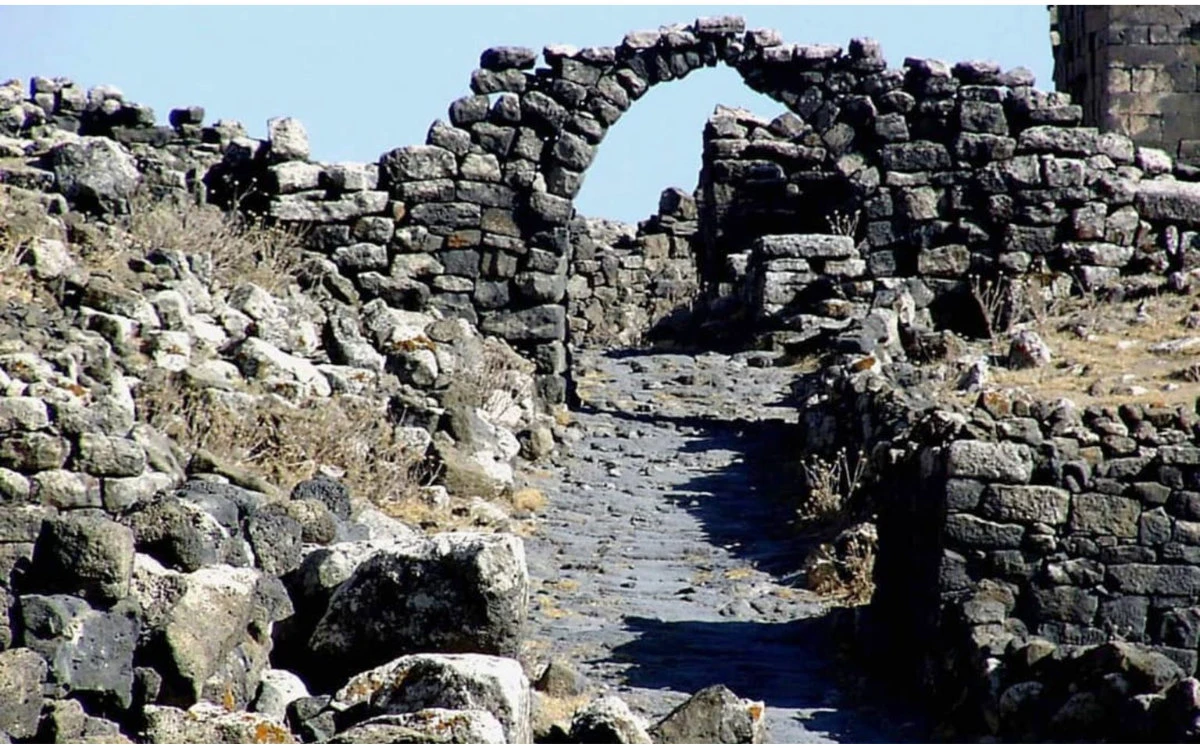
Al-Lajat forms a striking black basalt plateau in southern Syria. Known historically as Trachonitis, the region spans nearly 900 sq. km and represents one of the largest volcanic fields in the country.
Beyond its geological significance, Al-Lajat hosts more than 500 documented archeological sites spanning multiple civilizations from the Bronze Age through the Greco-Roman, Byzantine, and Islamic periods.
The region also includes ancient settlements such as Al-Masmiyah, Shara, Umm Al-Zaytun, and Izra, alongside churches, fortresses, watchtowers, and rock-cut water cisterns reflecting continuous human adaptation to the harsh basaltic environment.
Among the most notable is the Sahar Al-Lajat, where archeological surveys uncovered a Greco-Roman temple, a small music theater, and thousands of artifacts including human and animal statues and reliefs.
Declared a protected forest reserve in 2006 and later recognized by UNESCO’s Man and the Biosphere Programme in 2009, Al-Lajat also represents a unique ecological zone.
It hosts rare plant species such as wild almond, hawthorn, and the endangered Hauran iris, as well as wildlife including the striped hyena, wolf, fox, and Eurasian badger.
The area is also a corridor for more than 40 bird species.