- The explosions were felt as far north as Sidon, Iqlim Al-Kharroub and Khaldeh, at Beirut’s southern entrance
- Although Beaufort Castle itself appeared undamaged, the surrounding landscape had been dramatically altered
BEIRUT: Massive Israeli explosions targeting a Hezbollah tunnel network beneath Beaufort Castle in southern Lebanon triggered tremors that were felt across large parts of the country overnight, with residents describing the blasts as resembling an earthquake.
The explosions, which occurred shortly after midnight between Thursday and Friday, were felt as far north as Sidon, Iqlim Al-Kharroub and Khaldeh, at Beirut’s southern entrance.
Lebanese President Joseph Aoun Friday warned that Israeli detonations near the castle threatened a recent deal with Israel.
“I’ve lived through airstrikes and artillery shelling and never left my town during the last war,” Ayat, a resident of Kawthariyat Al-Sayyad, told Arab News.
“But what happened tonight was beyond belief. I was sitting on the sofa when the ground began shaking violently beneath me, like an earthquake, before the explosions echoed. I rushed to my children, who were terrified in their beds, and found the windows shattered.”
The Israeli military carried out one of its largest demolition operations in southern Lebanon, targeting an underground tunnel network extending from Beaufort Castle toward the eastern outskirts of Yahmar Al-Shaqif.
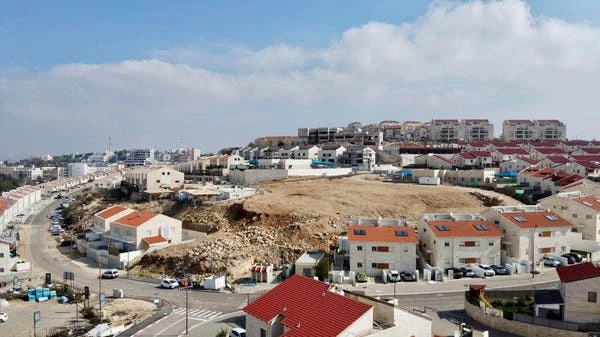
Morning light revealed extensive destruction across a 1.2-km stretch south of the historic fortress. Rocky hills and agricultural land in the areas of Jwar Al-Darankiya, Marj Al-Sultan and Arid Al-Hawa had been flattened, leaving behind vast expanses of dust-covered earth.
Although Beaufort Castle itself appeared undamaged, the surrounding landscape had been dramatically altered.
Blasts near castle 'direct threat' to recent deal
Aoun said that the explosions, which generated seismic waves equivalent to a magnitude 3.8 earthquake according to the National Center for Geophysics, constituted “a highly dangerous escalation and a blatant violation of existing commitments.”
He said that the attacks also posed “a direct threat to the process initiated under the framework agreement, to which Lebanon has committed.”
Aoun added that the timing of the operation, on the eve of a scheduled meeting in Rome to continue discussions on implementing the tripartite framework, “sends negative messages and undermines international efforts aimed at consolidating stability.”
He called on “the sponsoring parties and the international community to assume their responsibilities and put an end to these violations.”
Lebanon’s Parliament Speaker Nabih Berri said that the 700 tonnes of explosives used in the operation caused tremors measuring 3.8 on the Richter scale, which were felt across southern Lebanon, the mountains and the outskirts of Beirut.
“If these tremors do not awaken national and humanitarian awareness of the atrocities committed by the Israeli war machine against humanity, heritage, culture and urban development, then humanity and its future are certainly in danger,” Berri said.
Ahead of the operation, the Israeli military issued recorded warnings in Arabic instructing residents of nearby towns to remain indoors or seek shelter elsewhere and stay there until further notice.
The Israeli military said that it destroyed several sections of an underground tunnel network beneath Beaufort Castle after accusing Hezbollah of launching an explosive-laden drone at an Israeli army engineering vehicle on Ali Al-Taher Hill on Tuesday night.
Israel described the drone attack as “a serious violation” of the ceasefire agreement. Hezbollah has not claimed responsibility.
Israeli strikes also targeted caves and houses near Mansouri, Majdal Zoun, Haddatha and Deir Mimas. On Friday afternoon, Israeli forces shelled Ali Al-Taher Hill on the outskirts of Nabatieh Al-Fawqa with incendiary rounds, sparking fires in the area.
The Israeli military said that troops from the 36th Division destroyed key sections of what it described as a strategic underground command network used by Hezbollah’s Badr Unit to coordinate operations and launch attacks against Israeli forces and communities in northern Israel.
It said that the tunnel complex, built over two decades and funded by Iran, consisted of multiple underground levels located about 6 km from Metula and the Galilee Panhandle. According to the military, the site had been used to launch dozens of drones, including explosive-laden drones, as well as anti-tank missiles.
Israeli Prime Minister Benjamin Netanyahu and Defense Minister Israel Katz said that the operation had been planned before the ceasefire but was delayed following the agreement.
In a joint statement, they said that the demolition was carried out in response to what they described as Hezbollah’s “blatant violation” of the ceasefire through the drone attack on an unmanned Israeli military bulldozer.
The two leaders said that Israel would “not tolerate any violation of the ceasefire agreement” and warned that any future attacks by Hezbollah would be met with a forceful response.
The Israeli military said that it had destroyed most of the tunnel network beneath Beaufort Castle and was continuing to monitor another large Hezbollah tunnel complex beneath Ali Al-Taher Hill, where it claimed dozens of Hezbollah members were believed to be sheltering.