A US State Department spokesperson told Asharq on Monday that Washington is prepared to work with its partners to support a “genuine and inclusive civilian-led” Sudanese dialogue, to be held at a location agreed upon by the parties and involving a broad range of Sudanese voices, including those displaced inside and outside the country.
The spokesperson said the United States, in coordination with its allies, has repeatedly put forward proposals for a humanitarian truce and a broader peace plan aimed at saving lives and putting Sudan on a path toward Sudanese-led political dialogue, lasting peace and a stable political transition.
The spokesperson stressed that responsibility for agreeing to and adhering to a humanitarian truce rests with the Sudanese Armed Forces (SAF) and the Rapid Support Forces (RSF), urging both sides to “choose peace over war and causing suffering.”
Al-Burhan’s initiative
The US comments came after Sudan’s Sovereign Council Chairman Abdel Fattah Al-Burhan announced on Saturday the launch of an inclusive Sudanese dialogue initiated by a national group. He said the dialogue would be independent, with the state neither organising it nor determining its participants, agenda or outcomes.
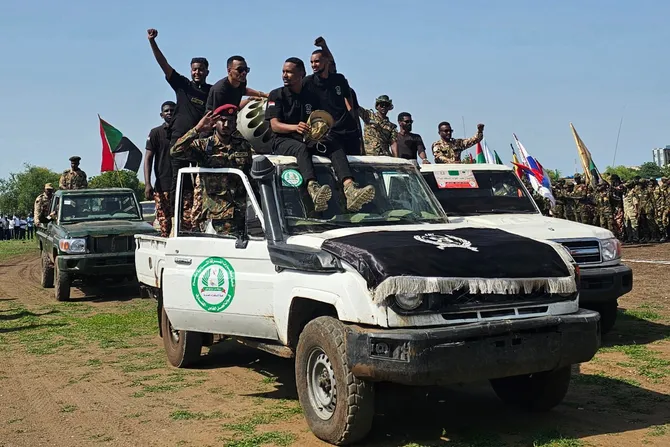
In a speech marking the 72nd anniversary of the founding of the Sudanese Armed Forces, Al-Burhan said the state would provide logistical support and the necessary legal, political and security guarantees for participants without interfering in the dialogue’s management. He stressed that it must take place in an environment where freedoms are protected, allowing political and community groups to freely express their views.
Al-Burhan said the path to peace begins with ending the fighting, laying down arms, and restoring citizens to their areas and restoring services and security. At the same time, he stressed that Khartoum “will not accept a peace that returns RSF leaders” to power.
Al-Burhan also announced that participants would receive legal guarantees regarding ongoing criminal proceedings against them. He said suspending those proceedings would not constitute an amnesty or permanently absolve them of responsibility, but rather provide “temporary procedural immunity” to create conditions conducive to participation.
He also pledged permanent immunity for opinions and positions expressed by participants during the dialogue sessions, meaning they could not later be used as the basis for criminal, civil or administrative proceedings against them.
“Dialogue will begin soon”
The US statements came after Sudanese Prime Minister Kamil Idris said on Sunday that Sudanese-Sudanese dialogue would begin soon, stressing that Sudanese people alone should determine how their country is governed.
During a meeting in Khartoum with a delegation of ambassadors from the African Union Peace and Security Council, Idris said the dialogue would lead to “comprehensive national recovery, full national reconciliation and integrated constitutional reconstruction,” culminating in free and fair elections through which the people would choose new national leadership.
Idris briefed the delegation on the Sudanese government’s peace initiative, saying it had received local, regional and international support. He called on the African Union to play a greater role in supporting Sudan and backing the government’s efforts to designate the RSF as a “terrorist organisation.”
The prime minister outlined what he described as “red lines that cannot be crossed,” foremost among them rejecting any equivalence between the Sudanese Armed Forces and the RSF and opposing foreign interference in Sudan’s affairs.
Idris also said the army was advancing in the Kordofan region and would move into Darfur, reflecting continued divergence between the Sudanese government’s position and US calls for a truce to be observed by both sides of the conflict.