
- In many parts of the world the mere mention of the jinn will draw shivers, while in other places the jinn, or genies, will be placed among myth and folklore.
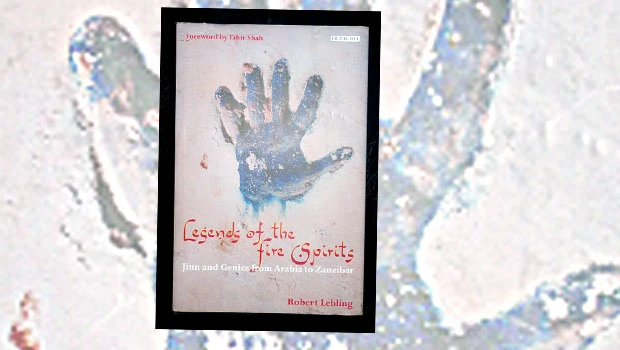
- In “Legends of the Fire Spirits: Jinn and Genies from Arabia to Zanzibar,” author Robert Lebling traces the story of this supernatural race of beings from the dawn of history to the present day.
English readers may be surprised by how many words associated with the jinn have become a part of their own language, from Satan and devils to ghouls and even genies, the jinn permeate into contemporary thought.
The jinn have their beginnings in pharaonic Egypt, Sumeria and ancient Persia. King Solomon, the son of David, was said to have control of the jinn, and centuries later, the jinn were described in the Qur’an and associated Sunnah. This connection with Islam not only provided some credence to the concept but helped to spread it through Africa and Asia as the religion spread in the first millennium after the birth of Christ. The beliefs hold that there are three types of beings, including angels, man and the jinn. Some contend the jinn held sway in the world before the dawn of man and were made subservient to man at the time of Adam.
Born of smokeless fire, the jinn play a variety of roles from prankster to eater of human flesh and tormenter of men, women or children. They can take a variety of forms or shape shift; they can be Christian, Jewish or Muslim or a variety of other religions depending upon whom you ask. They can marry humans and have hybrid children and can be stopped by invoking the name of God.
In “Legends of the Fire Spirits,” Lebling examines how the jinn have been adopted by many cultures and adapted to pre-existing belief systems from the Berbers of North Africa to the Malays of South Asia. Nowhere is belief in the jinn stronger than the Arabian Peninsula and the heart of Islam. Bedouins today avoid certain desert areas for fear of them, and in Saudi Arabia with its obedience to the word of the Qur’an, curses, spells and possession by the jinn are taken very seriously.
As mankind’s perception of the jinn evolves it also presents new challenges for Islam. In Nigeria, Lebling notes a pending criminal case in which the defendant is asserting jinn possession as a defense in a Shariah court.
“Legends of the Fire Spirits” is a long overdue compendium of the knowledge and history of the jinn and details the literary impact it has had from Arabic poetry to English 19th century Arabian Romanticism. Although the author maintains the book is not intended as a scholarly work, readers will find it rich with footnotes and citations to various books and manuscripts that would help those wishing to explore the subject with more detail.
Although the book’s focus is on the Arabian traditions and stories, an unintended audience may be found among young people fascinated with demons, vampires and werewolves that have resurfaced recently in pop culture.
“Legends of the Fire Spirits” is not a lazy read, but it will enrich the reader’s knowledge of human history more than one might imagine based on the subject. With its index and divisions, the book also can serve as a lifelong reference to the mysteries of the Middle East and their influence on both Western and Eastern cultures.
In a brilliant introduction to the book, author Tahir Shah notes that when he moved to Morocco he had to perform an exorcism at his new house. It was in part a response to his new community, but he notes that the ritual didn’t do any harm other than the associated expense.
Are the jinn real or imagined? Are they merely folklore or a supernatural race inexorably linked to mankind? Perhaps on one level it doesn’t matter because they are so involved with human history and superstition. Even the tradition of the groom carrying the bride over the threshold on their wedding night goes back to the belief that the jinn stay near the doorways of residences, so they already may have influenced us in so many ways as to make the question moot.