
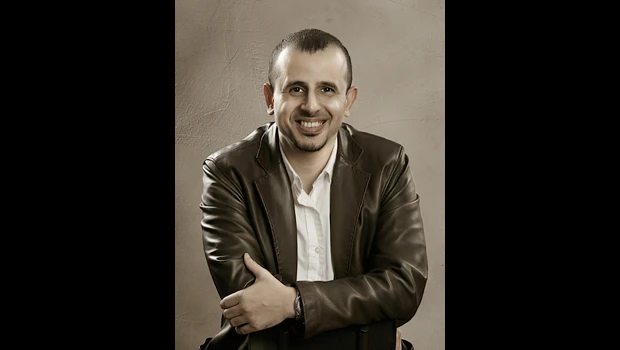
- Abu Bakr Omar, also known as Bakri, is a photographer, graphic designer and art director.
- He is also the founder of B&A visual communication consultants, and founder of THE PASSIONATES for photography and digital manipulation.
Abu Bakr Omar, also known as Bakri, is a photographer, graphic designer and art director. He is also the founder of B&A visual communication consultants, and founder of THE PASSIONATES for photography and digital manipulation.
A four-time winner of the “Best Design” award in graphic design during college in Arizona (1992 to 1994), Omar has over 22 years of experience in the industry and has worked with diverse clients both locally and internationally.
In my college years in Arizona, it was essential for graphic design students to take photography courses. I, myself, did not rely on those courses alone for I used to practice photography with a professional photographer whom I met when I started buying camera tools. We used to go on photography trips outdoors and take photos of random things until I came back to the Kingdom. Here, I stopped taking photos because it was hard for me to go around and take photos in public. So, I started my photography set that helped me take indoor photos.
My success was due to a consistency on quality along with patience. I also compared myself to photographers internationally and not just locally. Also, I listened to those who can actually help make my work better.
“Practice makes perfect” and that making mistakes is a way to teach yourself what to do and not do. When I compare myself to when I was younger, I find that I was very ignorant. But, if I didn’t make those silly mistakes, I wouldn’t have become the photographer I am today.
This should not only apply in photography, but in every other kind of art including music and writing. For me, I think what sets me apart is the imagery that I present, which is either in new ideas or technicality. That’s what attracts viewers!
Let me tell you something before I answer that question. Commercial and editorial are the same even though I’m sure a lot will disagree. The only difference is who is assigning you the job. If it’s an advertising agency or a direct client, it becomes commercial photography, but if it's a magazine or newspaper editor, then it becomes editorial photography. In both cases, the brief might ask for an artistic or special execution; therefore, the three types you mentioned are basically one.
To answer your question, I totally enjoy any assignment that is challenging and needs a creative approach to it more than a normal assignment.
I use a 35 mm digital camera with a medium format.
That depends on the shot. For portraits, there is the 50mm and there is 150mm on medium format. There is also the 200mm on the 35mm and for sure the 28mm for architecture on medium format.
Again that depends on the shot required. Sometimes, I use both in one shot. But, I don’t use darkroom anymore, but rather the computer. Surely, I also rely on manipulation, but only when it is needed.
Well, I use it only when I need to. For example, when it’s for a product or artist execution, then I use it heavily, but I don’t overdo it. As long as it still looks like a photo and is appealing to people then you are ok and are not overdoing it.
Some people think that if you use Photoshop then you are not a good photographer. They don’t understand that some people take photos and others make them. There is nothing wrong with using any tool to make your photo more appealing, especially in the commercial industry.
You can’t say it's pure photography with no manipulation. Personally, I think every photographer should use Photoshop regardless of the amount they use it.
Great photographers around the world who made a signature inspire me. I keep looking at their work and actually contacted some of them. Movies, great cinematography, pairing and any kind of art also inspires me a lot.
I think it's going well and that it is booming. There are a lot of great talents and great quality nowadays. I think it’s going to grow even bigger and better inshallah.
My advice is: commit to it, find the area of photography you like and are good at and focus on it. Never be completely satisfied with your work, rather beat yourself over and over and compare your work with both local and international photographers. Also, keep experimenting and listening to those who are ahead of the game.