
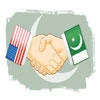

Pakistani Prime Minister Nawaz Sharif’s recent visit to the United States and his one-on-one meeting with President Barack Obama took place under the watchful eyes of his supporters and political opponents. The reaction to the outcome of the visit was supposed to be vociferous but to the surprise of many that did not happen.
The visit and the subsequent meeting elicited mixed responses. However, it was interesting to note that the criticism from the right-wing Jamaat-e-Islami and Sharif’s principal opponent Pakistan People’s Party was lukewarm and carefully worded.
It is yet to be seen whether the visit will prove to be a bane or a boon for Sharif, his government and above all for Pakistan. Viewed in the context of tension-ridden atmosphere and a mercurial relationship between the two countries, the visit and the meeting is undoubtedly a major development, per se. The fact that the two leader held talks for a considerably longer time than expected must have helped both in reading each other’s minds and in establishing a rapport. It can be assumed that attempts must have been made to hammer out differences but it is an uphill task and cannot be done overnight or in a single meeting. The US cannot ignore the fact that Pakistan had been through a mess during transition from military to democratic rule and that the transfer of power from one elected government to another showed peoples’ determination to safeguard their birthright to manage their affairs. It is heartening to note that Sharif carries no baggage from the past and has demonstrated his eagerness to normalize ties with his opponents at home and has adopted similar approach vis-à-vis Pakistan’s ties with India and Afghanistan.
Sharif’s meeting with his Indian counterpart on the sidelines of the UN General Assembly is a testimony to that approach. How fruitful the meeting proved to be is a different debate. Pakistanis were hopeful for a breakthrough on the issue of drone attacks but to no avail. The US president minced no words in his post-meeting demand from Pakistan to vacate the northern territory from terrorists, who are allegedly using it as a safe haven for launching attacks on US forces in Afghanistan.
Yet another bone of contention remains unresolved i.e. release of Dr. Afia Siddiqi and the handing over of Dr. Shakil Afridi, accused of spying for America that led to the killing of Osama Bin Laden in Abbotabad. Both sides have spoken differently on these issues. However, release of the long held-up $1.6 billion military and economic assistance to Pakistan, or the World Bank and State Department’s $1 billion for energy and irrigation projects, though minor concessions, was a relief for Sharif as the goodwill hidden in the release of these funds, was something that Sharif could rely on for image building at home. Most important aspect of the entire scenario is Russian President Vladimir Putin’s offer to help Islamabad economically, and also the Chinese interest in mega projects, including the construction of two new nuclear plants in Pakistan. Pakistan has already diversified to a great deal its trade directions, and shown unwavering intention to develop its own military hardware with Chinese assistance, and perhaps with Russian involvement too. America may not be alarmed by it, but cannot ignore these developments altogether. The bitterest development of the visit was Obama’s decision to act as counsel or attorney for India on Hafiz Saeed issue. Obama’s statement has drawn sharp criticism in Pakistan as on one hand the US refuses to mediate on the lingering Kashmir issue and wants Pakistan to resolve the dispute through bilateral efforts and on the other hand it supports Indian viewpoint regarding alleged involvement of non-state actors in terrorist incidents in India.
This approach has greatly damaged US image in Pakistan. Having said that it would not be wise to claim that the visit was a complete failure. The visit, itself, was a major achievement. Sharif may not have achieved the desired results but this visit may help get the ball rolling.


