

Millions of Americans, along with millions of others around the world, watched the 43-year-old John F. Kennedy on Jan. 21, 1961, when he was sworn in as president of the United States.
As he stood there in freezing weather giving his inaugural address, it was clear that the US was leaving the witless 1950s behind and entering a new, zestful era of cultural vigor. Kennedy, with his glamorous wife standing beside him, exuded confidence, strength and hope. Reporters at the time lavished a lot of ink on the handsome couple, noting their devotion to matters of the intellect, to good taste and to learning.
The Kennedys were above reproach. The new president could do no wrong. Social critic Allen Matusow observed at the time: “So luminous was the image created by Kennedy that day, that for countless of his countrymen no disaster of policy, no paucity of achievement, would ever dim it.” But, truth be told, in his One Thousand Days in office, Kennedy was responsible for many a disaster and for a surfeit of mistakes. Yet the image endured, embraced by Americans as it was by others around the world.
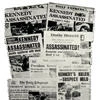
That is why 50 years ago this month, on Nov. 22, 1963, people everywhere were shattered at the news of his assassination, and incredulous that Camelot, the glitzy moniker that had come to symbolize the Kennedy years, had come to such an abrupt, senseless end. His myth endures, and his presidency continues to this day to be extensively chronicled by biographers plumbing every minutia of his life, every aspect of his temperament.
What kind of man was Kennedy? Was he, as his many (too many) admiring biographers aver, the astute chief executive who was able, at home, to read the public mind to advance his vision of change, an intellectually inquisitive president willing to link his presidency with good taste and high-brow culture, a president whose equally refined wife spoke fluent French and was a devoted fan of Marcel Proust’s “A la recerce du temps perdu?” And was he, really, a reckless cold warrior motivated by the will-to-power in his foreign policy, a petty and vain president, and a lecherous womanizer, as other biographers have portrayed him?
After spending years researching Kennedy’s legacy, the nationally known Pulitzer Prize winning investigative journalist Seymour Hersh wrote in his bestseller, “The Dark side of Camelot”: “(John F. Kennedy) was much more corrupt than other post-war presidents, by a major factor, and much more manipulative, though Nixon was a close second. There is nothing wonderful about Nixon — and Watergate proved that — but I think that Nixon was an amateur compared to Kennedy.”
And, yes, he was a cold warrior. Consider in this regard the failed Bay of Pigs invasion, the brinksmanship of the Cuban Missile Crisis that followed, and his adventure in Vietnam, where he expanded the American commitment there from a few hundred advisers under President Eisenhower to 17,000 troops under his own short tenure. And consider as well his Mideast foreign policy, where he was the first American chief executive to initiate the US-Israel military alliance — which has continued to this day under subsequent presidents — and to end the arms embargo that his predecessor enforced on the Zionist state following the 1956 Suez War. Moreover, Kennedy was the first president to introduce the concept of the “special relationship” between the US and Israel, a lopsided relationship that began with Washington sending the Israeli military the most advanced weaponry in America’s arsenal.
Yet, I say, the Kennedy myth persists. It persists because Americans want it to persist. And a myth that people believe in tends to become “true,” whether its veracity is evident or not.
But lest we forget, Seymour Hersh is no lone wolf. There are a lot of commentators around who equally debunk the Kennedy charade. Consider here, as a case in point, the writer James Ellroy’s observation: “Jack Kennedy was the mythological front man for a particularly juicy slice of our history. He talked a slick line and wore a world-class haircut. He was Bill Clinton minus pervasive media scrutiny and a few rolls of flab.”
That’s an observation that could be seen as flippant and irreverent — one that Damon Runyon would’ve liked — but it’s not an observation that is far off the mark.


