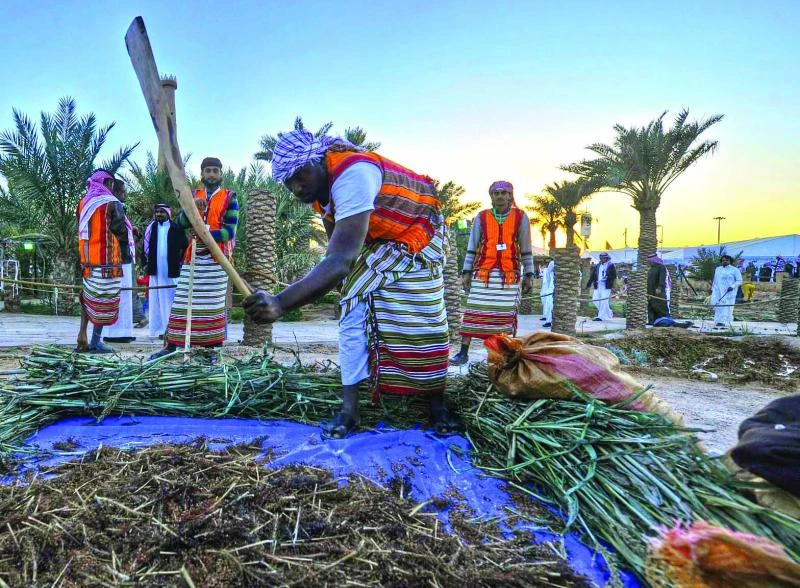
The 17-day Janadriyah national heritage and culture festival is drawing huge numbers of visitors. So far, over 200,000 visitors have shown up at the 29th heritage festival with locals and expatriates praising it for its unique portrayal of the history and culture of Saudi Arabia, the organizers said Saturday, the third day of the fest.
Organized by the National Guard, the mega event celebrates Saudi identity by encouraging a sense of sociocultural and national unity. It is customary to invite the head of a country as guest of honor at the festival. This year the United Arab Emirates (UAE) is the guest of honor.
Expressing his gratitude on his country being bestowed the honor, UAE Ambassador to Saudi Arabia Mohammed Saeed Al-Zahiri said:
“The selection of the UAE as the guest of honor at the Kingdom’s national festival indicates the profound and solid bilateral relations binding the two fraternal countries.”
The visitors were full of praise for the superb display of the Kingdom’s rich heritage and culture, saying they were enthralled by the programs featuring an operetta, a performance of the traditional Saudi Ardha folk dance. Local arts, sword dances, various symposiums, poetry, ethnic cuisine and camel races are among the festival's major attractions.
A cultural program was held in the King Faisal conference hall on Friday. A symposium entitled “Saudi Arabia and the Salafist movements in the Arab world” focused on the movements of political Islam, where the participants asserted the importance of Islamic moderation and unity. The participants affirmed that the Kingdom is following moderation urged by the Qur’an and Sunnah as guided by Prophet Muhammad (peace be upon him).
The Saudi Commission for Tourism and Antiquities (SCTA) has set up a bigger stand this year with the tourism body’s pavilion showcasing the travel and tourism history of the Kingdom, which attracted a huge number of visitors.
Various ministries have set up their own pavilions showcasing their achievements so far, and also hosted interactive sessions on current and upcoming projects, visions and missions to redress public grievances.
Prince Faisal bin Khalid, governor of Asir, witnessed a ceremony on Friday at the Asir pavilion and also toured the heritage and cultural exhibition.
Hayat Al-Maskeen, a Saudi student, said: “I have come here before, but this time the experience is amazing with improved arrangements and better display of major attractions.”
Moreover, several cultural events, speeches by national leaders and seminars with participation from leading Arab writers and intellectuals such as Qatar’s Abdulhamid Al-Ansari and poets like Qasim Haddad from Bahrain, Muna Hasan from Sudan and Shirin Al-Adwi from Egypt added value to the learning process, she added.
There are separate timings for students who wish to be educated on the rich culture and heritage of the Kingdom.
Abdullatif bin Abdur Rahman, a visitor, said: “I have found it the best means to experience the rich traditions and customs of the Kingdom with broad array of cultural and entertainment activities.”
The first event of the annual festival was held at the initiative of the late King Fahd in 1985, which was traditionally a camel race.
A member of the assistance committee exuded confidence that about 10 million people will visit the festival this year.
200,000 visitors soak themselves in rich Janadriyah experience