The Kingdom’s healthcare sector is increasingly directing its efforts beyond simply treating disease and into predicting and preventing it from taking root. That direction is being powered by artificial intelligence, genomics, and data-sharing systems that allow providers to identify health risks earlier, allowing for preventative measures to be put into place.
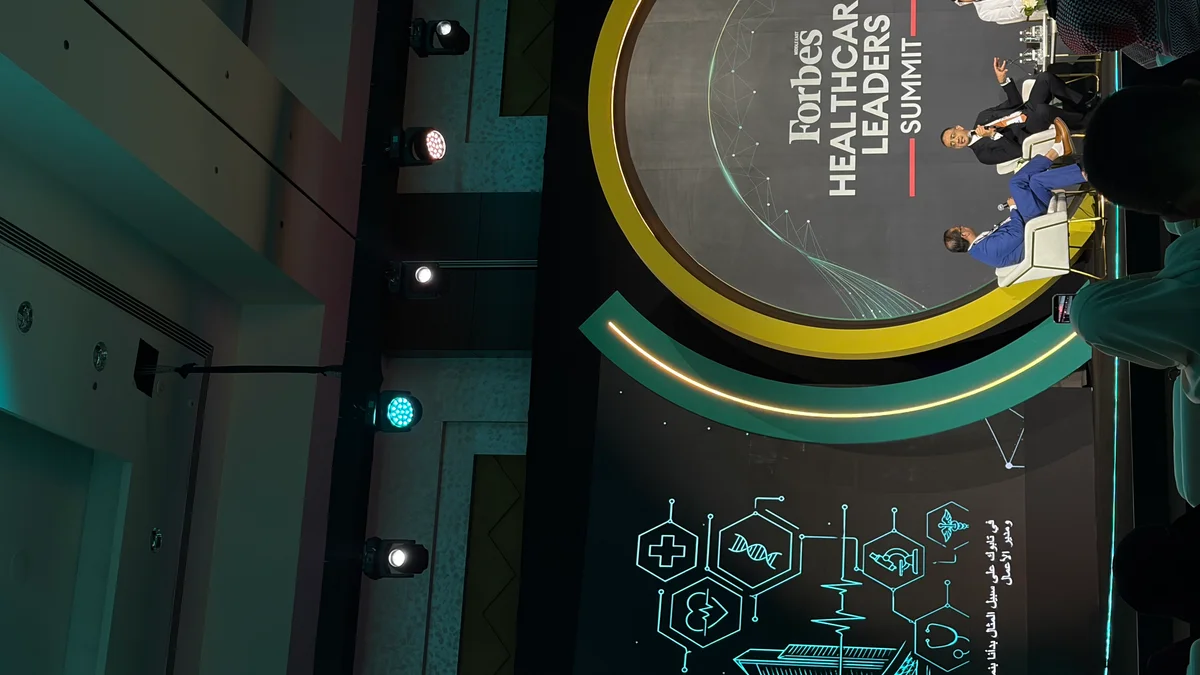
Healthcare, investment, and pharmaceutical leaders spoke at the Forbes Middle East Healthcare Leaders Summit in Riyadh on the technology that is revolutionizing the ways health risks are identified and targeted. Speakers pointed to data-sharing as an emerging technology tool that will help with intervention tactics and efforts.
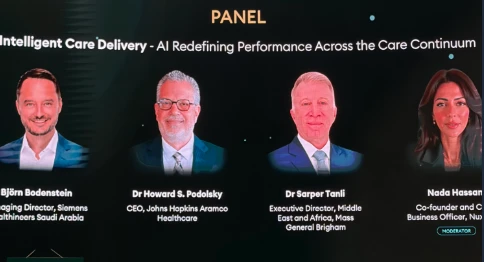
Speaking to Arab News at the summit, Dr. Howard S. Podolsky, CEO of Johns Hopkins Aramco Healthcare, highlighted how breaking down barriers between differing healthcare datasets can pave the way for providers to better understand risks across the population, saying:
“Data sharing, tearing down the silos, so that … we can have that information anonymized, and be able to cohort it in a way that we can best predict where the population is in terms of health, wellness and disease risk stratification — when we do that, we can get ahead of and create primary prevention within population health.”
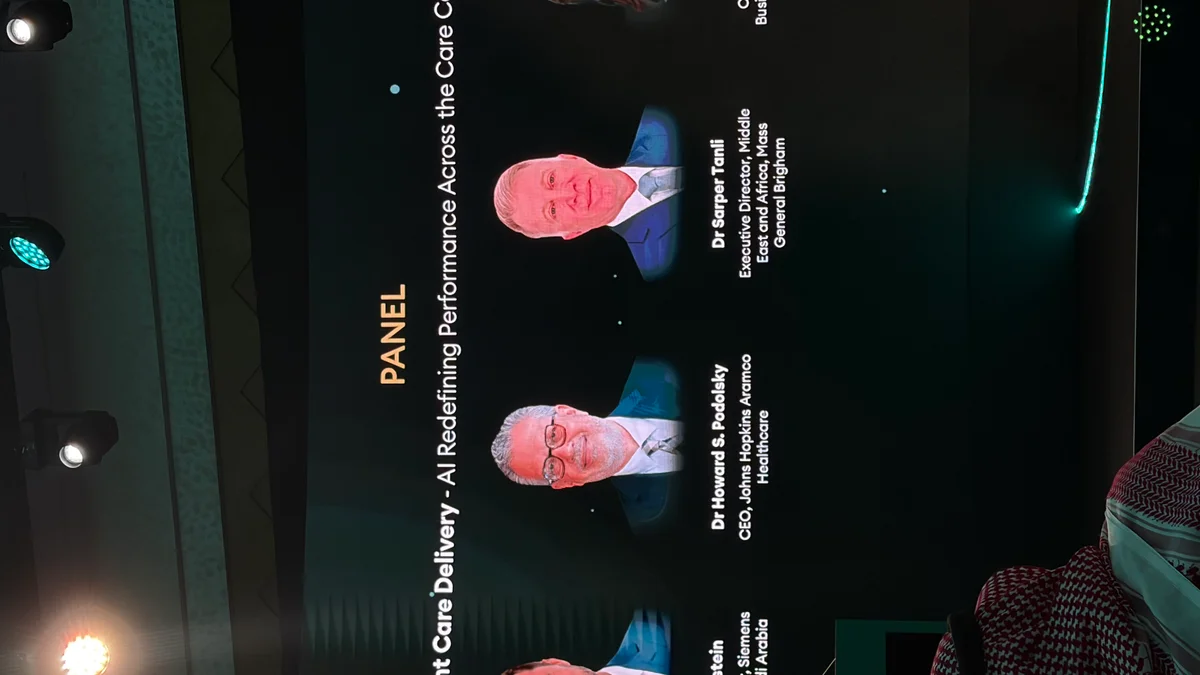
Podolsky took part in a panel that dissected the impact of AI across the care continuum and spoke on how access to protected and anonymized data would play a crucial role in that shift in healthcare, telling Arab News:
“I think being able to get our hands on the data is most important — anonymized, of course, and protected, of course — but that’s going to be key to our successful population health and making a difference.”
While data on its own is a great tool for identifying risks across populations, genomics is what is at the core of allowing healthcare providers to understand risk at an individual level.
Sameh M. Azzam, senior director of biotechnology, MENA, at Hikma Pharmaceuticals, spoke to Arab News on the transition from detecting patients once disease is present toward understanding genetic mutations and hereditary risks through testing, which extends to risks associated with conditions like cancer.
“We are moving from detecting the patients at the disease area, then gradually we will be moving to know which genes or genomes, or multiple mutations, are causing this cancer, and this is where we reach prevention,” he said.
“The important point here is moving gradually towards understanding more the genome and how the environment is affecting the genome and vice versa,” Azzam added. “The earlier we go to understand the genome, the more we can go to prevention.”
He added that the Kingdom is growing increasingly close to creating an ecosystem that is able to facilitate and support that level of testing.
The shift toward prevention also goes beyond initial diagnosis and thrives with patient feedback being a necessary source of data that is able to inform how treatments perform once they reach the market and are used.
Dr. Gunjan Bhardwaj, founder and CEO of Partex AI, spoke during his panel discussion on how feedback from patients outside of clinical trials is fundamental. He explained that such feedback can be collected through telehealth and telemedicine platforms, which can aid companies in understanding whether developed therapies are succeeding in their outcomes, and what aspects require adjustment.
“Once drugs are out in the market, you need to ask these patients whether these therapies actually work with intended healthcare outcomes or not,” he told Arab News.
He highlighted regional platform Altibbi as an example of how patient feedback is collected and is able to build a sense of direction for compounding pharmacies in their ability to adapt to patient needs regarding dosage and formulations.
For the Kingdom in particular, Bhardwaj pointed to the fresh ground as an optimistic scenario for newer healthcare models, saying:
“There is huge opportunity, because there is no legacy,” he said. “You’re building a garden from scratch.”
Rather than simply “sowing the seeds,” he added, the Kingdom has the opportunity to “transplant the trees.”