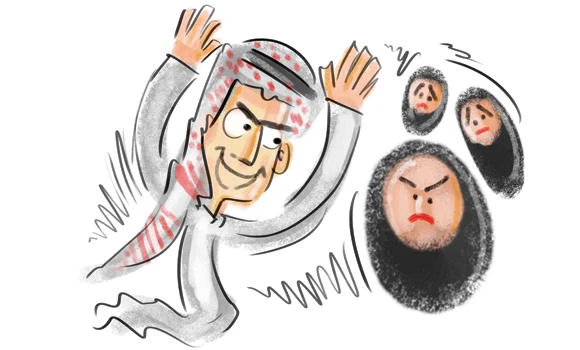
ABHA: Many Saudis expressed shock and anger at recent videos showing women being subject to harassment by men.
While many still believe that harassment is an individual case that hasn’t evolved into a phenomenon, others state the need to draft laws and legislation to combat this dilemma.
Proponents of having an anti-harassment law base their position on data showing that harassment is on the rise in the Saudi community.
Of women polled by a recent Saudi study, 92 percent say that the increased harassment is caused by the lack of a proper punishment.
Twenty-seven percent of women said they been subjected to verbal harassment; 26 percent said that harassers threw their phone numbers at them; 24 percent said that they were harassed by looks; while 15 percent had experienced physical harassment, the poll results stated. Women said that the majority (59 percent) of harassers are Saudi.
Last year, media outlets criticized the delay in passing the anti-harassment law that was drafted by eight Shoura Council members. Opponents slammed the draft law saying it encourages mixing between men and women in society leading the Shoura Council to delay discussions on the topic for five months.
The proposed law would have punished harassers with sentences of up to one year in prison and fines of SR100,000. The law stated that “any uncalled statement, act, position or signal that the suspected perpetrators use to sexually provoke or humiliate the other party is considered a harassment.”
Lawyer and legal counselor Dr. Hadi Al-Yami said that all crimes have punishments explaining that all harassment crimes have had court sentences depending on the judge’s assessment on the situation of each case.
He explained that harassment is a general term and needs to be specified in court cases such as harassment by relatives, or those happening in public or at workplaces.
“In some cases, harassment happens in front of everybody such as the Jeddah incident, or it could happen in secret,” Al-Yami said stressing that each case has its own details and, as a result, punishments.
Based on these details, Al-Yami highlighted the need for a general law that has a clear definition of harassment and indicates punishments for different harassment types.
He said that harassment could also threaten and affect both genders, not only women.
Al-Yami doesn’t believe that harassment has became a phenomenon but said that action should be taken to prevent it from escalating.
Member of the National Family Safety Program Abdul Rahman Al-Qarrash said that harassment is one of the most dangerous issues facing societies, particularly in light of strict rules against it.
Al-Qarrash strongly argued the need for relevant authorities to unite efforts and find laws to deter assailants from conducting their crimes, which have a negative influence on the victim’s psychology.
Appeals for a deterrent anti-harassment law