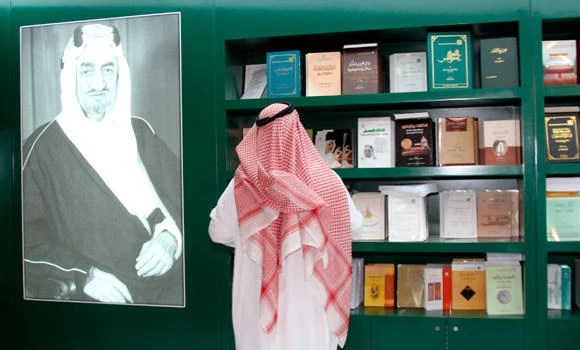
Most traditional bookstores in the Kingdom are facing hard times due to low turnout of customers as people increasingly use their smart devices to read their favorite books.
There are some readers in Saudi Arabia who still prefer their books in the traditional paper format, but bookstore owners fear that the worldwide trend for e-books will soon take over the Kingdom also.
“I think this new technology can destroy the traditional industry for products such as printed books, newspapers and even notebooks. Technology has created several choices for consumers. However, most readers still prefer printed books,” said Abu Khaled, owner of a bookstore in Jeddah.
E-books first appeared in Apple’s products in 2010 with the iPad and its agreements with five of the six largest publishers that would allow it to distribute books electronically.
The first commercially profitable tablet computer was followed in 2011 by the release of the first Android-based tablets including versions of the Nook by Barnes & Noble and the Kindle by Amazon.
Unlike previous dedicated e-readers, tablet computers are multi-functional allowing for the installation of other e-book vendors. The growth in general-purpose tablet computer use has increased the popularity of e-books over the past three years, according to Wikipedia.
In July 2010, online bookseller Amazon reported that sales of e-books for its proprietary Kindle outnumbered sales of hardcover books for the first time, saying it sold 140 e-books for every 100 hardcover books, including those for which there were no digital editions. By January 2011, e-book sales at Amazon had surpassed its paperback sales.
“Many readers still want to read traditional paper books. However, some also think the fate of traditional books will be the same as cassettes when CDs arrived,” Mohammed Al-Rasheed who manages a bookstore in Jeddah told Arab News.
Commenting on the downsides of digital books, he said: “Many traditionalists want to hold, touch, and even smell their books, which cannot be done with e-books. There is also the cost involved in buying expensive tablets, computers and Smart phones, and the hassle of getting accounts and making purchases with the major e-book publishers using a credit card,” he added.
Bookstores facing hard times in Saudi Arabia