- Houthis are using civilian objects and vital energy sources to sustain their war effort, the coalition said
- The militia has fully exploited these sites to support the war effort
RIYADH: The Coalition to Restore Legitimacy in Yemen carried out an operation on Tuesday to neutralize capabilities used by the Houthis to threaten the Kingdom, Yemen, the southern Red Sea, and maritime corridors.
The Houthis are using civilian objects and vital energy sources to sustain their war effort, the coalition said.
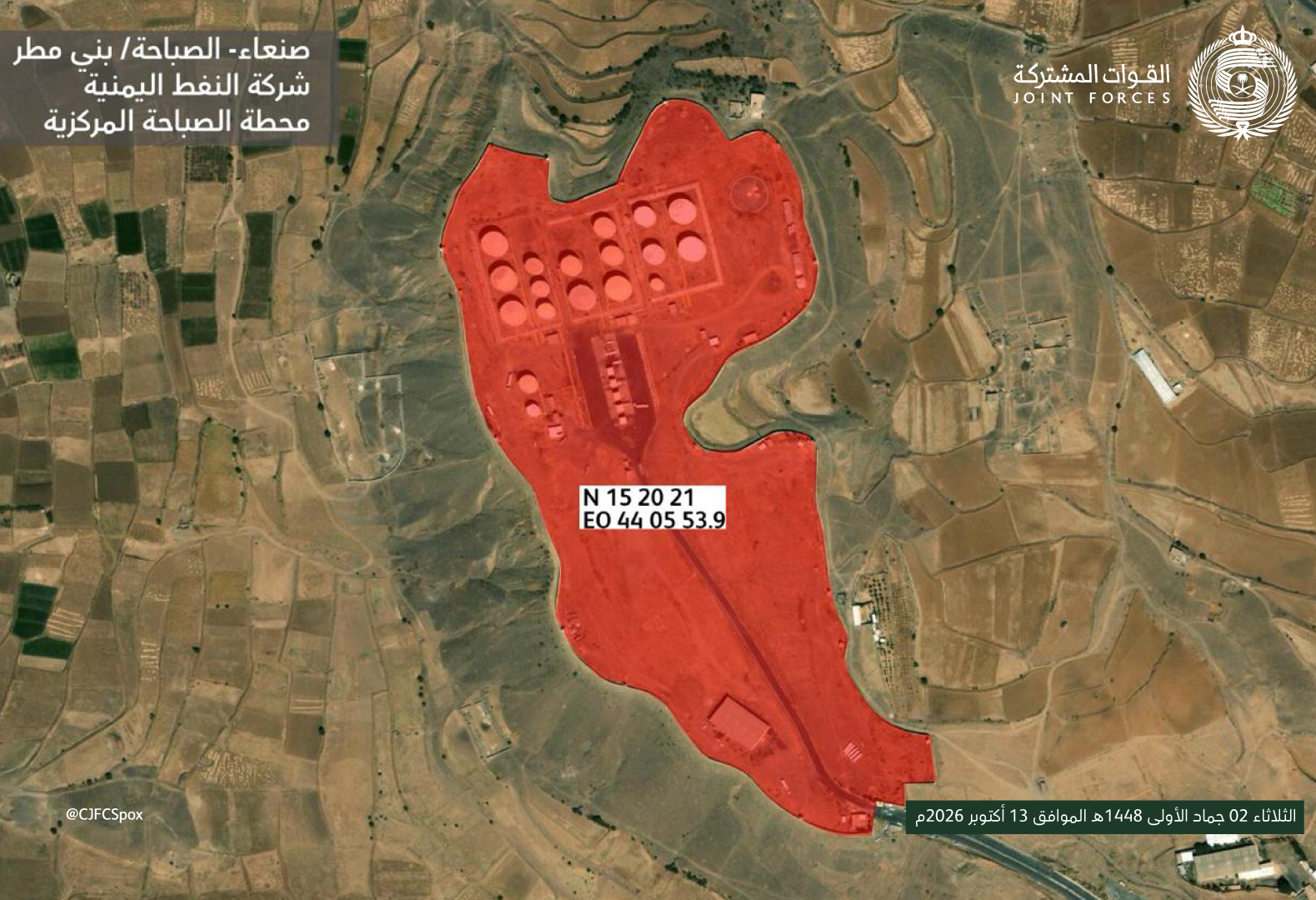
These include the central Al-Sabaha station in Sanaa, underground fuel storage reserves, fuel tanks, and dedicated piers for transferring and unloading fuel in Hodeidah, Sanaa, and Dhamar.
“The terrorist Houthi militia uses these to directly support its terrorist military operations while depriving the Yemeni people of benefiting from these resources, which ought to be lawfully allocated to meet their basic needs,” coalition spokesman Major General Turki Al-Maliki said.
The militia has fully exploited these sites to support the war effort by fueling the arsenal of missiles and drones that threaten Saudi Arabia, as well as the safety of navigation, ports, and commercial vessels in the Red Sea, Al-Maliki said.
This has directly contributed to the execution of hostile attacks against civilians and civilian objects, and to the planning of imminent attacks against civilian targets within the Kingdom and commercial vessels in international waterways, he added.
The operation focussed on “neutralizing the capabilities” and was carried out according to international humanitarian law.
“All feasible precautions to avoid incidental civilian casualties or damage” were taken during the planning and execution of the operation, Al-Maliki said.
The announcement comes after the coalition urged civilians to evacuate “the site of the Yemen Petroleum Company, the Al-Sabaha Central Station in Sanaa,” referring to a site on the western outskirts of the capital.
Earlier, coalition spokesperson Maj. Gen. Turki Al-Malki said on X that three drones had been destroyed north of Riyadh.
Meanwhile, the spokesperson for the Yemeni army said his forces have achieved gains on the ground supported by intense fire cover and the execution of 2,200 precision strikes carried out by fighter jets, drones, field artillery, multiple-launch rocket systems, and sniper units.
The strikes focused on dismantling Houthi defense networks by targeting command and control centers, fortifications, fire sources, surveillance and reconnaissance posts, troop concentrations and reserve deployments. The strikes also targeted weapons and ammunition depots, transport and supply lines, and high-value military targets deep within the militia’s territory, Colonel Majed Al-Nuzaily said.
He added that concentrated strikes in Taiz crushed militia convoys and reinforcements, dispersed their assembled forces, and crippled their ability to provide fire support to their positions or regroup their troops.
Preliminary field estimates indicate that approximately 1,200 personnel were killed, and over 440 military vehicles and pieces of equipment were destroyed or disabled across various operational sectors, he said.
Military engineering units on the western front are clearing recaptured sites and areas with landmines and improvised explosive devices planted by the militia, while securing roads and passages to protect civilians and facilitate their return, Al-Nuzaily said.
He added that strikes targeted legitimate military objectives in accordance with the rules of international humanitarian law and the principles of distinction, proportionality, and necessary precautions.