Medical experts have warned expats that the longer they stay in the Kingdom, the greater the risks of developing diabetes, a chronic syndrome that may cause kidney failure and heart ailments.
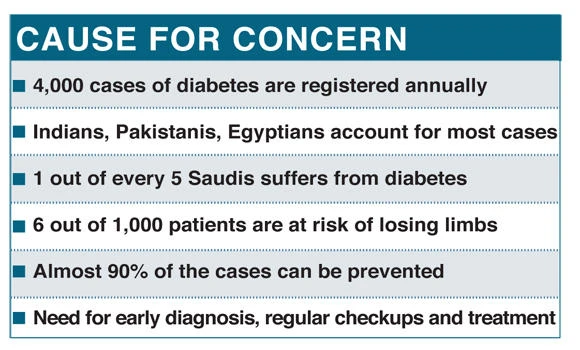
“The prevalence of diabetes varies among people of different countries, with Indians, Pakistanis and Egyptians accounting for the highest number of cases compared to Filipino, Sudanese and Somali nationals,” said Dr. Abd Alaaty Mustafa, a senior internist at Jeddah’s Bugshan Hospital. He blamed lifestyle, genetics and environment for the increasing number of diabetes cases among expats.
“We have noticed that for expats who are working here for a long time, the chances of developing diabetes are higher compared to recent years,” Mustafa told Arab News.
He said the prevalence of heart diseases is also high among Indian and Pakistani expats as a result of high blood sugar, high cholesterol and high blood pressure. He advised expats to exercise regularly, eat healthy food and reduce their body weight to control the disease.
Mustafa advised expats to check blood sugar levels regularly. “Most people do not know they have diabetes. It is very important to check blood sugar past the age of 30, especially those having a family history of diabetes,” he explained. Dr. Mohammed Ali of the Al-Abeer Polyclinic in Sharafiya also agreed that diabetes cases among expats are growing due to unhealthy lifestyle. “We have noticed that when Indian expats go back to their country, their blood sugar levels are reduced considerably as a result of lifestyle and environment changes,” he told Arab News.
Diabetes in general are reaching epidemic proportions in Saudi Arabia making it a major cause for concern, according to the latest statistics. About 4000 diabetic cases are registered in the Kingdom annually.
King Abdul Aziz University organized a two-day scientific symposium on the recent developments in the treatment of cardiovascular disease, diabetic foot and diabetes with the discussion of 50 scientific papers. The symposium was sponsored by Dr. Osama Tayeb the dean of the University and participation of specialists from around the Kingdom at a local hotel in Jeddah on Monday. Mohammed Hussein Al Amoudi, general supervisor and Professor Hassan Ali Al-Zahrani, diabetic researcher in diabetic foot and Professor of Surgery and Consultant Vascular Surgery gave some very useful information on diabetes.
Professor Al-Zahrani said that almost 6 out of 1000 diabetic patients are at risk of losing their limbs and that 1 out of every 5 Saudis suffers from diabetes. He further said almost 90 percent of these cases can be prevented from turning into extreme cases of sugar by early diagnosis, regular checkups and appropriate treatment by medical specialists. He pointed out that the incidence of diabetic foot which results from complications in patients with diabetes is a common occurrence.
“Almost half of the patients with diabetes have foot complications without their knowledge. The symptoms include the disruption of the nerves causing a numbing in the extremities leading to a high rate of injury, sores and infections,” Professor Al-Zahrani said.
Diabetic foot is the main reason for foot amputation globally,” he added.
He explained that owing to diabetes, injuries to the foot can fester and lead to foot ulcers. Sores can also erupt in the toes, soles and the ankle joint and are usually very painful.
Often because of the poor blood circulation, new skin growth does not take place leading to dead skin around the wound or ulcer. Patients with foot ulcers are usually unable to feel the pulse in their feet.
There are currently 336 million people who have diabetes globally. This figure is set to rise to over 550 million by 2030. Diabetes is among the top 10 causes for disability, resulting in life-threatening complications such as heart disease, stroke, lower limb amputations and blindness. Ironically, half of the diabetic cases go undiagnosed.
The prevalence of diabetes in the Kingdom is reaching alarming proportions. Over 25 percent of the adult population suffers from some form of the disease and that figure is expected to more than double by 2030.
Diabetes on the rise among expatriates in Saudi Arabia