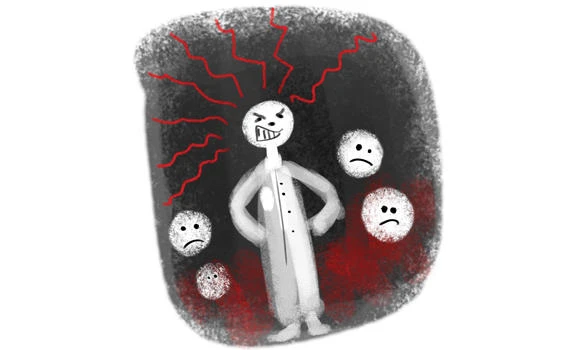
Saudi teachers and educators are concerned about the high incidence of violence in some schools. Violence almost certainly will hamper the development of students’ academic skills and their potential. In addition, it can isolate students and produce social problems.
The professionals are especially worried about the violence in girls’ schools and demand a firm stand in order to prevent the phenomenon from spreading.
Responding to a recent study by the Interior Ministry that revealed that incidents of school violence accounted for 82 percent of the total incidents of violence in the country, a teacher and parent, Abdul Aziz Al-Turki, said some form of punishment should be used to deal with student violence. He refused to put the blame totally on schools for the increasing school violence.
Another teacher, Abdul Malik Yusuf, said the strategies for dealing with the situation should include teaching social studies to students and their families in addition to encouraging students’ families to meet with teachers. He also stressed the need for increased awareness and the spread of a culture of respecting others as well as fostering an environment of safety and security inside schools.
Hanan Sulaiman, a student adviser, told Arab News that one of the girl students developed a habit of violent attacks on her classmates because she had a sense of social inferiority. She was brought back to normal relations with others and her self-confidence was boosted after undergoing a program suitable for her age and mental condition, said Hanan.
Bandar Al-Ghamdi, a school principal, said: “School teachers generally are not aware of how to deal with violent children, and principals may be afraid of a violent student and never attempt to solve his problems as they view him as a dangerous criminal.”
He suggested the formulation of a new educational philosophy eliminating all corporal punishment. This should be accompanied by rehabilitation as well as the training of teachers and the replacement of the existing ineffective school rules with new ones. Finally, qualified student advisers who are capable of identifying the problems of students and addressing the tendency for violence should be appointed.
Sami Al-Ansari, a consultant for family relationships and self-development in children, said most psychological and social research confirm that violence is often an acquired habit in early childhood, including school life. It may also be related to exposure to violence in media.
He recommended that a calm and peaceful school environment would be helpful in developing a violence-free attitude in students. Schools should also teach students to develop the culture of dialogue instead of using punishment as the sole solution for all their problems.
Ibrahim Al-Thobaiti, director of guidance and counselling at the Education Administration in Makkah, stressed that the role of the student adviser was different from that of a therapist in helping students deal with their problems. The role of a student adviser should be preventive and therapeutic only.
He denied that the violence was increasing in Saudi schools. “The cases of violence occurring in some schools are isolated and could be solved by proper guidance,” he said. He also stressed the need to spread the spirit of love, tolerance and constructive dialogue and respect for others within schools and out in the community in general.
Educators increasingly worried about spiraling school violence