Riyadh: The Investment Support and Promotion Agency of Turkey (ISPAT), which serves as a reference point for international investors and as a point of contact for all institutions engaged in promoting and attracting investments at various levels, says that it helps hundreds of Saudi investors with appropriate ideas for investment.
Due to proper guidelines, the agency said that the number of Saudi companies created until last year reached more than 486.
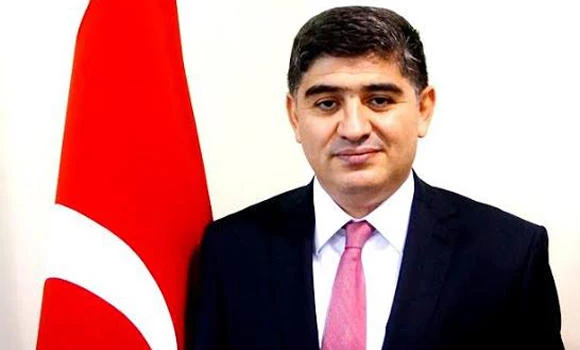
In an interview with Arab News, M. Mustafa Goksu, country adviser at ISPAT, Riyadh, said: “The number of Saudi companies created until last year reached more than 486 with Saudi investments in 2014 exceeding $136 billion.”
He added that ISPAT had rescued many failed projects, which had relied on brokers.
Competent authorities, representing ISPAT, offer free advice and consultation to help investors, he said.
ISPAT serves as a reference point for international investors and as a consultant for all institutions engaged in promoting and attracting investments at national, regional and local levels.
“We are active on a global scale,” he said.
ISPAT operates with a network of local representatives in 12 countries including Saudi Arabia, he added.
Working on a confidential basis, as well as combining the private sector approach with the backing of all governmental bodies, ISPAT’s free-of-charge services include market information and analyses, industry overviews and comprehensive sector reports, assessment of investment conditions, site selection, finding companies for potential partnerships and joint ventures, negotiations with relevant governmental institutions, facilitating legal procedures and legislation issues such as establishing business operations, incentive applications, getting licenses and work and residence permits.
The Turkish economy has shown remarkable performance with its steady growth over the last decade, he pointed out.
A sound macro-economic strategy in combination with prudent fiscal policies and major structural reforms in effect since 2002 has integrated the Turkish economy into the globalized world, while transforming the country into one of the major recipients of FDI in its region.
He said that the structural reforms, hastened by Turkey’s EU accession process, have paved the way for comprehensive changes in a number of areas.
The main objectives of these efforts were to increase the role of the private sector in the Turkish economy, to enhance the efficiency and resilience of the financial sector and to place the social security system on a more solid foundation, he added.
As these reforms have strengthened the macro-economic fundamentals of the country, the economy grew with an average annual real GDP growth rate of 4.7 percent over the period of 2002 to 2014, he pointed out.
When asked what are the investment opportunities that Turkey can offer to the investors, Goksu maintained that it depends on the experience and value of capital, which is owned by the investor, in addition to the number of years the investors plan to keep their investment in Turkey.
“Through these features, we can find out what might suit the investor,” he said.
“Accordingly, we offer investors the available opportunities, he said, adding that all meetings between the ISPAT and the investors are completely confidential and private.
All investment sectors are open for foreign investments, with the exception of the mining and education sectors, which require partnership with a Turkish party, he said.
He said foreign investors can set up businesses in Turkey by communicating with the ISPAT network and advisers.
They are located around the world and offer an extensive range of services to investors through a one-stop-shop approach and support them in obtaining optimum results from Turkey.
He said that ISPAT provides assistance in Turkısh, English as well as Arabic. It is dedicated to helping investors successfully develop their business operations in Turkey.
Responding to a query on taxation, he said Turkey levies 20 percent tax profits. Taxation is a major source of revenue in the country, he added.
However, there is no tax on investors’ funds deposited in Turkish banks, he added.
He also stressed that some investors are exempted from taxation. Industrial investors receive such incentives in some specific areas.
On the activities favored by Saudi nationals, he said they are involved in a a variety of projects to suit their expertise and capital value.
Some of them work in jewelry, energy and industries while others are interested in the real estate sector.
“Nevertheless, we encourage investors to head to the petrochemical sector, due the huge demand in this area,” the official said.
The government also offers considerable amount of incentives and facilities for petrochemical investors.
On real estate ownership for foreigners including Saudi nationals in Turkey, he said, the condition of reciprocity for foreigners who wish to purchase property in Turkey has been abolished. It was in accordance with the Article 35 of the Land Registry Law.
Information on countries whose citizens can buy property and estate in Turkey can be obtained from the Turkish Embassies/consulates in respective countries.
Foreign nationals can buy any kind of property (house, business place, land, field) within the legal restrictions, not exceeding the maximum of 30 hectares of land in total and can only acquire more, if joined by a local investor.
Commenting on Islamic finance in Turkey, he said there are some Islamic banks such as Kuwait Turkish Bank and Al-Baraka Bank.
Goksu said that investors could obtain funding from the Islamic banks ın Turkey, in exchange for mortgaging their property.
Asked if there are restrictions on property heritage, he said there are no restrictions on the heritage transfer and in the absence of the commandment, the ownership of the property goes to the legal heirs.
When asked if there is discontent because of price variation in Turkey between local citizens and foreigners including GCC nationals, he said: “Of course the Turkish laws deprive such action, all shops are obliged to put a price on their products, but usually some infractions occur in the real estate market while dealing with brokers.
“Therefore, we request Gulf investors and citizens to ensure the price in an indirect way,” he said.
He said the government offers incentives to encourage re-investment that would directly reduce the volume of imports from abroad as well as to the investor who creates employment for the Turkish labor.
There are a lot of features, including the new investment incentives system, which was launched on Jan. 1, 2012 and include advantages like local and foreign investors with equal access to General Investment Incentives Scheme.
Incentive schemes
The new investment incentives scheme is specifically designed to encourage investments with the potential to reduce dependency on the importation of intermediate goods, vital to the country’s strategic sectors.
He said that the primary objectives of the new investment incentive schemes are to reduce the current account deficit, boost investment support for lesser developed regions, increase the level of support instruments, promote clustering activities and to support investments that will create the transfer of technology.
Speaking of the key factors that attract investors to Turkey, he said the country has a booming, stable and promising economy.
“Turkey’s economy is expected to become one of the fastest growing economies among the OECD members,” he said.
There is a liberal and reformist investment climate in the country.
Turkey is the second biggest reformer among OECD countries in terms of its restrictions on FDI since 1997.
It has highly competitive investment terms amid a strong industrial and service culture.
It provides equal treatment to all investors, he said.
Enterprises flourishing with crucial support