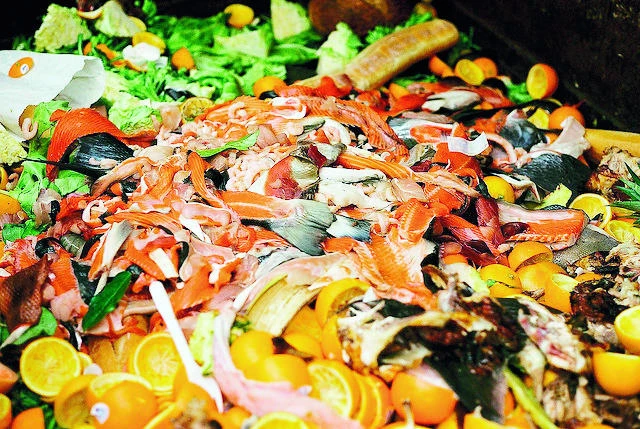
Environmental experts have expressed alarm at the amount of food wastage in Saudi Arabia and stress that it needs to be addressed by educating the local population on how precious food is and how much it hurts the economy besides contributing to inflation.
According to the Department of Agricultural Extension and Rural Society College of Food and Agricultural Sciences at King Saud University, wasting food affects the economy and the environment negatively.
Although wastage of food is normally termed as unethical, many people don’t mind leaving food on their plate.
Professor Khodran H. Al-Zahrani at the College of Food and Agricultural Sciences at KSU said many people buy far too many groceries. Poor planning, a busy lifestyle and having little idea of how to use leftovers leads to a great deal of food waste.
“The younger generation especially should learn about the importance of food and water. One often sees how young children throw half empty packets of chips, chocolates or burger sandwiches and soft drink bottles on the road,” he said, pointing out that such practices not only cause littering but also contribute to the phenomenon of food wastage.
“This is particularly sad when there are so many in the world who don’t have enough food to eat,” he noted.
Staff in restaurants and hotels can often be seen throwing food into trash bins. Many eateries serve huge portions which people are unable to consume. “Such leftovers are an unnecessary waste when just addressing the size of the portions would resolve the matter,” Al-Zahrani said.
He elaborated that awareness about food wastage is necessary. “The municipality could probably introduce a proper food management strategy and teach people the value of food and water and the harmful effects of wasting food.”
He continued: “People in the Kingdom could aim to reduce food wastage and redistribute their surplus to the impoverished sections of society. Individually and collectively, it is vital to address this issue and amend habits before it is too late. Excess food is an untapped energy source that mostly ends up rotting in landfills and releasing harmful green house gases into the atmosphere.”
Environmentalists alarmed at food wastage