A Jeddah-based Indian expat has gone to great lengths to serve pilgrims.
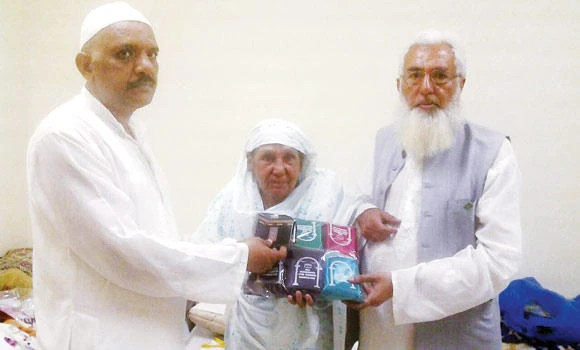
Bahjat Ayub Najmi, founding president of Maulana Hifzur Rahman Seoharvi Academy, has been helping both Umrah and Haj pilgrims by distributing basic things, such as pocket size prayer mats and stickers containing supplications in several languages, in addition to guiding them on how to perform rituals.
Najmi said most pilgrims do not know even the basic concept and rituals of Haj.
“A friend of mine did not even know that he had to circumambulate the Kaaba seven times,” said Nadmi.
“When a person doesn’t even know such a simple fact, you can just imagine what other rituals must be clarified,” he said.
Najmi lamented the lack of proper training among pilgrims to authorities in their home countries.
This year, Najmi is all set to distribute 20,000 prayer mats made of cloth, 30,000 stickers (of supplications with translation in three languages), 5,000 “toghra” and 30,000 Qur’anic dua.
He plans to distribute the goodies among all Hajis, including Indians, Pakistanis and pilgrims from other countries.
Prayer mats, he said, have become most popular among Hajis, mostly among Europeans, mainly because of they are handy during travel.
Najmi has permission from the Indian Consulate in Jeddah to take care of Haj-related issues and has transport facilities shuttling pilgrims to Makkah daily without fail.
Najmi is supported by his wife, Umme Fakeha Zinjani, in taking on this noble line of work and his son Fahad, who join Najmi in reaching out to pilgrims.
Another thing that baffles Najmi are the strange rituals and habits that many pilgrims have made up during Haj.
“This is simply because they are ignorant and therefore need proper guidance on how to perform the pilgrimage,” he said.
“I try as much as possible to guide them by distributing booklets, such as the ‘Fortress of Islam’, which has been provided to us by Darussalam, Riyadh and have been duly approved by the government of Saudi Arabia.”
The academy is named after a great Muslim leader of the Indian subcontinent, who fought with Indians during the freedom struggle and helped Muslims lead a dignified life following the partition of India.
Seoharvi was an Islamic scholar of repute and a prolific writer, who is much remembered in India and Pakistan for several books, the most notable of which are “Qassasul Anbiya.”
Expat pushes on with selfless service for pilgrims