Many expatriates changing their professions here are worried that the government might introduce new regulations that target these professions for Saudization.
Some believe that the government will implement new educational and technical criteria for additional positions after the amnesty ends on Nov. 3.
Many Asian expatriates are opting for sales and marketing positions and are reluctant to choose administrative jobs.
Expatriate supervisors in the construction and maintenance sectors, where technical qualifications are needed, are choosing job titles such as steel fixer and tiler.
In the medical field, many expatriates are opting for positions such as health cleaners and insurance advisers because the Saudi Commission for Health Specialties reserves patient-related and administrative jobs for Saudis.
Ali Mohammed Ali, a Sudanese expatriate with over 25 years experience in the farming industry, told Arab News he was "very confused about which job to choose.”
Mohammed Zakir, an Indian expatriate working as an administrative assistant for a leading construction company at the King Abdullah Financial District in Riyadh, told Arab News by telephone that he is handling his firm's administration, but his residency permit shows he is a laborer.
“I want to change to manager or secretary but I'm afraid that with the nationalization drive they may ax my job sooner or later.”
One worker who does not have a problem is Mohammed Abrar Uddin, an Indian expatriate who has worked as a textile salesman for 20 years. “My profession has always been sales professional. I'm doing this now, and I won't have a problem in future.”
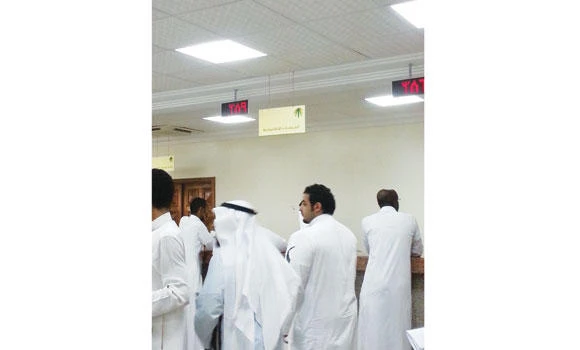
Meanwhile, the personnel departments of large companies are rushing to change the professions of their employees.
Many South Asian and Sudanese expatriates canceled their Eid Al-Adha holidays to process their paperwork before the amnesty deadline.
Officials from the Passport Department and Ministry of Labor are meeting regularly to assess and review the process.
The labor Ministry has waived the SR1,000 fee for changing professions if the process takes place through its online portal.
According to a report, some 4 million expatriate workers have changed their professions since the beginning of the grace period.
Expats in a bind over change of profession