Given that Greece holds this semester the rotating Presidency of the Council of the European Union, let me express some of my thoughts highlighting the key priorities for Europe.
The priorities of the Hellenic Presidency this semester, principally we want to reflect and promote the real concerns and the real priorities of European societies, of European citizens.
So our first and obvious priority is growth and job creation, and this naturally concerns first and foremost the real economy, funding for businesses — mainly small and medium-sized enterprises — wherein lies the potential for jobs; jobs that employ the bulk of our country’s workforce and the workforces of all the European countries.
Without a strong financial sector, we cannot in reality utilize the tools provided by the European architecture.
As an achievement of the Hellenic Presidency, I should like to warmly welcome the agreement on the key element of Europe’s banking union.
The political agreement was reached recently in Brussels at the trilogue between the European Commission, the European Parliament and the Council, on common rules for banks and the supervision of banks, is one further important step toward the completion of the banking union and opens the way to stabilize the Eurozone as a whole, through confidence in the banking system, ensuring the deposits and preventing future crises of credibility.
Because the great problem being faced in Europe is the profound inequalities that we must stress and underscore so that we can overcome them.
There are two major inequalities: The first concerns the cost of money; the high interest rates on loans that hinder SMEs from making real use of resources and potentials, and thus from investment and job creation. And the second, equally important matter is the increased cost of energy that is plaguing us, burdening us in particular in Greece, as an inequity that absolutely must be overcome if we want to function as a single market, if we really want there to be equal opportunities for growth.
The Greek government is implementing a bold program of structural reforms with the goal of improving macroeconomic prospects, boosting growth and creating employment opportunities.
This effort has impressive results.
Thanks to the sacrifices of the citizens, after 7 years of recession, with such high unemployment rates, we can show a tangible and unique achievement, which is the achievement of a primary surplus in the budget.
A primary surplus that enables us to say that we are now passing into a phase of fiscal equilibrium, and we can now speak confidently of the long-term sustainability of the Greek economy.
The state of affairs has changed, so we have to talk in another manner; a manner more creative, more optimistic.
Our land, our sea, our islands, our natural wealth and the intellectual capital of our people are domestic resources for the recovery of the Greek economy, for a new production model that is competitive, realistic, post-industrial; resources that capitalize on the country’s obvious and apparent comparative advantages deriving from geography, history and culture.
Greece as all European countries are preparing, in May to hold the European elections.
On May 18 and 25, the European citizens will be called upon to make fundamental choices on everything above and below the national states.
They are being called upon to make critical choices for their countries, within Europe and for the future of Europe.
It’s a very interesting opportunity for us to talk about Europe.
The citizens of Europe — Greek citizens, and mainly the young citizens of Europe — want less talk and more practicable initiatives.
They want a Europe that again shines brightly and focuses on its values: democracy, the rule of law, social cohesion, justice and solidarity. A Europe of innovation, of research, of major initiatives, of competitiveness on new, contemporary terms.
The young citizens of Europe cannot accept the idea that Europe is a Europe of austerity policies, of unemployment, or of bureaucracy.
So the history of Europe and of the European elections, is an excellent springboard for a new political conception that must impart to the citizens, and especially to the younger citizens, if we want to make them participants, once again, in the European idea — The idea of European integration.
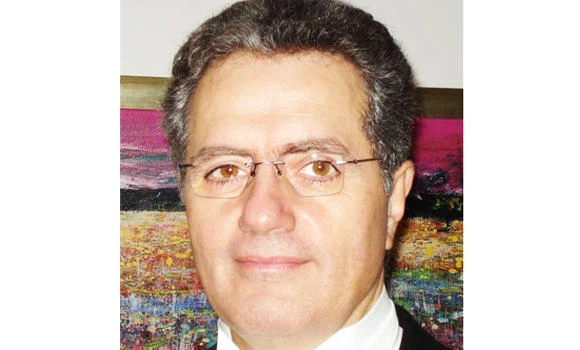
— Chronis Polychroniou, Consul General of Greece
Growth and job creation ‘is our first and obvious priority’