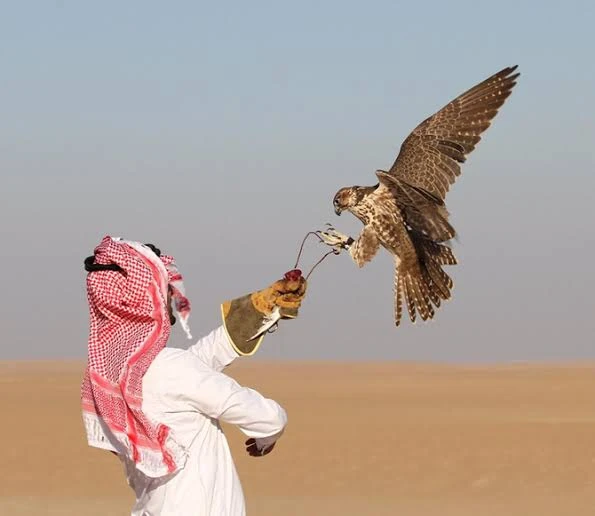
- Horse riding and falconry traditions in Northern Borders, Saudi Arabia, are evolving into organized leisure and tourism activities.
- The 10th edition of the Falcon Festival in Turaif featured over 700 participants and attracted around 4,000 visitors daily, promoting cultural awareness through educational activities.
- Falconry is recognized by UNESCO as part of the Intangible Cultural Heritage of Humanity, emphasizing its generational transmission and significance.
- The International Falcon Breeders Auction in Riyadh brought together over 90 breeding farms from 24 countries, generating sales exceeding SR33 million for more than 2,200 falcons.
- Horse riding is being popularized through equestrian academies that offer training to individuals regardless of their background with horses.
- The growth of organized events and academies is allowing traditional practices to be both preserved as cultural identity and experienced as structured hobbies by the younger generation.
Horse and falcon traditions in Northern Borders expand into organized leisure and tourism
Waad Hussain Alkhobar
Horse riding and falconry, long associated with life in Saudi Arabia’s Northern Borders, are increasingly moving beyond family tradition into organized leisure, competitions and tourism-related activity.
The region has historically maintained strong ties to both horse ownership and falconry, shaped in part by its desert environment and its location along migratory routes used by falcons and other wild birds, according to the Saudi Press Agency.
That geography continues to attract falconers from across Saudi Arabia and neighboring Gulf countries during migration seasons, while organized festivals have given the practice a broader public presence.
In January, Turaif hosted the 10th edition of its Falcon Festival in cooperation with the Saudi Falcons Club. More than 700 professional, international and local participants competed across 18 rounds, with prizes exceeding SR1 million.
The five-day event drew about 4,000 visitors daily and included cultural and educational activities intended in part to introduce younger generations to falconry.
Falconry is also recognized by UNESCO as part of the Representative List of the Intangible Cultural Heritage of Humanity. The organization describes it as a practice passed between generations through families, mentoring and clubs, including in Saudi Arabia.
The tradition is also becoming more formalized commercially. In August, the International Falcon Breeders Auction in Riyadh brought together more than 90 breeding farms from 24 countries and recorded sales exceeding SR33 million for more than 2,200 falcons.
Horse riding is undergoing a similar shift, with equestrian academies and riding centers making the activity accessible to people who may not have grown up around horses.
For Saudi hobbyist Shahad Al-Otaibi, who takes riding classes at Sahwah HDB Equestrian Academy in Alkhobar, the attraction is both recreational and skill-based.
“I started taking riding classes because I wanted to learn properly, not just ride occasionally. The more I practiced, the more I understood that it requires discipline, confidence and a real connection with the horse.”
Her experience reflects a broader change in how traditional activities are being approached, particularly among younger Saudis who encounter them through academies, clubs and organized events rather than solely through family practice.
In the Northern Borders, SPA said horse breeding and falconry are also supporting related economic activity, including breeding, training, equipment, seasonal services and events.
That activity sits alongside efforts to preserve the cultural element of both practices. In Turaif, falconry remains closely associated with family transmission, with parents continuing to take children on hunting trips and teach them how to handle and care for birds.
As organized events, academies and specialized services grow, the traditions are increasingly occupying two spaces at once: as inherited practices tied to local identity, and as structured hobbies that new participants can enter through formal training.