A visiting Kashmiri leader has supported Saudi Arabia’s rejection of a seat on the United Nations Security Council, saying it highlights the double standard of the world body in dealing with issues affecting Muslims around the globe.
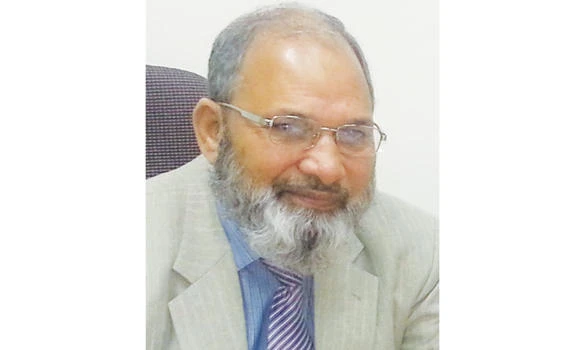
In an exclusive interview with Arab News, Ghulam Muhammad Safi, the Pakistan-based convener of the All-Parties Hurriyat Conference led by Srinagar-based Syed Ali Shah Geelani, said the Kingdom’s decision was a step in the right direction.
“The entire Muslim world, all 57 members of the Organization of Islamic Cooperation (OIC), should follow Saudi Arabia’s example,” said Safi.
He said Kashmiris have been the worst victims of the world body’s double standard. “We have suffered for the last six decades and are still suffering because of the UN’s inaction,” he said.
Safi accused the UN of failing to act objectively on issues affecting Muslims. “When it came to carving out East Timor from a Muslim Indonesia, everything was done in a matter of minutes,” he said. “Resolutions were passed overnight at the United Nations and the new country was created just like that.”
Safi said the UN followed a similar methodology while partitioning Sudan. “South Sudan came into being overnight,” he said.
“Our leader, Syed Ali Shah Geelani, is completely in sync with Saudi Arabia’s decision,” he said. “The UN Security Council needs to be reformed and restructured for it to play a constructive role in Syria, in Kashmir ...”
He described Saudi Arabia as central to the Islamic world. “Saudis should unite the entire Muslim Ummah, especially (now that) Muslims have begun fighting among themselves. The call that went out from here more than 1,400 years ago was to help the oppressed. The Saudi role in world Muslim affairs is crucial and extremely important,” he said.
He urged the OIC to play a meaningful role. “They pass resolutions and the other party dismisses them and then they pass more resolutions, this is meaningless,” he said. “The OIC needs to take some stern steps that would mean something.”
Safi comes from Baramula in Indian Kashmir but is now based in Pakistan. He is the spokesman of the elderly Geelani who commands wide respect among his followers for his unflinching and uncompromising stance on Kashmiris’ right to self-determination.
Safi referred to Geelani’s recent call for a boycott of parliamentary elections in India and assembly elections in Jammu and Kashmir.
Reminded that a similar boycott call went unheeded four years ago, Safi said: “The situation in Kashmir has gone worse with the recent hanging of Afzal Guru, the rapes of young girls in Shopian, the unearthing of unmarked graves ... all have cast a dark shadow on the lives of Kashmiris,” he said. “In such a scenario, our stance is that no one should think of taking part in elections,” he said.
He said the recent revelations by Gen. V. K. Singh, the former Indian army chief, that a special fund was earmarked for buying politicians and manipulating elections, has vindicated Geelani.
“We have been saying this for a while that India has been playing sinister games to subvert the popular will of the people of Kashmir,” he said. “Their own man (Gen. Singh) has proved us right.”
He said Prime Minister Nawaz Sharif’s stance on Kashmir, as enunciated at his press conference in London recently and during his address to the United Nations General Assembly, has restored the confidence of Kashmiris in the Pakistani leadership.
“During Pervez Musharraf’s time the Pakistani stance was wishy-washy, but now it is different,” he said. “Sharif was unequivocal in his support of the Kashmiri cause; he reiterated the international, not bilateral, nature of the Kashmir issue. You can say that this has restored our confidence (in the Pakistani leadership) to a large extent.”
Safi is in the Kingdom at the invitation of the Jeddah-based Kashmir Committee chaired by Masud Javaid to attend an event marking the events of Oct. 27 decades ago. “It was on this day in 1947 that Indian occupation forces landed in Srinagar and since that day we observe it as a black day,” he said.
Since Oct. 27 coincided with the Haj period, the Black Day was observed this year in Jeddah on Nov. 4.
Kashmiri leader backs Saudi stand on UN