The Saudi economy had shown much of its buoyancy when Custodian of the Two Holy Mosques King Salman ascended the throne nearly four months ago.
Its resilience was all the more evident when it remained unaffected despite the worldwide economic crisis and even the falling oil prices in the recent years.
With the coming in of King Salman, who for a long time was the governor of Riyadh and later the crown prince, new blood has been infused into the economy and the country at large with his more than 50 years of experience as the new king was close to his predecessors and watched how policies were framed and successfully implemented for the benefit of the citizens and enhancement of the status of the Kingdom.
If the Saudi economy remains strong, buoyant and resilient, it is mainly due to the pragmatic and futuristic policies of the kings and their governments over the last 40 years.
Arab News has been chronicling the enviable, unprecedented economic growth of the Kingdom since the newspaper’s launch on April 23, 1975.
Around that time, the Kingdom went into its booming phase thanks to the oil revenue, which turned out to be unprecedented and became the envy of many nations.
The peak of the boom lasted more than a decade and a half during which the country’s foundations for major economic projects, both oil and nonoil, were not only laid but took shape.
In the past few years, Saudi Arabia has been witnessing another spell of unique economic growth, which is widely considered to be another boom, largely triggered by the huge real estate activity, both residential and commercial, as well as the creation of new cities, knowledge cities and smart cities.
The world has acknowledged that the Saudi economy has grown strongly in the last four decades.
According to Fahad Alturki, chief economist and head of research at Jadwa Investment, the ever growing economy is set for further healthy performance despite the grim global economic outlook.
The Kingdom’s prevailing growth model with an inflow of oil revenues achieved a large improvement in human development indicators such as health, education, sanitation and physical infrastructure.
A number of policies have been adopted to diversify the production base and reduce reliance on the oil sector.
What is more, he says, a stable exchange rate policy with a low-inflation environment has been achieved, the business climate strengthened, education expanded, trade and foreign direct investment (FDI) liberalized, and the depth and width of the financial sector improved.
This has led to a fundamental shift in the composition of economic growth over the past decade, with the nonoil sector taking an important role alongside the oil sector as a source of growth, Alturki points out.
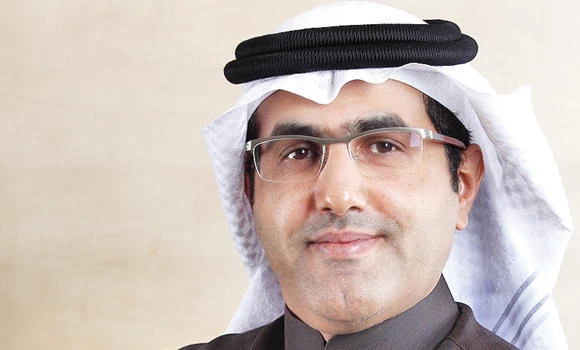
The Saudi industrial sector in particular looks promising and is constantly growing. Saleh Al-Rasheed, director general of the Saudi Industrial Property Authority (MODON), says the growing and expanding industrial scenario across the Kingdom can be gauged from MODON’s track record.
MODON continues to build industrial infrastructure in many cities, works to provide new industrial properties to meet the sector’s increasing growth and demand, and provides supportive services for industrial projects.
There are 34 industrial cities in regions across the Kingdom at present.
The number of industrial cities has more than doubled from 14 industrial cities in 2008, an increase of nearly 145 percent.
Developed industrial sector properties in the industrial cities cover 178 million sqm.
The number of factories supervised by MODON has increased to 5,600.
Under MODON 2020, a strategy meant to stimulate the growth of the Saudi industrial sector, residential and commercial complexes will be developed in the industrial cities of the Kingdom.
Also, schools, colleges, shopping centers, entertainment and hospitality centers will be provided in these cities, which will be turned into model smart cities, Al-Rasheed stated.
While the Saudi economy maintains its rising trend, the world economy has changed drastically over the last 40 years, says Mohammad Alawi, board member and CEO of Red Sea Markets Co. Ltd., owner and developer of Red Sea Mall in Jeddah.
“Over the last four decades, we have witnessed a new dynamism in the world economy, the effects of globalization on markets and the rise of international trade agreements,” he added.
“What we are witnessing now is a new era, a switch from traditional economy to the digital economy. This new era will have people transfer their commodities and knowledge through digital spend, habits and modules,” Alawi said.
With the newly appointed leaders taking responsibility of the economy, he is positive that there will be many changes toward privatization and maximizing the efficiency of the government agencies, and the private sector bestowed with increased role in contributing to the Kingdom’s total GDP.
With the global climate change becoming a major issue, Saudi Aramco and the world’s leading oil and gas companies unveiled an oil and gas climate initiative at the UN Climate Summit in New York.
“The climate initiative will only grow stronger as more companies join this historic undertaking. And it will put our industry even more firmly at the forefront of the climate solution to which we all aspire,” said Health Minister and Saudi Aramco Chairman Khalid A. Al-Falih.
“The initiative serves as a platform to address key climate challenges, share industry best practices, and catalyze meaningful action and coordination on climate change,” he said in his remarks at a summit session.
“It’s yet another example of how the oil and gas industry is positioning itself once again to be the key provider of solutions to global energy challenges,” Al-Falih added.
The growth of the petrochemical industry in just four decades from a standing start to a world-class pillar of the economy worth $ 354 billion is something to be raved about, says Mohamed Al-Mady, former Saudi Basic Industries Corporation (SABIC) vice chairman and CEO.
SABIC was established in 1976 as part of the first phase of Saudi Arabia’s economic diversification into primary downstream industries, including petrochemicals, fertilizers and steel.
The vision of taking the natural gas that was the waste product of the oil industry and turning it into commercially viable products drove the foundation of the Royal Commission and the establishment of the industrial cities in Jubail and Yanbu.
This in turn led to the Royal decree that founded SABIC and drove its growth over the next four decades.
Growth in the petrochemical industry continues to outstrip the economy as a whole, averaging 9-10 percent over the past years against the GDP growth of 4-5 percent.
Referring to the growth of nonoil economy, Hasan Al-Jabri, CEO of SEDCO Capital, says a lot of value-addition was created in the hydrocarbon industry as the Kingdom moved from selling crude oil to refined oil with the new refineries and became a top global leader in petrochem production.
The industry has also been the catalyst for growth in other areas of the economy, including banking, construction and insurance.
About the enhancement of higher education locally, Al-Jabri said the massive investment in the expansion and creation of universities across the Kingdom — 25 public and 30 private — is a clear indicator of the emergence of a strong powerful caliber of Saudis that are able to compete on the local and international levels.
A total enrolment of 1.2 million students last year proves that point.
“Moreover, we noticed strong investment in the Saudi women who are contributing more and more to the Saudi economy,” said Al-Jabri.
Princess Nora University in Riyadh is a clear sign of the role the Saudi woman will play in the future of the Saudi economy given its capacity of 60,000 students.
Also, the creation of King Abdullah University for Science and Technology (KAUST) added a totally new perspective to higher education and research.
Saudi Arabia is witnessing the emergence of young educated youth who studied abroad and want to put there learning and education to practice.
Having over 145,000 students studying abroad gives Saudi Arabia a very strong advantage in giving the Saudi students the opportunity to study at some of the best institutions from around the world.
This infused very strong cultural elements within the Saudi students and provided massive networking opportunities in order to better enhance the private and public sectors of the Saudi economy.
Thus, Saudi nationals are more prominent in the work force on both the high and mid/entry levels of the management, and are playing an increased, effective role.
Banking and investment are some of the most noticeable sectors, which have embraced the trend of an increased number of Saudi nationals occupying top managerial positions in the private sector.
Some of the positive trends include the emergence of the stronger e-government infrastructure across different ministries in Saudi Arabia.
Above all, Saudi Arabia’s WTO entry in 2005 was one of the first steps in creating transparent structures and allow for governance to be the trend among the public and private sectors.
In fact, Saudi Arabia has been one of the best performing G-20 economies in recent years and supporting the global economy through its stabilizing role in the global oil market.
The International Monetary Fund (IMF) has acknowledged Saudi Arabia’s role as an important source of financial assistance and remittances for many developing countries.
It is said that prudence, adequate regulation and management of public finances have provided Saudi Arabia with the right tools, guided by an important principle: Save in the good days and spend a portion in the bad ones.
Amid these positive developments, comes the news of an unprecedented commitment by the G-20 ministers in Sydney to boost global growth by more than $2 trillion over the next five years, which bodes well for the world economy that has sputtered since the 2008 financial crisis.
The centerpiece of the G-20 commitment is to boost the combined GDP of G-20 countries, representing about 85 percent of the global economy, by 2 percent above the levels expected for the next five years, possibly creating tens of millions of new jobs. World GDP was about $72 trillion in 2012.
The G-20 commitment provides a tremendous opportunity to Saudi Arabia to boost growth and raise standard of living further as its population is young and increasingly well-educated, and as it continues to enter into the labor market. As the government gradually diversifies from oil, a strengthened culture of entrepreneurship is also developing in Saudi Arabia, which will give a major boost to nonoil GDP.
The
IMF said the Saudi economy grew by 5.1 percent in 2012, benefiting from high oil prices and output, strong private sector growth and government spending.
After all, Saudi Arabia’s economy continues to be strong as is reflected in its annual growth rate of 3.1 percent in Q3, 2013, after posting a growth of 2.1 percent in Q1 and 2.7 percent in Q2.
Nowadays, the Saudi stock market (Tadawul) is much in focus.
But when Arab News was launched four decades ago the stock market concept did not exist.
All that is changing as more and more family-owned companies are going public, thus providing an opportunity for small and medium investors.
That has been making news and readers always want to check how their investments are doing on a daily basis. Arab News has been providing them their daily dose of latest information on Saudi stock prices.
With the Kingdom now gearing up to open the stock market to foreign investors, Arab News is preparing to provide extensive and exhaustive coverage on stock market developments.
According to Tadawul website, establishment of the first stock company in the Kingdom goes back to the third decade of the 20th century, but stock trading found its way in the Kingdom by the end of the 90s, which witnessed substantial increase in the number of stock companies.
In 1984, a Royal decree was promulgated for regulating stock trading through local banks, and forging a ministerial panel for supervision of the market, which has among its members the Minister of Finance, the Minister of Commerce and Industry, and the Saudi Arabian Monetary Agency (SAMA) governor.
In 1990, ESIS — the first electronic integrated system — was introduced for settlements and clearing, and also for launching the Tadawul system in October 2001 with its cutting-edge technology that added new dimensions to the trading system.
As a part of the extensive regulatory developments, the Kingdom has reviewed and upgraded many of the existing and new regulations and systems.
At the top of these regulations is the enactment of the Capital Market Law, which is mainly designed for restructuring the capital market at the Kingdom, benefiting from the most up-to-date international applicable standards.
With Arab News keeps tabs on the day-to-day developments of the economy, its business and economy pages are becoming more popular among its wide readership. That is the reason the corporate sector vie with each other to find a mention in these pages.
Companies from Dubai and Bahrain in particular, aside from those in the Kingdom, have been showing their first preference for placing their ads in Arab News.
This has immensely contributed to the growth of the advertising and marketing industry in the Kingdom.
So, what is true of Saudi Arabia is also true of Arab News: It’s not business as usual but it’s business as never before.
Kingdom’s economy stands out with solid four-decade record