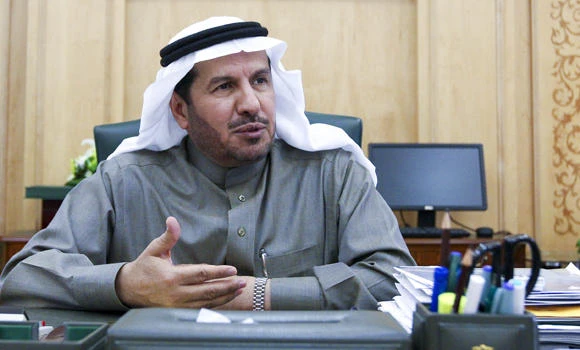
Health Minister Dr. Abdullah Al-Rabeeah says his ministry has not been able to implement 220 new health projects because of a land shortage.
This was one of the most important challenges facing the ministry. However, Custodian of the Two Holy Mosques King Abdullah has already ordered the government to provide land for the ministry in the north and east of Riyadh, he told Ali Al-Alyani, who interviewed him on the television program “Tuesday Table” on Rotana Khalijia.
Al-Rabeeah said the ministry’s other challenge over the past Haj season was the danger of an H1N1 outbreak in the Kingdom. “But the ministry’s efforts and experience ensured the season was successful and epidemic-free.”
He said the ministry is still discussing a proposal to introduce commercial health insurance in the Kingdom, and to make sure it benefits citizens.
“We are in the process of offering incentives for doctors to open night clinics to ease the burden on hospitals.”
The other programs that the ministry would provide include the home medicine program, one-day surgery services, visiting doctors and a service purchase program, he said.
He said the ministry will open 26 new hospitals in 2014 across the Kingdom. “We are working on establishing five new medical cities that include hospitals for tumors, nerves, heart surgery, organ transplants, and eye treatment, with a capacity of 6,200 beds.”
He said the ministry also has an electronic system to detect medical errors. Every medical system has errors, but the ministry was working to reduce this as much as possible, he said.
Al-Rabeeah said the country has 21 independent health commissions that “ensure transparent litigation between citizens and the ministry.”
He said the ministry is about to establish large dental clinics across the country, and would also buy dialysis services from the private sector at a cost of SR1.9 billion.
Al-Rabeeah also spoke about his personal commitment to ensure universal health care for Saudis in the Kingdom.
He said that he became a doctor because of a childhood incident when he suffered a cut that needed stitches. He thought at the time that if he became a doctor he would be able to stop the pain.
“In the beginning my studies were very difficult because of my poor English at the time and the sheer scope of the course. I was one of the first Saudis who studied at the University of Alberta, proving that Saudis are able to take up responsibilities.”
Al-Rabeeah said most people are satisfied with doctors after they perform surgery, but at least 50 percent are not satisfied when “you work in administration.” He said he has personally prevented many practitioners from making mistakes.
He said that he considers King Abdullah his “commander and father.” The king taught him to be “honest and transparent,” and to ensure he provides services for the most vulnerable in society.
Land shortage delays 220 health projects