Abandoned by their own country, the stranded Pakistanis in Bangladesh, however, have never been forsaken by their compatriots — be they in Saudi Arabia or the United States.
OBAT Helpers’ Anwar Khan Akmal is one such relentless American campaigner who has made it possible for the stranded Pakistanis living in Dhaka’s squalid camps to begin “a life of dignity, where they could get good health care and good education.”
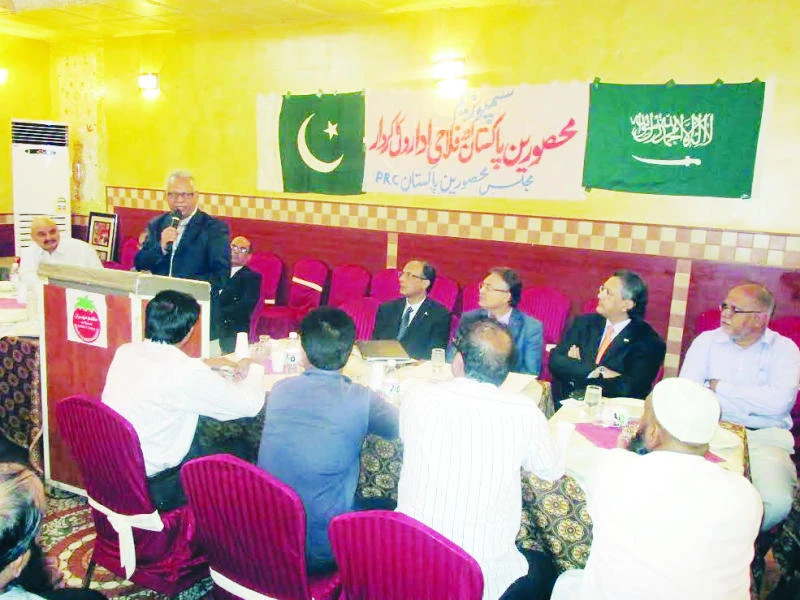
The Pakistan Repatriation Council (PRC) held a symposium here on Saturday to discuss the issue of stranded Pakistanis and the role of welfare organizations.
Akmal, the founder of the US-based OBAT Helpers, cited the example of an 18-year-old Abul Kashem who remained an A+ student throughout his studies with the help of OBAT’s scholarship program. OBAT made it possible for the boy to get through his medical exam and is “set to become the first ever doctor from those camps which lack even the basic amenities of water and electricity.”
Akmal became emotional when he narrated the story of an old woman, who once asked him as what were her fault to merit such an inhuman treatment.
“Is it only because we supported Pakistan in 1947 and remained faithful in 1971,” she asked me, to which I did not have any answer, said Akmal. The woman died a few years back and with her went her unanswered question, he said and burst into tears.
In fact, Akmal said, from there he took up the cause and formed OBAT, which has completed 10 years and which have received support from US senators like Richard Lugar and Andy Carson.
OBAT’s activities included educating over 2,000 students of every level, micro-finance loans to women workers, running 40 vocational institutes providing computer skills and other trainings even to elders, he said.
In his speech, Hamid Islam, the deputy convener of PRC, provided a detailed outline of OBAT’s welfare activities.
Abu Farhan Siddiqui, another social worker, who through his Pakistan-based Muslim Welfare and Development Organization (MWDO) has been extending all facilities to the hapless Pakistanis for their education and subsistence.
Welcoming Akmal, PRC Convener Syed Ehsanul Haque hailed Pakistan Supreme Court’s recent decision to reopen the five-year-old petition filed by Abdul Jabbar Khan, president, Stranded Pakistanis’ General Repatriation Committee (SPGRC).
The court last week admitted for hearing a petition filed in 2009 seeking repatriation of around 230,000 stranded Pakistanis from Bangladesh.
A three-judge bench headed by Justice Nasir-ul-Mulk issued a notice to Attorney General Salman Aslam Butt to respond to the issues raised in the petition.
“This has raised hope that legitimate citizenship of those Pakistanis will soon be restored,” Ehsan said.
Rohail A. Khan, founder chairman, Society for International Peace (UK), Tayyab Mosani, general secretary, Pakistan Memon Association, M. Shamsuddin Altaf of Pakistan People’s Community, M. Amanatullah, journalist, Mohammad Sharif Zaman of Pakistan Welfare Society paid tributes to Akmal for his welfare services. Samiur Rahman and Ghazanfar Hassan of Engineers Welfare Forum were also present.
The function began with Qur’an recitation by Qari Abdul Majeed, followed by naat by Zamurrad Saifi. Syed Musarrat Khalil conducted the program. Abdul Qayyum Waseq presented his poem.
PRC welcomes court’s decision to reopen stranded Pakistanis’ case