The Shoura Council has approved the decision to study the possibility of dispensing medication free of charge from private pharmacies when it is unavailable in Ministry of Health pharmacies. However, informed sources in the pharmaceutical industry told Arab News that they were unaware of the study and of the MoH’s decision to implement such a decision.
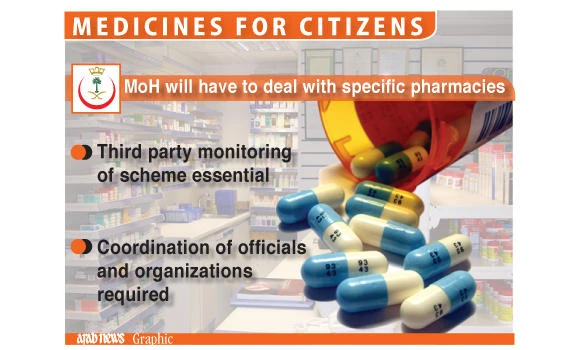
Fahad Batterjee, vice president of Abdul Raouf Batterjee and Bros. Pharmaceutical Co., noted during an interview with Arab News that implementing such a decision would require the cooperation of many officials and external organizations to ensure the realization of these goals. On the other hand, he pointed out that such a measure would resolve a lot of the problems patients face.
He added: “The ministry must cooperate and deal with specific pharmacies in order to monitor the provision of free medication. In addition, there must be a third-party committee that is neutral and impartial in supervising the provision of free medicine in order to ensure the presence of official prescriptions and authorized documents.
Batterjee also emphasized the need for the ministry to devise a plan for dispensing free medicine to patients with chronic illnesses.
Meawhile, Mohammad Zamo, a member of the pharmaceutical agents’ committee at the Jeddah Chamber of Commerce and Industry, confirmed that the committee did not receive any information regarding this decision. The role of the committee, he said, is to represent international pharmaceutical companies and distribute their products in local pharmacies. He noted that when the Ministry of Health’s pharmacies suffer from a shortage, they compensate the scarcity by purchasing medicine from the market after negotiating prices. He questioned how the ministry would implement this decision and devise mechanisms of control.
Sami Badawood, director of health affairs, confirmed the presence of such cooperation between private pharmaceuticals and the MoH, saying: “This system is already implemented, as the MoH’s hospitals provide all the necessary medicine that patients require. Moreover, when the MoH’s pharmacies run out of medicine, it compensates the shortage by buying from private pharmacies at its own expense."
Badawood concluded by stressing that it is the right of every citizen to demand medication from the MoH.
Private pharmacies may dispense govt hospital-prescribed medicine