Railways are playing an increasing role in the Saudi transportation sector. Its several projects that are underway will provide facilites that will create business opportunities and which will also attract the foreign investments to the Kingdom.
The government has launched a number of initiatives to develop this sector through major expansion projects connecting the different regions of the Kingdom. The current value of executed projects is estimated at SR 50 billion.
Saudi Arabia’s Railway Master Plan (SRMP) shows about SR 365 billion will be invested for railway infrastructure by 2040. The Kingdom’s growing economy, on the back of high oil prices, has led to heavy investments in railway infrastructure.
The North-South railway is considered the largest freight rail project that will have a strategic importance for freight exports to the Gulf. At 2,750 km long, it is valued at an estimated SR 20 billion. The Land bridge project is another important freight line estimated to cost SR 26.6 billion.
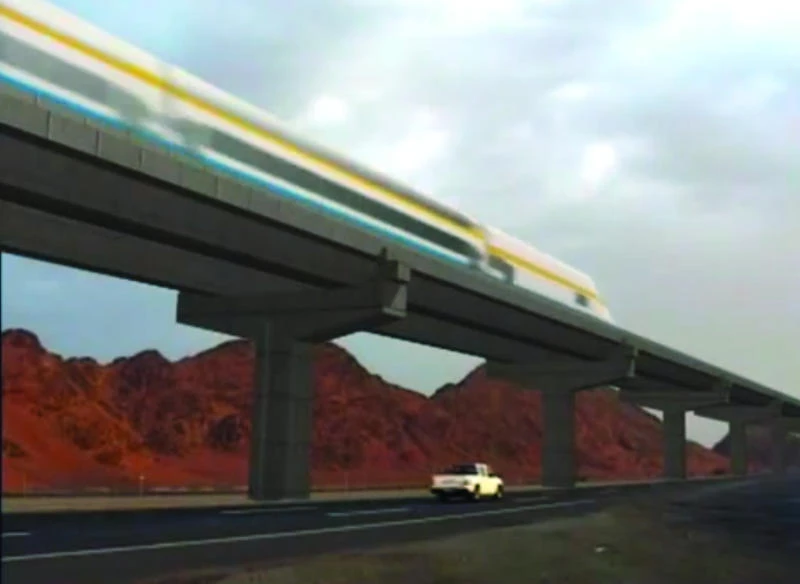
Owned by SAR, it will link the port cities of Jeddah, Dammam and Jubail, passing through Riyadh. The Haramain High Speed rail project, owned by SRO, is built to transport pilgrims and Umrah visitors from and to the holy cities passing by Jeddah and Rabigh. The project consists of two phases, costing about SR 51.5 billion.
It is expected that Saudi business investments in coordination with the Ministry of Transport will contribute to develop this sector through finding out several business opportunities. There will be also other dimensions to solve the economic problem such as unemployment; this sector will create many job opportunities through attracting a lot of Saudis to work within railway stations.
The activation of rail’s role will be reflected positively on the national economy through stopping migration from rural areas to cities and contribute to stimulate industrial and agricultural production in various cities and villages of the Kingdom.
The Kingdom plans to construct more railway lines to link all parts of Saudi together. Several projects, worth SR 93 billion, will be awarded in 2013 and 2014. Under the 9th Development Plan, it is expected that the number of railway passengers will increase to reach 3.37 million passengers by 2014 using the existing railway system, North-South line, and the Haramain high-speed rail. As for freight, 15 million tons of goods and materials are expected to be transported through railways by 2014, of which about 3.51 million tons will be transported by existing lines, while the North-South line is likely to transport about 10.35 million tons of mineral products, the NCB report said.
The Saudi Railway Organization (SRO) and Saudi Railway Company (SAR) are government-owned entities that oversee and manage the railway system. SRO supervises the existing railway system, which connects Riyadh with Dammam, while SAR manages the implementation and operation of the North-South project. SRO aims to improve operation standards as well as the quality of materials and equipment. These developments have led the railway sector to push for privatization by inviting national and foreign investments.
Rail projects to boost business opportunities