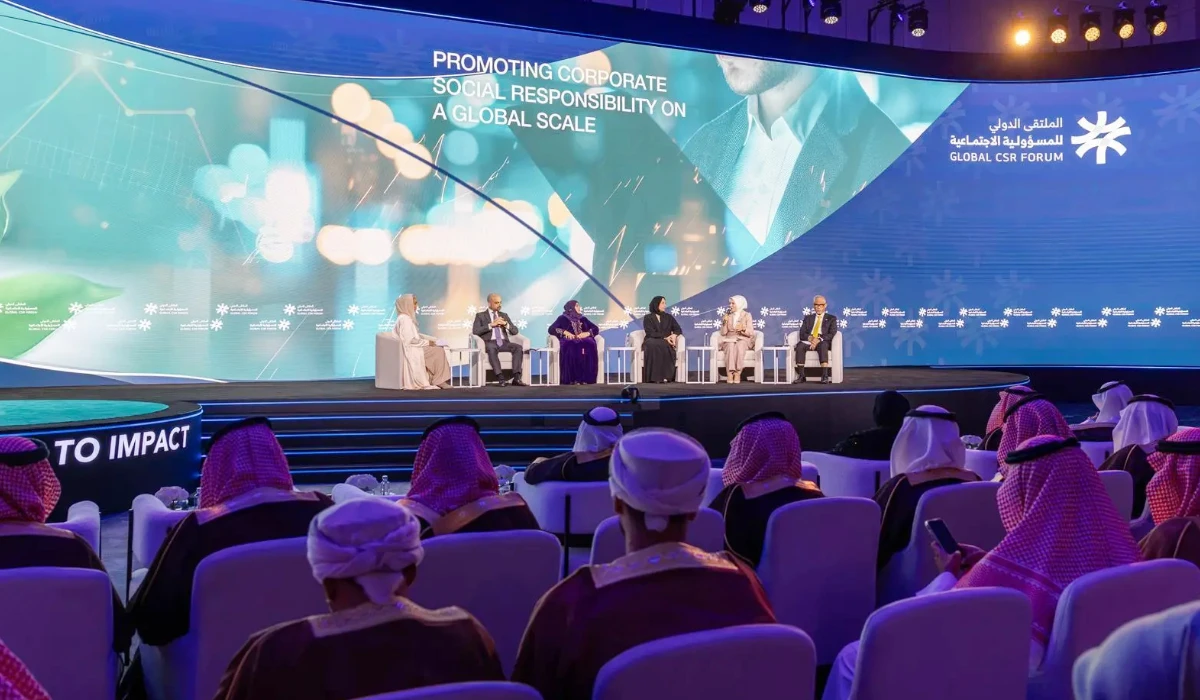

- Partnerships play a key role in driving projects and programs toward greater impact by expanding their reach, reducing operating costs and enabling initiatives to be developed jointly with multiple partners
RIYADH: Measuring impact and linking funding to results have become an urgent necessity, experts and specialists participating in the Global CSR Forum 2026 told Arab News.
Spending levels and the number of beneficiaries are no longer sufficient to assess the success of initiatives, they noted, with the real measure being the tangible change they achieve and its sustainability.
The next phase will require more precise measurement tools and a unified national social impact index to improve the efficiency of resource allocation and ensure resources translate into tangible and sustainable value, experts emphasized.

Under the patronage of Saudi King Salman bin Abdulaziz, the second edition of the in the Global CSR Forum 2026 kicks off on Monday, Oct. 5, organized by the Ministry of Human Resources and Social Development.
Held under the theme “From Commitment to Impact,” the two-day forum will bring together senior executives and leaders from the public and private sectors, along with regulators, standard-setting bodies, institutional investors, academics and community representatives.
Meshari Al-Mermish, general director of social development centers at the ministry, said: “The centers’ participation in the forum reflects their role in supporting local communities, strengthening partnerships with the private and nonprofit sectors, and advancing sustainable development through social responsibility and community investment.
Greater focus on community investment and impact measurement can improve the allocation of resources and partnerships while supporting more sustainable interventions that begin with real needs and end with measurable results.
Meshari Al-Mermis, General director of social development centers at Ministry of Human Resources and Social Development
“The centers’ nationwide presence and close ties to communities, which enable them to turn local needs into targeted initiatives for companies and development partners, directing social responsibility efforts toward priority needs and creating opportunities for shared-value investment,” he added.
Al-Mermish underscored the centers’ growing focus on impact measurement as a key element of development work, with attention extending beyond the implementation of initiatives and resources allocated to the actual change achieved, the response to community needs and the value created for beneficiaries and society.
“Greater focus on community investment and impact measurement can improve the allocation of resources and partnerships while supporting more sustainable interventions that begin with real needs and end with measurable results,” he confirmed.
Al-Mermish pointed to the forum as an opportunity to build strategic partnerships, attract community investments and contributions, and showcase development opportunities across the Kingdom, strengthening the centers’ role as a link between community needs and private-sector social responsibility opportunities.
Faisal Alshammari, head of partnerships and volunteering at Alborhan Association, noted that impact measurement has reached a more advanced level of maturity, particularly with the use of artificial intelligence in data analysis.
“This has helped reduce costs for nonprofits and improve the accuracy of results, making impact measurement a stronger basis for directing funding toward high-impact programs and ensuring resources translate into tangible, verifiable outcomes,” he said.
Partnerships play a key role in driving projects and programs toward greater impact by expanding their reach, reducing operating costs and enabling initiatives to be developed jointly with multiple partners.
“This improves funding efficiency and ensures that every riyal is directed toward measurable impact rather than spending without clear indicators,” Alshammari added.
“Digital transformation is a key pillar of the association’s work, directly supporting the objectives of Saudi Vision 2030 by improving operational efficiency and expanding the reach of services.”
Alshammari noted that the accumulation of expertise across nonprofits can help create lasting impact built on planning, monitoring and measurement.
The private sector is increasingly recognizing opportunities to contribute to social initiatives through the nonprofit sector, helping strengthen cooperation between the two sectors. This integration is particularly important when funding for such programs is supported by clear impact measurement and transparent results, Alshammari pointed to.
Saadoun Alenazi, administrative affairs manager at Al Jazeera Medical Complex, stated that the facility works with nonprofits through health and community initiatives and campaigns, providing health and awareness support to target groups and participating in events that promote prevention and health awareness.
Alenazi said: “The facility is also committed to building effective community partnerships with relevant organizations to coordinate efforts, expand the reach of beneficiaries and achieve sustainable health and social impact.”
He outlined several factors driving continued investment in health and community programs, including social responsibility and its role in serving communities, as well as the positive impact on health awareness, illness prevention and early detection, alongside beneficiary engagement and satisfaction and the success of previous initiatives.
He recommended that “healthcare facilities seeking to launch community initiatives first identify actual community health needs, then select clear, measurable programs suited to their capabilities.”
Alenazi encouraged starting with simple initiatives that deliver tangible impact, building effective partnerships and measuring results to support further development and sustainability.
Abdullah Alkhamais, founder of Nmo Academy, said: “The lack of systematic performance measurement as a key challenge facing social responsibility initiatives.”
An initiative’s success cannot be assessed solely by spending levels or the number of beneficiaries without measuring its actual and sustained impact, he noted.
“Major forums, including the International Social Responsibility Forum, provide a platform that brings together the public, private and nonprofit sectors alongside experts, allowing participants to move beyond sharing experiences toward developing more accurate and objective impact measurement tools and linking funding to results,” he added.
Alkhamais underscored the importance of developing a unified national social impact index based on clear standards and measurable, comparable indicators, while considering differences across sectors and initiatives.
“Social impact measurement in development projects is largely achievable when targets are defined from the outset, data is collected before and after implementation, and results are assessed over the medium and long term. The next phase should shift the focus from measuring spending to measuring the impact generated by that spending,” Alkhamais concluded.