- Article 34 of Saudi Arabia’s Basic Law of Governance states that ‘Defending the Islamic creed, the society, and the nation is the duty of every citizen.’
RIYADH: Saudi influencers are using their social media platforms to promote national unity, counter misinformation and encourage informed discussion amid ongoing regional tensions.
The Arabic hashtag #GoToExtremesInDefendingYourHomeland has gained traction online, encouraging citizens and residents to use their voices in support of the Kingdom. The campaign has become a rallying point for content creators seeking to shift conversations toward verified information and constructive dialogue rooted in unity and national pride.
Beyond messages directed at local audiences, influencers have also used their platforms to explain developments affecting the Kingdom to international followers, aiming to foster informed discussions and improve global understanding of events.
When I saw the Houthis actively engaging on social media and inciting against us, I felt that, as someone with a platform, I had to respond and defend my country.
Xzit Thamer
(8.4 million followers on TikTok)
Many participants in the campaign have also cited Article 34 of Saudi Arabia’s Basic Law of Governance, which states that “Defending the Islamic creed, the society, and the nation is the duty of every citizen.” Influencers say that responsibility extends to the digital sphere, where social media users can help to raise awareness, counter misinformation and promote national solidarity during periods of tension.
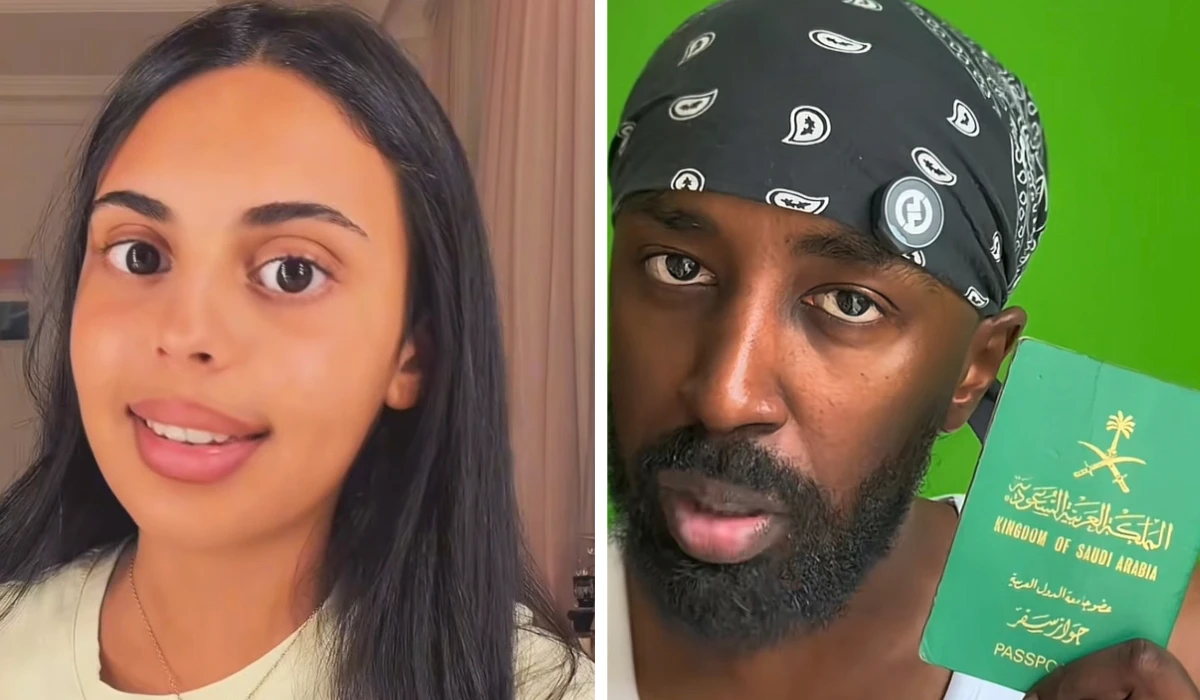
Among them is 15-year-old Saudi influencer Rateel Alshehri, who has 1.6 million followers on TikTok. She said her decision to participate stemmed from a deep sense of gratitude and pride in her country.
“I am deeply attached to my country and incredibly proud of it, especially all the opportunities it has given me and my generation,” she said.
I wanted to explain, in a simple and genuine way, why what people see online might be different from what we feel and experience offline, and why this issue means so much to us.
Rateel Alshehri
(1.6 million followers on TikTok)
“So many of the things I have been able to do and dream of today are possible because I grew up in Saudi Arabia at a time when my generation was given so much room to start, experiment, and have a voice.”
Alshehri said speaking out felt like a natural extension of the content she already shares with her audience.
“I am constantly sharing my achievements and the positive things happening in my life and in Saudi Arabia. So, to me, it wouldn’t make sense to stay silent when something truly important happens, as though my platform is only meant for the good times,” she said.
“If people choose to listen to you and give you a place in their day, I believe there are certain moments when your voice needs to carry more meaning than your usual content.”
She said her posts sparked greater engagement among non-Arab followers, many of whom sought additional information about events in the Kingdom.
One of the most searched phrases associated with her account after she shared a video was: “What’s happening in Saudi Arabia?”
“That was when I realized how important it was that I had explained the situation in the first place,” she said.
“I wanted to explain, in a simple and genuine way, why what people see online might be different from what we feel and experience offline, and why this issue means so much to us.”
Alshehri stressed the importance of fact-checking and accuracy, noting how quickly information could spread online during periods of heightened tension.
Saudi influencer Xzit Thamer, who has more than 18 million followers on TikTok, echoed her views on the responsibility that comes with having a large platform.
“When I saw the Houthis actively engaging on social media and inciting against us, I felt that, as someone with a platform, I had to respond and defend my country,” he told Arab News.
“As a well-known figure with more than 18 million followers, I can raise awareness about how people can defend their country in the right way.”
Thamer said his international audience gave him an opportunity to challenge misinformation and present what he viewed as an accurate account of events.
“Since I also have an international audience, with followers from many different countries, I can use my platform to share the truth about the events taking place,” he said.
“There is always misinformation circulating during times of crisis.”
He said some online criticism included racist remarks and comments questioning his Saudi nationality, adding that he later identified many of the accounts as belonging to Houthi supporters.
Despite the backlash, Thamer said the response from Saudis was overwhelmingly positive.
“The Saudi people stood up for me, whether they followed me or not, and that made me very happy,” he said.
For Alshehri, the online campaign also revealed a side of her generation that is often overlooked.
“Sometimes people say our generation is only concerned with social media and ourselves, but in moments like these, you see the complete opposite,” she said.
“You see a generation that follows events, asks questions, tries to understand, and engages with what’s happening around them.”
She added that moments of national significance often transcended differences among young Saudis.
“We might differ in age, the content we create, our interests, and even how we express ourselves. But when it comes to Saudi Arabia, you feel like all those differences disappear,” she said.
Thamer also expressed gratitude to the Kingdom’s leadership and those responsible for maintaining the country’s security.
“By God’s grace, and then through your efforts, people are able to live their lives and sleep peacefully. Thank you for everything,” he said.