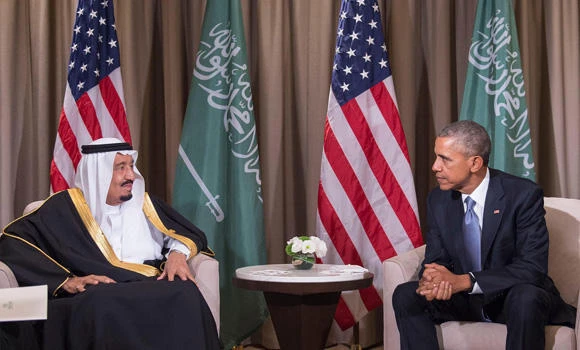
RIYADH: A cross-section of Saudi scholars, political analysts and diplomats have called for more solidarity among the G-20 nations in the wake of the Paris terror attacks, saying that the Kingdom has a major role to play in curbing the menace of terrorism. They also spoke about the challenges faced by G-20 economies, including Saudi Arabia.
“The need for solidarity among the leading nations has never been so acutely felt as it is being done today,” said Ahmad Al-Ghamdi, a political analyst, while commenting on the G-20 summit in Antalya, Turkey.
“The people all around the world, especially those living in the Middle East, expect more conjugated efforts from G-20 leaders to ensure peace and security in the region,” he said. “Moreover, the Kingdom and Turkey currently enjoy very cordial relations and hence it will be in the interest of the two countries to push their common interests on the G-20 forum.”
In a brief statement, Turkish Ambassador Yunus Demirer, said: “Saudi Arabia is a major stakeholder both bilaterally for Turkey and also within the framework of the G-20 summit as the summit comes at a time of major economic, political and security challenges for the rich and the poor of the world.”
The summit is expected to prepare the ground for a road map that will find ways to increase global economic resilience, increase trade and investment, and above all curb the menace of terrorism.
Demirer said that all G-20 member states, including Saudi Arabia and Turkey, would hold wide-ranging consultations on terrorism, refugee crisis and regional conflicts in the Middle East.
“In fact, we expect a better world to live in peace and security,” said Ibrahim Al-Quaiyid, a member of the National Society for Human Rights (NSHR), while calling on the world leaders to ensuring social and economic growth.
Al-Quaiyid urged the G-20 forum to strive hard “to solve conflicts in the Middle East, which has tossed the whole region into turmoil.”
He was of the opinion that the G-20 summit has taken on a new urgency with the Paris attacks in which more than 120 people have died so far. “While we recognize the risks posed by terrorism and its adverse impact on economic development, we must respond to that,” said Al-Quaiyid. “We must work together to enhance our solidarity.”
Al-Quaiyid called on the G-20 member states and their allies to “redouble efforts to find a peaceful solution in Syria and prevent all terror outfits like Daesh militants from perpetrating attacks.”
In fact, the G-20 states now face the question of how the West should respond after Daesh again demonstrated it posed a threat far beyond its strongholds in Syria, Iraq and elsewhere in the Middle East.
Zaid Al-Jasser, a professor at King Saud University (KSU), said: “The leaders will be more focused on global economy, infrastructure investment, jobs growth and other economic measures. I think we are going to see a lot of recycling and improvement of old ideas and initiatives even though some of the major economic blocs and nations are doing better."
He said that the Kingdom, which ranks today as the world’s biggest crude oil exporter, has also submitted an emissions pledge in the run up to the United Nations Climate Change Conference to be held in France later this month. “Whatever the case may be, climate change will be on agenda with of course some appreciations for Saudi Arabia, which exerts efforts for diversification of the country’s fossil fuel-reliant economy,” he observed.
Referring to the need to regulate the economy, while boosting trade and investment, Abdullah Al-Zeidan, a local businessman, said: “The Kingdom, which represents the Arab world in the summit, looked for better investment climate and financial cooperation from G-20 member states.”
He said that Saudi Arabia’s financial deficit is manageable despite the low oil prices, and the country’s economic growth will stay strong.
The G-20, which includes the world’s 20 largest economies, manages a budget of nearly $60 trillion. The employment, unemployment, growth and national income data of G-20 countries are closely monitored across the world. The G-20, which brings together developed and developing countries, consists of Saudi Arabia, the US, Japan, Germany, the UK, France, Italy, Canada, Turkey, Argentina, Australia, Brazil, China, Indonesia, India, Russia, Mexico, South Korea, South Africa and the European Union (EU) as an institution.
Saudis want world leaders to resolve regional issues