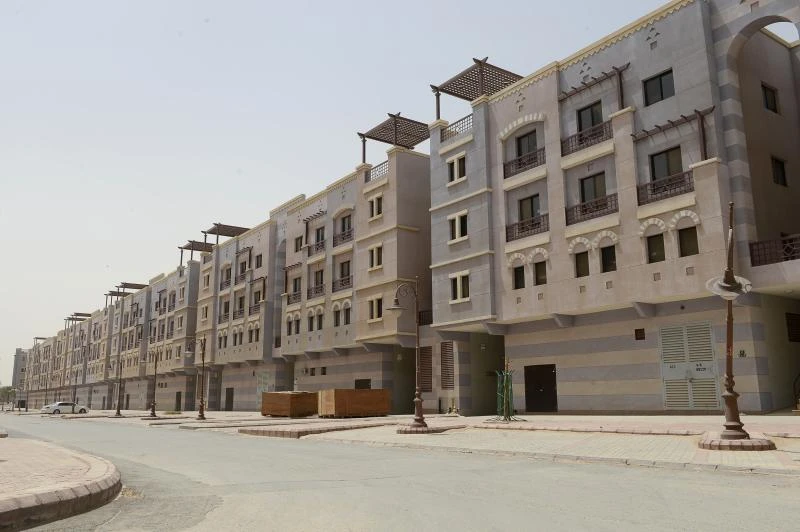
RIYADH: Saudi Arabia is planning to raze slums in one of its largest cities to make way for newer, restored neighborhoods as part of a wider plan to keep up with soaring demand for affordable housing.
A gap between what is available on the market and what many Saudis can afford has left people frustrated. A shortage of low and middle-income housing means millions of Saudis cannot afford to buy a home.
Young Saudis are especially affected since it takes years of saving before many can afford to buy a home, often a precursor to marriage.
To address the housing shortage and public grumbling, Jeddah has become a testing ground for a plan that includes getting rid of most of its roughly 50 unplanned settlements, which comprise a third of its built-up area, according to municipality figures.
In their place, the city plans to build subsidized housing units for Saudis.
If this new model for revamping the Kingdom’s second-largest city succeeds, it would be replicated throughout Saudi Arabia in areas where aging infrastructure needs overhaul.
The government has allocated SR250 billion to construct 500,000 low-cost housing units across the Kingdom within a few years.
Fayyaz Ahmad, associate director of real estate adviser Jones Lang LaSalle in Saudi Arabia, says a third of new entrants into the workforce cannot afford a house costing more than $133,000, which, in a city like Jeddah, buys a small two-bedroom apartment.
“The government is doing a lot, but the population is large and how to improve people’s access to cheaper loans is a real challenge,” he said. “There is no quick solution.”
Thirty-year-old Muhammad Al-Bakri, a Jeddah resident, and his friends founded the Young Initiative Group, which seeks to address social challenges in their hometown.
“Wherever you go in Saudi, there is a housing crisis,” Al-Bakri said.
“When it comes to ‘unplanned districts,’ these people have been there for two, three, four generations.”
His perspective changed in 2010 when he and a group of wealthy friends decided to visit the poor Jeddah neighborhood of Harazat and pass out air conditioners to needy families. It was the first time they had been to such an impoverished area, where families live in cramped apartments and children struggle to find shoes.
Usamah Shehatah has spent countless hours drafting proposals to deal with Jeddah’s slums. He runs the Slum Areas Development Department for the Jeddah Development and Urban Regeneration Company, Saudi Arabia’s first municipality-owned agency tasked with tackling the country’s housing gap. Other cities across Saudi Arabia, including Makkah and Riyadh, are following suit with similar models.
Shehatah says he hopes the initiative can “recycle” Jeddah’s slums. He has a proposal for transforming the Al-Salamah slum, though residents do not know about it yet and the agency’s board of directors has yet to approve his model.
Scheme to address demand for affordable housing