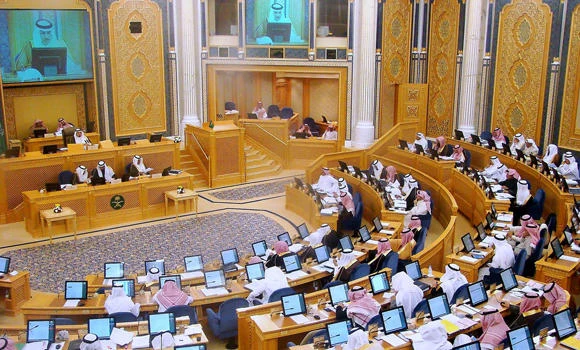
The Shoura Council has urged the National Anti-Corruption Comm-ission to publicize the names and photographs of officials found guilty of corrupt practices and conduct swift trials as part of efforts to root out corruption from the country.
It also instructed the commission, known as Nazaha, to provide an assessment of the graft situation in the Kingdom in its annual report.
“The Shoura agreed that Nazaha must revise its regulations to include defamation as a form of punishment for individuals involved in graft,” said Fahaad Al-Hamad, assistant president of the council.
“The Shoura also urged the commission to coordinate with government departments to speed up investigation into graft cases and trial for people involved in such cases,” Al-Hamad said.
The 150-member consultative council also instructed Nazaha to publish its findings regarding corruption in the Kingdom in order to ensure transparency, fairness and trustworthiness.
Fuad Kawther, a Saudi engineer, welcomed the decision and hoped it would contribute to eradicating corruption from the Kingdom. He said Nazaha should be given more powers to deal with corrupt individuals.
He wondered whether the commission would be ready to question and punish corrupt officials at the Health and Interior Ministries.
“I am working in the aviation sector and I know that the General Authority of Civil Authority has the power to take action against airlines that violate rules. Nazaha should have the same power to punish the corrupt,” he told Arab News.
Kawther narrated an incident that took place during the time of Caliph Omar. “Salman Al-Farsi questioned the caliph when he wore a large dress covering him fully. Salman told Omar that he would not obey him until he discloses how he acquired two pieces of cloth. Omar then asked his son Abdullah to reply to Salman. Abdullah said he had given his father his share of the cloth in order to make the dress. We are looking for the Kingdom to develop such a degree of transparency,” he said.
Shoura: Name and shame the corrupt