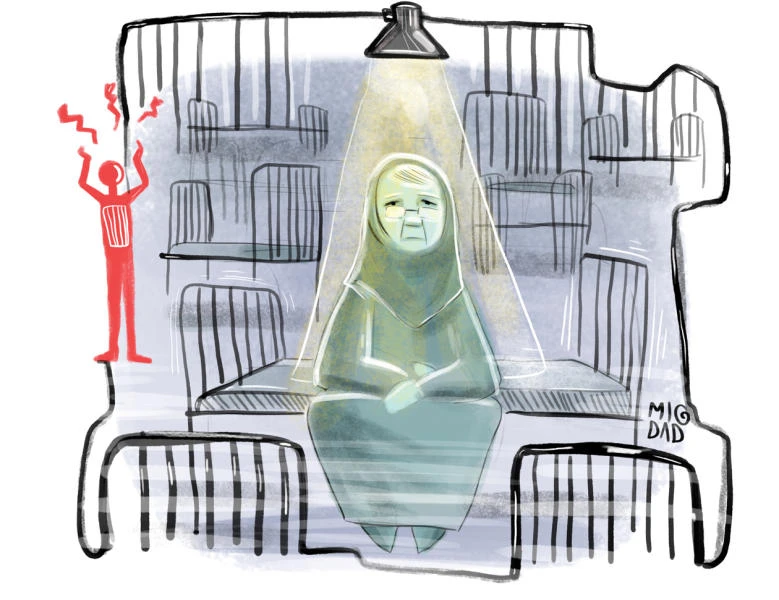
The phrase, “Allah will provide for us,” is repeated often by the residents of the women’s home in the historic district of Jeddah. It sums up the unhappy lives of the unfortunate women.
Everyone of them has painful memories of ingratitude from their children and their relatives’ neglect. Such stories are common in the home where they spend their time in ill health, constantly remembering their broken relationships and the relatives who do not find time to visit them.
An elderly woman said: “Only journalists visit us here. They listen to our problems but can do nothing to help us.”
A charity home resident in old Jeddah told Arab News that she had been living in the home for the past 40 years. Rarely does anyone visit her. She occasionally goes to hospital for treatment even though it is hard to find money for a taxi. “None of our relatives visit or give us SR10. Allah provides for us,” she said.
Fatima, another resident, is in no better condition. She suffers from an eye disease. “We do not get any help except in Ramadan and some other rare occasions. But still we hope for better days. Only my sister, who is no better off than I am, visits me,” she said.
Umm Muhammad came to the home a few months ago. She chose to live at the home after the death of her husband because she did not want to be a burden on her brothers.
“My social insurance pension is not enough to meet my expenses, including the cost of treatment. I have asthma and my son is an invalid,” she said, adding that several widows and divorced women, along with her, spent their days hoping that rents and prices of food would stop increasing.
“We begin the day with the hope that some philanthropist will come by, donating enough money to meet their needs. We hope especially for an air-conditioner because of the simmering heat we endure in the home.”
Umm Abdullah said she was in the home to take care of her sister who is totally paralyzed.
She wished that authorities would set up a home visit team of doctors and nurses who would visit her sister and other residents because many women are too weak to go to hospital or even to walk.
Another in-mate said she dreamed of a charitable person who would donate an air-conditioner to the home so that the residents could spend the summer in relative comfort.
When Arab News asked her about visitors, she almost wept, explaining that no one visited her and that was the case with most women in homes all over the city.
Another woman said she wanted to be admitted to the home as her husband had died and the house where her older daughter and her mother are living, was not big enough.
Another woman said she received a monthly pension of SR1,800 which hardly sufficed for the needs of her daughters and the daughter of a dead sister.
Adding to her woes, one of her daughters has cancer so she has begun working as a beggar despite her illness. The woman hoped that all inmates could be issued ration cards with which they could buy food and other essentials at a lower price in addition to free medical care and education for their children.
Suffering in silence: Painful memories of ungrateful children