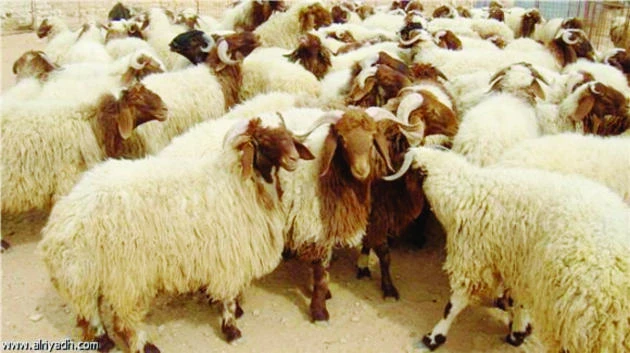
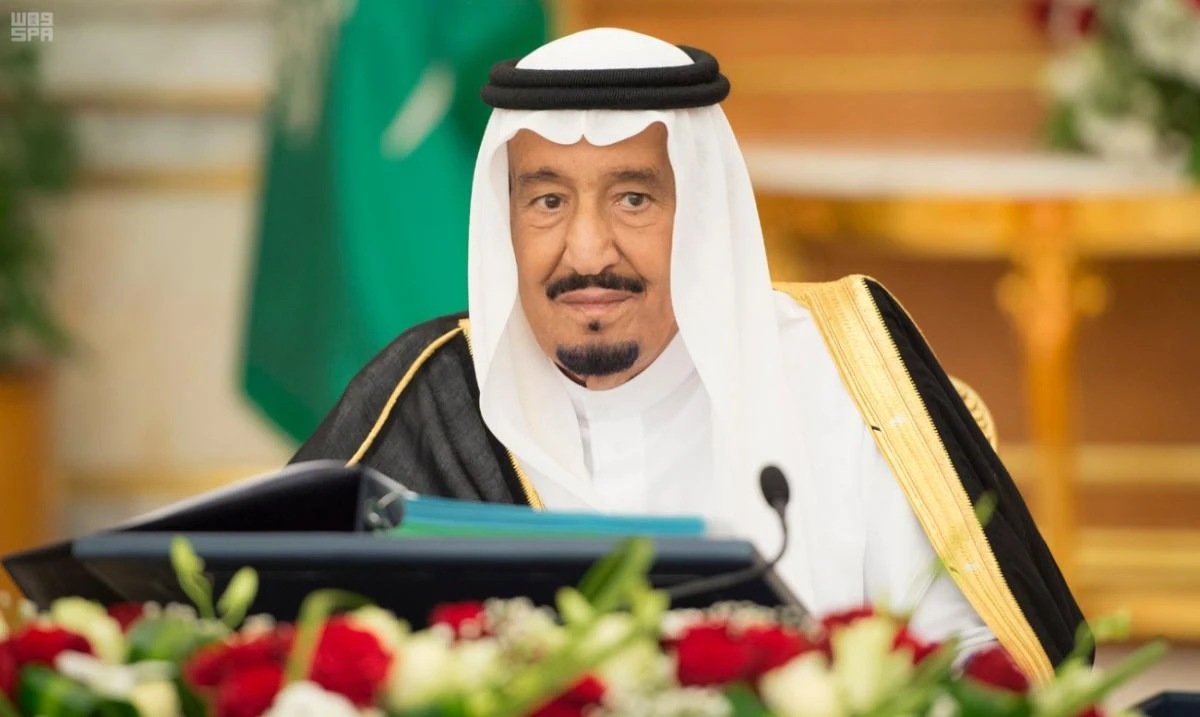
JEDDAH: Islamic Development Bank (IDB) President Ahmed Muhammad Ali has denied allegations the bank, which administers the annual slaughtering of millions of sheep through Saudi Arabia’s Sacrificial Meat Project, does not undertake its role of distributing the meat to the poor and needy seriously. “These are baseless allegations,” he said in an exclusive interview with Arab News.
The president asked all those who doubt the efficiency of the project, including pilgrims, to make personal visits to the site of the project in the Moaisim area in Mina to see by themselves all its stages. “The bank carries out this nonprofitable business free of charge. Contrary to what a number of people believe, the bank does not gain a single riyal out of the project,” he said.
Speaking about the main objectives of the project, Ali said it was designed to serve the guests of God through the provision of sacrificial animals that are healthy and fulfilling all Shariah conditions. “The project also helps in preserving the environmental safety of the holy sites through preventing random slaughtering of sheep,” he said.
The president said more than 40,000 people work in the project, including butchers, assistant butchers and administrators. “Every year we employ more than 700 veterinarians and more than 400 Shariah students to ensure that the animals are healthy and meet all Shariah conditions,” he said.
Ali said the IDB staff, in coordination with the parties concerned, supervise the distribution of sacrificial meat to the poor and needy at the holy sites and in the poor districts of Makkah. “With the help of charity organizations, we distribute the sacrificial meat to various regions of the Kingdom and export the surplus to poor Muslims abroad,” he said.
The president appreciated the efforts of Custodian of the Two Holy Mosques to provide pilgrims with all services that enable them to do their rituals in safety and comfort. He said the Saudi government had spent over SR 2 billion on building modern and well-equipped slaughterhouses.
He recalled that the project was started in the year 1403H (1983) with the slaughtering of 63,000 sheep. “Since then, the project has been steadily progressing. Last Haj season, 1.4 million sheep were slaughtered and their meat was distributed among the poor and needy in the Kingdom and in 27 other countries,” the president said. He expected the number of animals to be slaughtered within the project this year to be much more than that.
According to Ali, the distribution of meat to the various regions of the Kingdom is done under the supervision of charity organizations. “We have lists containing the names of charity organizations in all regions. Large quantities of meat are sent to the regions for distribution among the poor and needy in towns, villages and hamlets. We also coordinate with the governorates in the regions while doing this,” he explained.
Asked if the bank had any intention to distribute meat to Muslims in Syria and Myanmar, the president said it is not easy to distribute meat in these two countries without the consent of their governments. He, however, hastened to add that the bank was planning to send quantities of the sacrificial meat to Turkey, Jordan and Lebanon for distribution among Syrian refugees there. “We will also send meat to Bangladesh to be distributed among the Rohingya refugees,” he added.
The president revealed that the government of Custodian of the Two Holy Mosques had decided to transfer the slaughterhouse for cattle and camel from its current location in Moaisim to a new site in Wadi Al-Hirman near Al-Sharaie district within the boundaries of the Haram. He said the bank was also planning to sign more memorandums of understanding with the Haj missions, so that their pilgrims benefit from the services of the project.
The president described the current production capacity of the slaughterhouses as sufficient, but said their number might be increased with the steady rise of the number of pilgrims.
Asked about the pros and cons of the project since its establishment, Ali said the positive aspects were obvious in the simple fact that meat of all the slaughtered animals had been completely distributed. “The negative aspect is that some people are still slaughtering animals randomly at the holy sites. This phenomenon should stop immediately,” he said.
The president said that all preparations for this year’s Haj had been completed, and that sufficient quantities of sheep, cattle and camels had been secured.
He said the Hadi and Adahi coupons can be bought at special kiosks in Makkah, Madinah, the holy sites and all the Kingdom’s inlets. “The coupons can also be bought via the Saudi post offices, Al-Rajhi Bank and Alamoudi Exchange Company. This can also be done via the project’s website, www.adahi.org.
The price of a sheep is SR 450, which is equivalent to $ 120 or 96 euros.
Syrian refugees to get sacrificial meat