A master’s degree thesis completed by a Saudi scholar in the UK has concluded that many Twitter users in the Kingdom consider the social networking site an essential and irreplaceable “artery of life.”
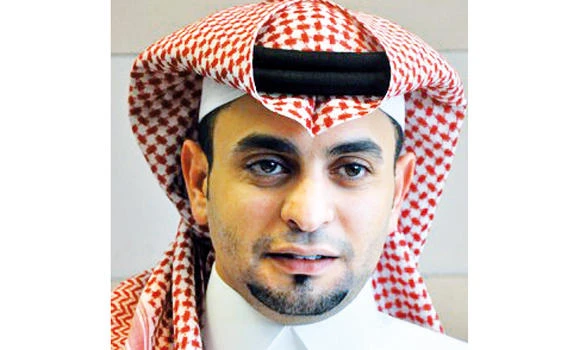
The paper argues that the extent of freedom exercised on social networking platforms has given broad momentum to claims of changing society for the better, thus making Saudi Arabia a world leader in tweeting. The British University of Bedford adopted Saudi scholar Abdullah Al-Rakf’s research in new media affairs, which concludes that Twitter has led to the birth of “citizen journalism” that can be used at any time and place. Al-Rakf’s research revealed that 50 percent of Twitter users in Saudi Arabia are below the age of 30. Around 27 percent of users are below the age of 40, while only two percent are 50 years of age or older. Around 24 percent of Twitter users have a bachelor’s degree, while about 14 percent of users have postgraduate degrees, Al-Rakf reported.
Meanwhile, 51 percent of users are employed, of whom about five percent work in the business sector.
According to the study, about 65 percent of users use Twitter every hour, while only about 20 percent use the website once a day.
The study found that Twitter users receive news about 70 percent faster on the site than through traditional media outlets.
About 65 percent of users follow celebrities, artists and religious figures to stay up to date on news about them and from them.
The study reflected data collected by Twitter users through an online survey and reveals that people between the ages of 21 and 41 use Twitter the most in Saudi Arabia. Most of these users are students at high school and university.
The study also revealed that Twitter is hugely popular among teenagers and young adults, the reason being that older people are often more reluctant to turn to new outlets to get their news.
In addition, the social status of people included in the research sample reflects the fact that younger users have more time to spend on social networking sites for leisure.
Al-Rakf attributed the popularity of Twitter in Saudi Arabia to its perception as an effective tool for young users to maintain contact with the outside world, as well as a tool to deliver concerns to officials and share thoughts and ideas on trending issues.
The research also showed that journalists working in traditional media have increasingly turned to social media in an attempt to deliver news quicker and to a larger number of people. Journalists have also come to view social media sites like Twitter as a reporting platform that offers more freedom than what is available to them through traditional media outlets.
Twitter an ‘artery of life’ for Saudis