RIYADH: The Kingdom is moving in the right direction as far as combating drug trafficking and related crimes are concerned, a visiting UN official has said here.
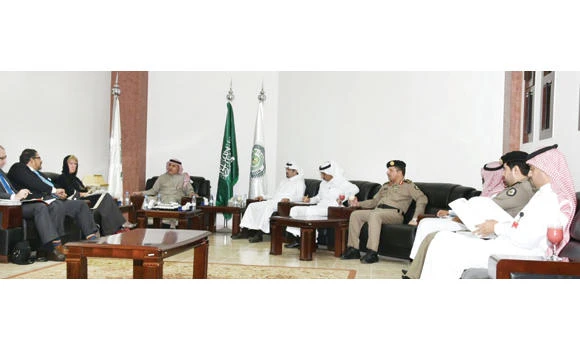
Gillian Murray, deputy director, Division for Policy Analysis of the United Nations Office on Drugs, met Maj. Gen. Abdullah Al-Atram, assistant director of Narcotics Control and Operations.
Murray said she was in Riyadh to exchange experiences with the Kingdom in the field of narcotics control. The visit to the Kingdom is within the framework of the cooperation with the member countries to combat the drug menace, she added.
The UN official said her office is preparing for an extraordinary session next year to chalk out a clear-cut plan to be implemented till 2020.
Welcoming the visiting delegation, Al-Atram said the Kingdom and the UN have been cooperating to combat drug trafficking for a long time.
Abdelilah Mohammed Al-Sharif, secretary general of the National Committee for Narcotics Control and assistant director of Anti-Drug and Preventive Affairs, said the Kingdom signed the Single Convention on Narcotic Drugs,(1961) in 1973.
The convention is an international treaty to prohibit production and supply of specific (nominally narcotic) drugs and of drugs with similar effects, except under license for specific purposes, such as medical treatment and research.
Its major effects included updating the Paris Convention of July 13, 1931 to include the vast number of synthetic opioids invented in the intervening 30 years and a mechanism for more easily including new ones, he said.
He recalled that the Kingdom also took part in the Convention on Psychotropic Substances of 1971. It was a UN treaty designed to control psychoactive drugs such as amphetamine-type stimulants, barbiturates, benzodiazepines, and psychedelics signed in Vienna, Austria, on Feb. 21, 1971.
The Single Convention on Narcotic Drugs of 1961 could not ban the many newly discovered psychotropics because its scope was limited to drugs with cannabis, coca and opium-like effects.
Al-Sharif said the Kingdom has foiled several attempts by drug peddlers with the cooperation of the Saudi Customs and Border Guard.
Hatem Ali, regional director of the United Nations Office on Drugs and Crime in the Gulf Cooperation Council, stressed the importance of e-distance learning in the field of fight against drugs and the possibility of the national project for drug prevention.
It is an innovative effort to build preventative programs and apply quality standards in the area of reducing demand for drugs and psychotropic substances, in coordination with the Saudi Basic Industries Corporation (SABIC).
It targets all age groups, especially youth, aims to build role models and support parents, teachers, and any parties interested in promoting awareness and protecting their community from drug abuse.
A majority of drug users in the Kingdom fall in the 12-22 age group, and close to 40 percent of them rely on substances to fill a vacuum. Captagon pills are reportedly the most popular among young people.
UN official praises KSA’s efforts in combating drugs