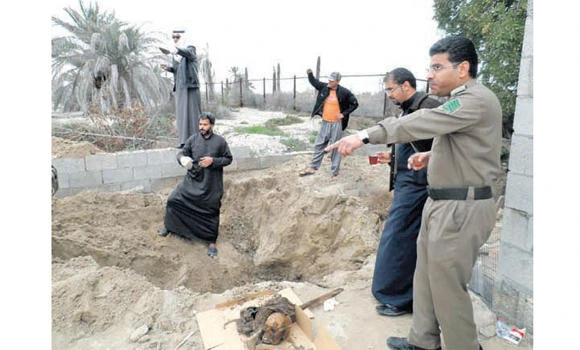
The widows of two Keralites who were buried alive in a farm in Safwa, Qatif, nearly four years ago are desperately trying to provide DNA samples for official identification so that they can finally lay their murdered husbands to rest.
“I have been working as a laborer to feed my two children and support their education ever since my husband stopped calling me in March 2010,” 46-year-old Shylaja, the widow of Saleem Abdul Khader, told Arab News. The driver, whose decomposed body was dug out from a farm last month along with four others, had worked in the Kingdom for 26 years, of which four with his last sponsor.
One of the arrested suspects admitted to subjecting the victims to severe torture along with his gang, who were under the influence of alcohol and drugs, after one of the victims had allegedly teased his sponsor’s wife.
Saleem was set to buy a house with the help of a bank loan just a year before his brutal killing.
“One of his colleagues had made me believe that he was in jail. I had to sell a small piece of land to pay back the loan,” she said, frequently breaking down in tears. “My only prayer now is for a decent burial for my husband.”
Shylaja is on a long waiting list after petitioning Overseas Indian Affairs Minister Vayalar Ravi to speed up the process of identification.
Beena, widow of Shahjahan, also had an equally sad story to tell. The 36-year-old works as a temporary sales girl at a state-run convenience store to feed their two children since her husband disappeared four years ago. She was also under the impression that her husband was in jail until a month before the shocking revelation.
Shihab Kottukad, a social worker, had informed the family that he was missing. Her husband’s brothers, all blue collar workers, are also in the Kingdom to help complete formalities and are in constant touch with his wife.
“They took DNA samples a week ago and we are awaiting the results,” she said. “My children have stopped going to school. They are awaiting the arrival of their father, whom they will never see again. I last saw my husband in 2009.”
The couple had no house of their own and she is now living with her elder sister and kids.
“He worked in Saudi Arabia for six years and used to come home at least once every two years. He also had to look after his six sisters and help marry them off,” she told Arab News.
Social workers in the Kingdom have only been able to trace these two families so far.
“The family one of the victims, identified as Sheikh, is said to be living in Tamil Nadu, but we are unable to find any such family here,” said Nazimudheen Labba, president of the Nedumpana Mahallu Jama’at Committee and a member of the village council in the Kollam district.
Widows of Qatif farm victims seek justice